BLOG

7 Best PCB Micro Switch Suppliers for Global Buyers

Selecting a Pcb Micro Switch supplier is about more than finding a low unit price. The right component must fit the board, perform consistently, and suit the equipment’s operating conditions. Small details matter. Plunger height, actuator travel, operating force, contact rating, and terminal layout can all affect assembly and field performance. A switch that looks suitable in a catalogue may still fail a practical fit check.

For global buyers, supplier evaluation also means checking clear datasheets, sample availability, production capacity, and communication quality. Ask for the exact part number and confirm that the quoted specifications match the intended design. Where appropriate, review inspection records and request samples for board-level testing before placing a larger order. Shipping lead times and packaging deserve attention, too; bent terminals or unclear labeling can cause avoidable delays. This guide compares seven suppliers through practical sourcing factors, including product range, technical support, and suitability for different purchasing needs. No shortlist can fit every project. Requirements vary, and public product information may not answer every question. Use the comparison as a starting point, then verify details directly with each supplier before making a decision.
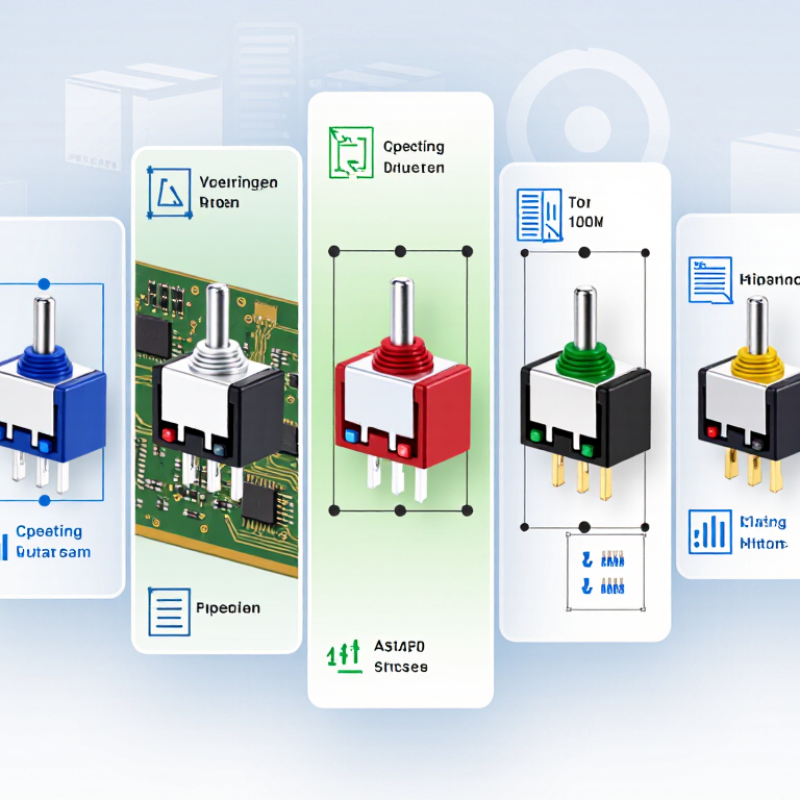
7 Best PCB Micro Switch Suppliers for Global Buyers

Understanding PCB Micro Switches and Their Applications

PCB micro switches are compact electromechanical parts mounted directly on a circuit board. Pressing the actuator moves internal contacts, usually creating a momentary signal for a controller. Their small footprint suits handheld instruments, appliance panels, access controls, and test equipment. Small parts matter.

A switch’s feel and electrical rating both affect the finished product. Check operating force, actuator height, travel, contact rating, and expected cycle life against the device’s actual use. A low-profile switch may fit beneath a narrow panel, but it can be harder to press through a thick cover. Dust, vibration, and repeated side pressure can also change performance. Datasheets help narrow choices, though they cannot fully predict how a switch will feel in a complete enclosure.

Tips: Confirm the PCB footprint and soldering method before ordering samples. Test the switch with the intended panel, not just on a bare board. Listen for inconsistent clicks and check that the actuator returns freely. It is easy to overlook mounting tolerances; even a small height difference can alter the user’s experience. When comparing suppliers, request clear mechanical drawings and traceable test information.

Key Factors for Evaluating PCB Micro Switch Suppliers

A PCB micro switch may measure only a few millimeters, yet small differences in operating force or travel can affect the finished product. Ask suppliers for dimensional drawings, force curves, rated electrical load, and mechanical life data. Check whether specifications describe the same test conditions you plan to use. Otherwise, two figures may look comparable but mean different things. Details matter.

Review terminal dimensions, contact materials, and soldering guidance against your board layout and assembly process. Ask for samples from the production series, not only hand-selected units. Then test them on a representative PCB, checking actuation feel, electrical continuity, and behavior after repeated presses. A bench test is useful, but it may not reveal every issue in a real enclosure. That gap deserves attention.

Reliable documentation also helps distinguish a capable supplier from a persuasive sales contact. Look for revision-controlled datasheets, lot identification, inspection records, and clear responses about production changes. Discuss lead times, minimum order quantities, and how defects are handled before placing a large order. Communication can be imperfect; a delayed answer is not proof of poor quality, but repeated vague answers are worth investigating. Ask how sample results connect to routine factory checks.

Key Factors for Evaluating PCB Micro Switch Suppliers

Suggested buyer evaluation weights on a 100-point scorecard. These are practical guidelines, not market-survey results; adjust them to your application and sourcing priorities.

Seven PCB Micro Switch Suppliers Serving Global Buyers

Seven PCB micro switch suppliers serving global buyers can differ more in capability than in catalog size. Consider established component manufacturers, regional switch specialists, broad-line distributors, custom-design workshops, assembly-focused vendors, export-oriented suppliers, and engineering-led firms. Each serves a different purchasing need. Some offer stable standard parts; others adapt terminals, actuator shapes, or operating force. The label “global supplier” alone proves little.

Compare the specifications closely. Check PCB pin spacing, mounting dimensions, rated electrical load, mechanical life, and operating temperature. Ask for a current datasheet and samples before approving a production run. A buyer should also confirm lead times, packaging details, and how revisions are controlled. Small mismatches matter. A switch that looks right may not fit the board or deliver the expected tactile response. Supplier experience with similar applications is useful, though it is not a guarantee.

Tips: Send a drawing and target operating force with your inquiry. Test samples on the actual PCB. One detail is often missed: confirm whether quoted tolerances apply to the actuator or the full switch assembly.

7 Best PCB Micro Switch Suppliers for Global Buyers — Seven PCB Micro Switch Supplier Profiles

Supplier Profile Typical PCB Micro-Switch Offering Potential Buyer Advantage Key Checks Before Ordering Best Suited For
Switch manufacturer with direct sales Snap-action switches in PCB-mount versions; configurations and electrical ratings vary by product series. Direct access to product engineering, technical documentation, and factory quality processes. Confirm the exact part number, PCB terminal layout, operating force, travel, electrical rating, and applicable approvals. OEMs needing repeat production and direct technical support.
Authorized component distributor Catalogued PCB-mount micro switches from represented manufacturers, subject to stock and regional availability. Traceable supply channels and access to manufacturer datasheets and lifecycle information. Check authorization, country of shipment, stock status, date or lot codes, and order minimums. Buyers prioritizing traceability and established procurement processes.
Broadline electronic-component distributor Selection may include through-hole PCB terminals, different actuator styles, and multiple circuit configurations. Convenient comparison across component categories and consolidated ordering. Compare the datasheet—not just the listing title—for dimensions, terminal spacing, contact form, and ratings. Engineering teams sourcing switches alongside other electronic components.
Regional electromechanical specialist Micro switches and related electromechanical parts, with product availability varying by territory. Local-language support and potentially simpler regional logistics or payment arrangements. Verify local inventory, import responsibilities, warranty terms, and whether products are sourced through authorized channels. Buyers who value nearby support and region-specific service.
Custom switch and design-in supplier Standard PCB micro switches plus possible options for actuator, terminal, or packaging variations, depending on capability. May support design reviews and help match a switch to a mechanical interface or application requirement. Request written specifications, samples, change-control details, and confirmation of any custom tooling or qualification requirements. Projects with defined mechanical constraints or a need for application engineering.
Contract manufacturer with component sourcing PCB micro switches procured as part of an electronics assembly or product-build service. Can coordinate component sourcing with PCB assembly and production planning. Agree on approved part numbers, substitution rules, component traceability, and responsibility for obsolescence management. Companies outsourcing board assembly or complete product manufacturing.
Online B2B sourcing platform supplier Listings may cover PCB-mount snap-action switches, but specifications and supplier controls differ between sellers. Useful for initial supplier discovery and quotation comparison across markets. Validate legal business details, datasheets, samples, certificates where applicable, inspection terms, and independent traceability. Buyers exploring new sources or requesting preliminary quotations.

Comparing Supplier Products, Certifications, and Capabilities

A useful comparison of PCB micro switch suppliers starts with the switch itself: actuator style, terminal layout, operating force, travel, and rated electrical load. Ask for drawings and sample parts, then check whether the switch fits your board footprint and enclosure. Small parts matter. A supplier’s catalogue rating is not a substitute for test conditions; request endurance, contact-resistance, temperature, and vibration results for the exact model.

Certifications need careful reading. ISO 9001 indicates a quality-management system, not proof that every switch meets your application’s requirements. Request current certificates, scope, issuing body, and model-specific safety or conformity documents. IEC 61058-1 may be relevant to switches used in appliances, but applicability depends on the end product. Paper is not proof. Traceability, batch records, and a clear process for handling field failures also reveal operational capability.

Industry context helps explain why capacity and continuity matter. Prismark’s 2023 PCB industry report estimated global PCB production value at about US$68.9 billion for 2023, with growth projected through 2028. That figure describes the wider board market, not micro switch quality. Compare suppliers using actual lead times, minimum order quantities, sample-to-production consistency, and change-control practices. No checklist is perfect; I would still verify claims with a pilot order and incoming inspection.

Steps for Selecting and Qualifying a Supplier

Qualifying a PCB micro switch supplier starts with a measurable specification. Define operating force, travel, contact rating, mounting footprint, and expected cycle life before requesting quotes. Ask for the tolerance range, not just a typical value. Then compare drawings, material declarations, and inspection records against your board layout and use conditions. Small details matter.

Request samples from a normal production lot, not hand-selected prototypes. Test actuation force, contact resistance, solderability, and mechanical endurance on your own PCB assembly. Include temperature and vibration tests if the switch will face those conditions. Review how the supplier controls process changes, lot traceability, and nonconforming parts. A polished audit file helps, but it cannot replace test results. Test the awkward cases.

Delivery capability also deserves evidence. The World Bank’s 2023 Logistics Performance Index assessed 139 economies across six dimensions, including tracking and timeliness. Use those measures as prompts: ask suppliers for shipment records, lead-time ranges, and contingency plans for component shortages. Verify production capacity and quality controls at the actual manufacturing site. A remote review may miss practical gaps. Keep a pilot order small, document defects, and agree on corrective-action timing before scaling. Supplier qualification is not a one-time checkbox; reassess after major process or site changes.