BLOG

China Top 10 Roll Crusher Manufacturers for Global Buyers

Choosing a Roll Crusher supplier is not just a price comparison. Global buyers must check whether a machine suits their feed material, target product size, capacity, and site conditions. A crusher that performs well on dry, uniform coal may behave differently with damp, abrasive ore. Details matter.

Barry A. Wills is a recognized mineral-processing author. The following is an editorial summary of sound selection principles, not a verbatim quotation: “Match the crusher to the material, then verify performance under real operating conditions.” This is a useful lens for comparing China’s leading manufacturers. Buyers should review roll diameter and width, drive configuration, wear-surface options, safety features, and access for maintenance. Ask for test data relevant to your material, not only a headline capacity figure. Request drawings, spare-parts lists, warranty terms, and clear commissioning support. Evidence beats promises.

This guide introduces ten Chinese Roll Crusher manufacturers for international buyers. It considers product range, engineering capability, customization, export experience, and after-sales service. Company rankings can change, and public information may not show how equipment performs at a particular site. That gap deserves attention. Treat the list as a starting point, verify references, and compare like-for-like technical specifications before making a decision. A careful review can prevent costly surprises, though no checklist replaces a material test.
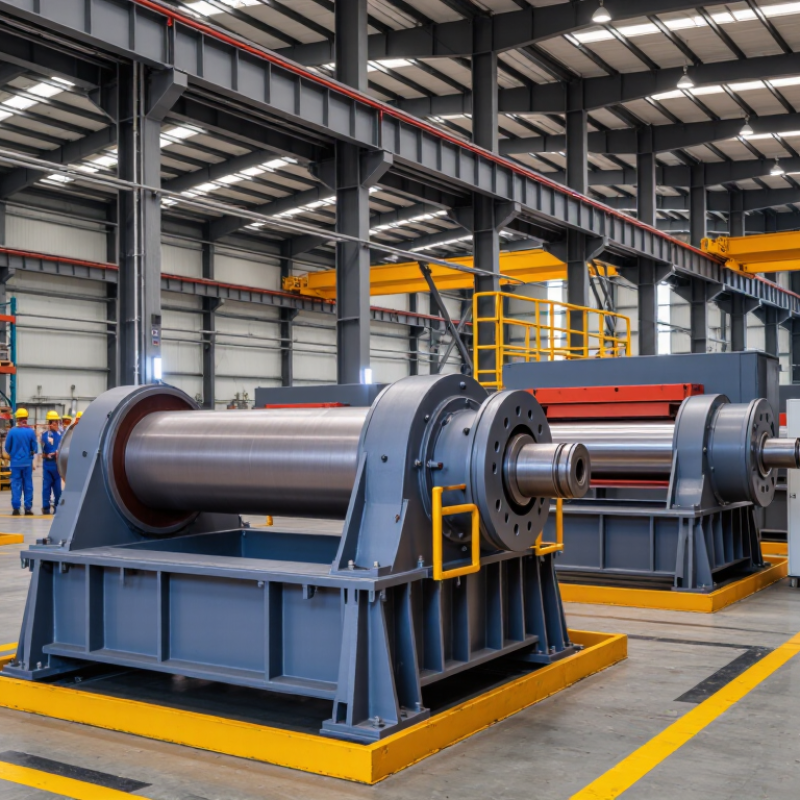
China Top 10 Roll Crusher Manufacturers for Global Buyers

Roll Crushers: Operating Principles, Types, and Industrial Uses

Roll crushers reduce material by drawing it between two rotating cylinders and compressing it against a controlled gap. Smooth rolls suit brittle feed and produce a relatively even product; toothed rolls grip larger, softer pieces. Single-roll and double-roll designs serve different capacity and reduction needs.

Small details matter. Operators check roll speed, gap setting, feed size, and bearing temperature because uneven feeding can cause surges, excess fines, or wear.

These machines appear in mineral processing, cement production, aggregates, and some recycling lines. Their relatively simple action can limit over-crushing, but sticky or highly abrasive feed may demand extra maintenance or another crusher type.

The U.S. Geological Survey’s Mineral Commodity Summaries 2025 estimated U.S. crushed-stone output at about 1.5 billion metric tons in 2024, illustrating the scale of material handling behind aggregate operations. That figure is not a roll-crusher market estimate; equipment suitability depends on the specific feed and product target.

In plant trials, a practical assessment measures throughput and particle-size distribution, then checks whether the discharge remains consistent as the rolls wear. A neat laboratory result may not survive a messy shift.

China’s Roll Crusher Industry and Its Manufacturing Landscape

China’s roll crusher industry combines heavy-equipment production with a broad network of component suppliers. Foundries provide roll shells and frames, while machining shops finish shafts, housings, and bearing seats. This supply chain can support customized sizes and replacement parts, though consistency may differ between factories.

Production quality depends on more than appearance. Buyers should ask how manufacturers control roll alignment, surface hardness, weld quality, and assembly tolerances. A practical inspection may include checking bearing temperature and listening for vibration during a loaded test. Small details matter. Yet test conditions are not always comparable, so request the feed material and operating settings used.

Manufacturers serve mines, quarries, and industrial plants with different feed sizes and capacity needs. Selection should reflect material hardness, moisture, target product size, and expected operating hours. Ask for drawings, wear-part specifications, and maintenance intervals before comparing quotations. A low price alone reveals little about service life. No single factory profile represents the whole market; visiting a production site, where practical, can clarify what written specifications leave out.

How to Assess Chinese Roll Crusher Manufacturers

Assess a Chinese roll crusher manufacturer by matching its engineering evidence to your material, not by comparing price sheets alone. Share the ore type, moisture level, maximum feed size, target product size, and required hourly capacity. Ask for a duty-specific drawing and written estimates for throughput, power use, and roll wear. Check roll diameter, surface profile, bearing arrangement, gap adjustment, and overload protection. Small details matter. Request material certificates and inspection records for key wear parts, then confirm how maintenance access works on the proposed machine.

Ask for references involving similar feed conditions, and verify them where possible. A test using dry, uniform material may not predict performance on damp or abrasive feed. It is easy to overlook that gap. Request test data that states the feed size, moisture, settings, and measured product distribution. Review the spare-parts list, warranty terms, operating manuals, export packing, and expected response times for technical support. If practical, inspect the workshop or arrange a witnessed production test. No checklist is perfect; installation quality and site conditions can still change results. Look for clear answers, including limits and assumptions, rather than promises that sound unusually certain.

Roll Crusher Reduction Ratio: A Buyer’s Comparison Guide

The bars show theoretical product size calculated as feed size divided by reduction ratio, using a 100 mm feed as an example. Actual product size depends on material properties, feed grading, and crusher settings. When assessing manufacturers, request performance data for your specific material and operating conditions.

Profiles of Ten Leading Chinese Roll Crusher Manufacturers

Chinese roll-crusher manufacturers often specialize by material, capacity, and production scale. These ten profiles offer practical ways to compare suppliers, rather than a verified ranking.

One manufacturer type serves hard-rock operations, matching large roll diameters with high-torque drives. Another focuses on aggregates, where adjustable gaps help control product size. A third builds enclosed machines for dusty mineral-processing lines. A compact-equipment producer targets laboratories and pilot plants, with smaller feed openings and accessible controls. A custom-engineering supplier adapts frame dimensions and drive layouts to existing plants. Fit matters.

Some manufacturers handle casting and machining in-house, which may simplify inspection and replacement-part planning. An export-oriented supplier emphasizes installation documents, spare-parts lists, and remote technical support. Another focuses on energy use, offering motor and drive options suited to different duty cycles. A wear-parts specialist pays close attention to roll surfaces and maintenance access. An engineering-led producer supports commissioning and operator training. Ask for evidence. Buyers should compare drawings, material specifications, test records, and service response times. Catalog claims can sound precise, but actual ore hardness, moisture, and feed variation may change performance. A factory visit or sample test can reveal details a brochure misses.

Key Considerations for Global Buyers Sourcing Roll Crushers

When sourcing a roll crusher, begin with the material, not the catalog. Record feed size, moisture, hardness, abrasiveness, and expected throughput. These details affect roll diameter, surface pattern, drive power, and gap adjustment. A unit rated for a certain capacity may perform differently when the feed contains wet fines or uneven lumps. Small details matter.

Ask suppliers for test data using material close to yours. Confirm the product-size range, reduction ratio, and how the gap is measured and adjusted. Ask for evidence. Drawings, wear-part specifications, and clear maintenance intervals help buyers compare offers on more than price. Check whether bearings, seals, and roll surfaces can be inspected without complicated disassembly. These points can shape downtime costs over years of operation.

Also review installation requirements, electrical compatibility, guarding, spare-part lead times, and operator training. Request references from facilities handling similar materials, then ask what required adjustment after commissioning. Supplier documents are useful, but they cannot predict every site condition. That is worth admitting. Build a practical acceptance test into the purchase plan, including agreed feed conditions and measurable output checks. A low quote can be attractive, yet unclear service terms or unsuitable wear materials may outweigh the initial savings.

China Top 10 Roll Crusher Manufacturers for Global Buyers - Key Considerations for Global Buyers Sourcing Roll Crushers

No. Evaluation Factor What Buyers Should Assess Information to Request and Verify
1 Feed Material and Characteristics Roll crushers are commonly selected for brittle or moderately hard materials. Performance depends on properties such as hardness, abrasiveness, moisture, clay content, and the presence of tramp metal. Provide representative material samples and a reliable feed analysis. Ask for test results using material with comparable properties, and confirm how sticky or abrasive feed may affect throughput and wear.
2 Maximum Feed Size The largest feed lump must be compatible with the crusher’s design and feed opening. Oversized feed can cause blockages, uneven loading, or damage. Confirm the maximum lump size and typical feed-size distribution the proposed machine can accept. Check whether a grizzly, feeder, or upstream sizing equipment is required.
3 Required Product Size Product size is affected by roll gap, roll profile, feed characteristics, and operating conditions. A roll crusher generally produces a product with a size distribution rather than a single exact size. Specify the target top size and acceptable size distribution. Request test data or a clearly stated performance basis, including the material and operating conditions used.
4 Capacity and Duty Cycle Capacity varies with material, feed size, product setting, moisture, and machine configuration. A quoted capacity is meaningful only when its operating assumptions are stated. Ask for capacity at the required feed and product sizes, with assumptions for material density and moisture. Confirm whether the rating is continuous-duty and whether it includes any feeder or conveying limitations.
5 Roll Diameter and Width Roll dimensions influence the crusher’s feed acceptance and processing capability. The appropriate size depends on the application and should be considered alongside the feed opening and required capacity. Request a dimensioned drawing showing roll diameter, roll width, feed opening, overall dimensions, and maintenance access. Verify that the proposed layout fits the site and plant interfaces.
6 Roll Surface and Wear Protection Roll surfaces may be smooth, corrugated, or fitted with other profiles suited to the application. Wear life depends on material abrasiveness, operating conditions, and the selected wear materials. Obtain details of roll surface design, wear-material specification, and replacement method. Request wear-life estimates with the assumptions stated, plus pricing and lead times for replacement parts.
7 Roll Gap Adjustment and Protection The roll gap affects product size. Adjustment arrangements and overload protection help operators manage changing feed conditions and reduce the risk of damage from uncrushable material. Confirm the adjustment range, whether adjustment is manual or powered, and how the gap is measured. Ask how the machine responds to tramp material and how settings are secured during operation.
8 Drive, Power, and Controls Motor power and drive configuration must suit the material, duty, and process arrangement. Controls should support safe operation and integration with the wider plant. Request the motor rating, electrical requirements, starting method, drive arrangement, and control-interface details. Verify compatibility with the site’s power supply and automation system.
9 Safety, Dust, and Noise Safe operation requires suitable guarding, access control, emergency-stop provisions, and clear maintenance procedures. Dust and noise controls depend on the installation and material being processed. Request safety documentation, guarding details, recommended isolation procedures, and any available noise or dust data. Confirm which protections are included and which must be supplied by the site.
10 Service, Spares, and Delivery Lifecycle performance depends on access to qualified support, critical spare parts, clear maintenance instructions, and realistic delivery commitments. Ask for a recommended spare-parts list, maintenance schedule, warranty terms, commissioning scope, and support arrangements. Confirm delivery terms, documentation language, and parts availability for the intended service period.