How to Choose the Right Surge Arrester for High Voltage Systems?
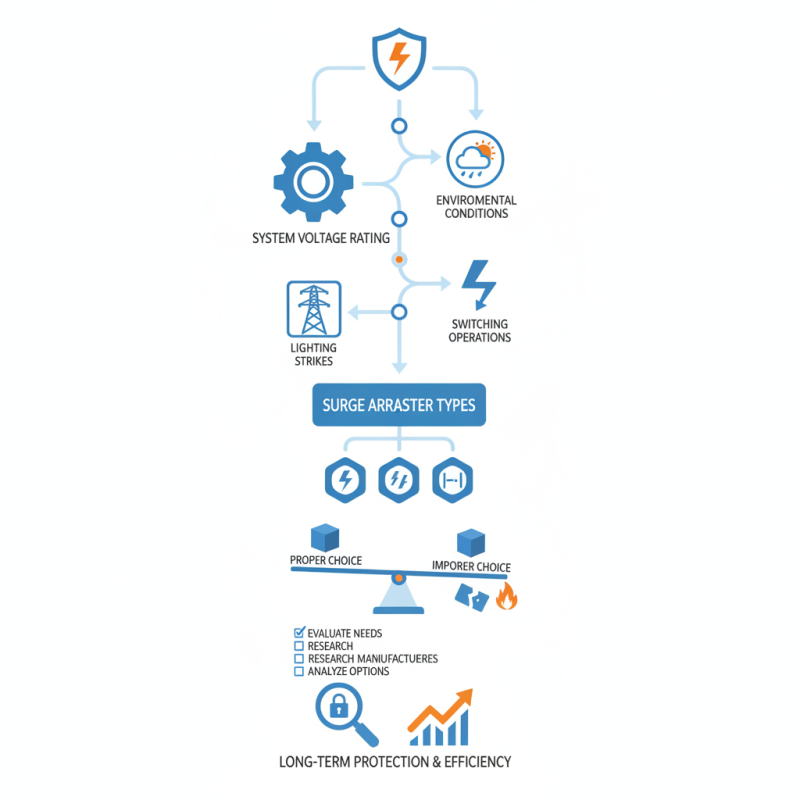
Choosing the right Surge Arrester High Voltage system is crucial for protecting your electrical infrastructure. Surge arresters are critical components that shield systems from voltage spikes. These spikes can originate from lightning strikes or switching operations. Selecting the appropriate surge arrester requires understanding various factors, including the system's voltage rating and environmental conditions.
Many people overlook the importance of surge arresters. They often assume that one size fits all. However, surge arresters come in different types for specific applications. Each type has its rating and features, making careful selection necessary. An improper choice may lead to device failure or safety hazards.
Evaluating the specific needs of your high voltage system is essential. Consider the surrounding environment and installation requirements. Research manufacturers and their products to establish reliability. This process may seem tedious, but it is vital for long-term protection and efficiency. Taking the time to analyze your options can prevent costly issues in the future.
Understanding High Voltage Systems and Their Protection Needs
High voltage systems are crucial for power transmission and distribution. They operate at voltages above 1000 V AC or 1500 V DC. Such systems are more vulnerable to surges caused by lightning or switching operations. According to industry reports, over 80% of equipment failures are due to voltage transients. Understanding their protection needs is essential for system reliability.
Surge arresters play a vital role in safeguarding high voltage systems. They redirect excess voltage away from sensitive equipment. Proper selection of surge arresters requires attention to their voltage ratings and energy absorption capabilities. Reports highlight that failure to choose adequate surge protection can result in costly downtime and repairs.
Yet, many engineers face challenges in understanding these requirements. Some may overlook the importance of surge arrester placement. Misplaced devices lead to inadequate protection. Regular assessments of existing surge protection systems are necessary. This proactive approach can mitigate risks and enhance system longevity.
Types of Surge Arresters Used in High Voltage Applications
When selecting surge arresters for high voltage systems, it is vital to understand the different types available in the industry. Surge arresters primarily fall into two categories: metal oxide varistors (MOVs) and silicon carbide (SiC) devices. MOVs are widely used due to their excellent clamping voltage characteristics. Recent studies indicate that MOVs provide a fast response to overvoltage transients, protecting equipment from damages.
SiC surge arresters are gaining traction as an alternative. Reports reveal that SiC devices offer higher thermal conductivity and better performance under extreme conditions. Their durability makes them suitable for long-term installations, reducing maintenance costs. In fact, data from industry analyses suggest that using SiC can improve system reliability by up to 30%.
Despite their advantages, the choice between MOV and SiC requires careful consideration. MOVs may fail under repetitive surges, while SiC devices, though robust, can be more expensive upfront. A thorough assessment of the specific application is critical. Consulting technical white papers and reliability studies can further aid in making informed decisions.
Surge Arrester Types for High Voltage Systems
Key Parameters to Consider When Selecting a Surge Arrester
Choosing the right surge arrester for high voltage systems is critical for ensuring protection against transients. When selecting a surge arrester, several key parameters should guide your decision-making process.
First, consider the voltage rating. This rating must exceed the maximum operating voltage of your system. If it's too low, the arrester may fail during a surge. The energy absorption capability is another vital factor. High energy absorption ensures the device can handle significant surges without damage.
Next, assess the response time. A faster response can minimize the damage to connected equipment. Look at the insulation level as well. Poor insulation can lead to failures, exposing your system to risks. Ensure the selected arrester has appropriate insulation ratings for your environmental conditions.
Lastly, durability matters. Not all surge arresters are built to last. A device's lifespan can vary under different conditions, affecting long-term reliability. Regularly review the performance and condition of installed devices. Some may not meet evolving system needs. It's essential to stay proactive in your evaluation.
How to Choose the Right Surge Arrester for High Voltage Systems? - Key Parameters to Consider When Selecting a Surge Arrester
| Parameter | Description | Recommended Value | Importance |
| Voltage Rating (Vrms) | The maximum continuous operating voltage. | 1.2 - 1.5 times the maximum system voltage | High |
| Surge Current Rating (Imax) | Maximum surge current the arrester can handle. | 10 kA - 100 kA | High |
| Clamping Voltage (Vc) | Voltage level at which the surge arrester starts conducting. | Varies by application; typically below system voltage | Medium |
| Response Time | Time taken to respond to a surge event. | <1 ns | High |
| Energy Absorption | The amount of energy the arrester can absorb during a surge. | Up to several hundred joules | Medium |
| Construction Type | The physical design and materials of the arrester. | Metal oxide, gas discharge tube, etc. | Low |
| Environmental Ratings | Suitability for various conditions (humidity, temperature). | IP rating (e.g., IP54, IP67) | Medium |
Evaluating Environmental and Operational Conditions for Surge Arresters
When selecting surge arresters for high voltage systems, evaluating environmental and operational conditions is crucial. Factors like temperature, humidity, and air quality can impact performance. High humidity can lead to corrosion, while extreme temperatures may affect insulation materials. It’s essential to assess the specific environment where the surge arrester will be installed.
Tips: Always consider the location's climate. If the area is prone to heavy rains or dust, choose devices that offer enhanced protection. In coastal regions, look for corrosion-resistant materials.
Operational conditions also matter. The frequency and nature of electrical surges vary by application. Industrial settings may experience more frequent surges compared to residential areas. Understanding the load switching frequency and system layout can aid in selecting the appropriate surge arrester.
Tips: Regularly monitor the system's performance. Unexpected surges may not always be easily identified, potentially leading to equipment damage. Conducting periodic assessments can help you determine if adjustments are necessary.
Installation and Maintenance Best Practices for Surge Arresters
Proper installation and maintenance of surge arresters are crucial in high voltage systems. According to the IEEE, surge protection can reduce equipment damage by over 50%. When installing surge arresters, it is essential to follow the manufacturer's specifications. Make sure to consider the operational voltage and current rating. Placing arresters too close or too far from the equipment can lead to inefficiencies. Adequate grounding is necessary. Poor grounding may result in inadequate surge suppression.
Regular maintenance is vital. Inspections should occur semi-annually. Technicians should check connections for corrosion or wear. An alarming statistic shows that nearly 30% of surge failures stem from installation errors. This underscores the need for skilled personnel. They should know local codes and standards. Documenting maintenance can assist in identifying patterns or recurring issues. Continuous education on evolving technologies helps teams stay prepared.
Surge arresters require a lifecycle approach. Many systems operate in harsh environments. For instance, temperature fluctuations can impact performance. Therefore, adjustments should be made based on climatic conditions. This requires ongoing evaluation of conditions. System operators must remain vigilant. Monitoring real-time data could prevent potential surge failures.

