BLOG

How to Choose the 2026 Best Organic Sweet Potato Powder?

Choosing the best Organic Sweet Potato Powder in 2026 requires more than comparing prices or choosing the brightest orange color. The powder should reflect careful farming, controlled processing, and dependable quality testing. Its intended use also matters, whether it is added to smoothies, bakery recipes, infant foods, or nutritional blends. A fine texture may dissolve smoothly in water, while a slightly coarse powder could preserve a more noticeable root flavor.

Look beyond attractive packaging. It can mislead. Verify the supplier’s organic certification, production location, batch number, and traceability records. Organic requirements differ between markets, so current certification documents should be checked rather than assumed. Ask for laboratory reports covering moisture, microbial safety, heavy metals, pesticide residues, and nutritional specifications. Independent testing offers stronger evidence than a sales claim alone.

Experienced buyers often examine the raw material source, drying temperature, color stability, and storage conditions. A sealed, light-resistant pouch can help protect flavor and reduce moisture absorption. The aroma should resemble mildly sweet, earthy sweet potato, not burnt starch or stale grain. However, no single feature proves quality. Even a reliable supplier may provide incomplete information, and this is worth questioning. Comparing several samples under identical conditions can reveal differences in sweetness, solubility, color, and aftertaste. The best choice is not always the cheapest or most vivid product. It is the Organic Sweet Potato Powder supported by transparent evidence, consistent performance, and responsible manufacturing practices.
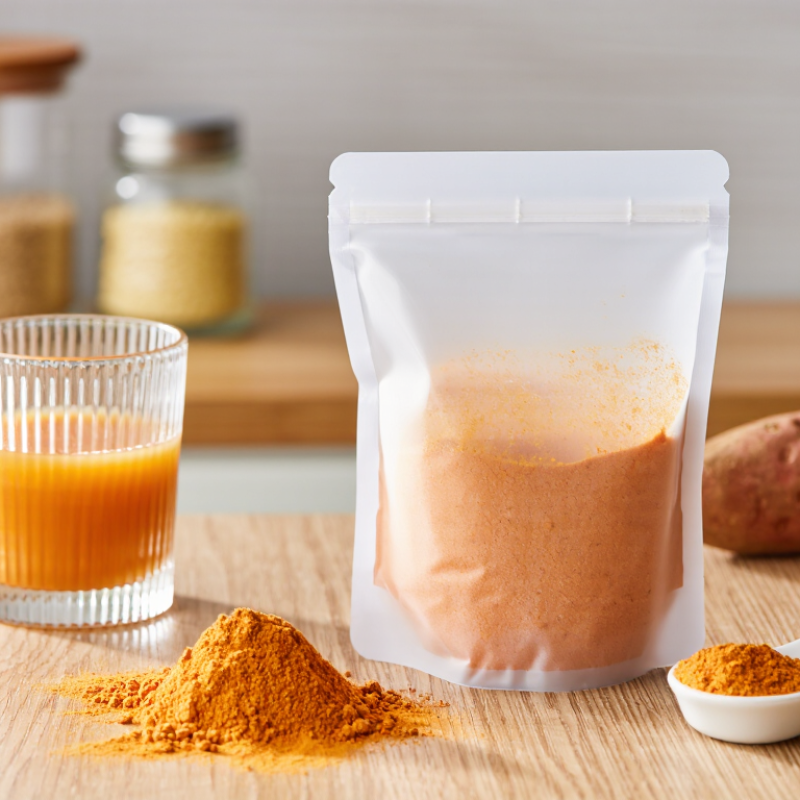
How to Choose the 2026 Best Organic Sweet Potato Powder?

Understanding Organic Sweet Potato Powder and Its Uses

How to Choose the 2026 Best Organic Sweet Potato Powder?

Organic sweet potato powder comes from cleaned, sliced, dehydrated sweet potatoes. It offers natural sweetness, warm color, and a mild earthy aroma. The powder may contain fiber, starch, and small amounts of naturally occurring nutrients. Its texture depends on drying temperature and milling. Lower heat can help preserve flavor, but it may increase production costs.

Different powders suit different uses. Fine powder blends smoothly into smoothies, sauces, and nutrition mixes. Coarser powder works well in bread, pancakes, noodles, and soup bases. It absorbs water quickly. Measure carefully.

Quality requires more than attractive color. A bright orange appearance once seemed persuasive, but that judgment can mislead. Check the ingredient list for one item: organic sweet potato. Review the organic certification and the certifying body for your market.

Reliable suppliers should provide batch information, origin details, moisture testing, and contaminant screening. Ask whether the facility manages allergen risks. Packaging should protect the powder from light and humidity. Clumping can signal poor storage, although it does not always prove contamination.

Taste a small sample before large-scale use. Notice bitterness, excessive smokiness, or a stale smell. Those details matter.

The “best” powder is not universal. Bakers may prefer deeper sweetness, while beverage makers often need fast dispersion and a clean finish. I would also compare water absorption between batches, because recipes can change unexpectedly. Organic does not automatically mean superior; careful verification still matters.

Checking Organic Certification and Ingredient Purity

How to Choose the 2026 Best Organic Sweet Potato Powder?

Checking Organic Certification and Ingredient Purity

When I assess organic sweet potato powder, I start with the certificate, not the front label. A green leaf image proves little. Check the certifier, certificate number, covered product, and expiration date. The document should match the supplier and processing site. It should also apply to the exact powder, not merely the farm.

Ingredient purity needs equal attention. The ingredient list should say only organic sweet potato, unless additives serve a clear purpose. Watch for maltodextrin, starch, coloring, sweeteners, or flow agents. Ask for a recent certificate of analysis from the actual batch. Useful results include pesticide screening, microbial counts, moisture, and heavy metals. Traceability matters too. A reliable supplier can identify the field, harvest, drying method, and lot number.

My practical mistake was trusting a clean-looking specification sheet without checking its date. It looked professional. It was outdated. That small oversight changed my review. Organic status does not automatically mean pure, fresh, or nutritionally superior. Powders can absorb moisture and develop a dull smell when poorly sealed. Look for opaque, food-grade packaging and clear storage instructions. I also compare color and aroma across batches, although natural variation is normal. Perfect uniformity may deserve questions, not praise. Choose evidence you can verify, and leave room for careful doubt.

Comparing Processing Methods, Nutrition, and Flavor

How to Choose the 2026 Best Organic Sweet Potato Powder?

Comparing Processing Methods, Nutrition, and Flavor

Processing method shapes both nutrition and flavor. USDA FoodData Central lists baked sweet potato at about 90 calories and 3.3 grams of fiber per 100 grams. Powder values become more concentrated after water removal. Therefore, compare serving sizes carefully. Freeze-drying usually protects color and delicate aroma better. Drum-drying often creates a deeper, cooked-sweet flavor. Spray-drying can produce fine particles, but may require carriers. The best method depends on your recipe.

Nutrition claims need evidence. The USDA Agricultural Marketing Service explains that organic certification controls production practices, not guaranteed nutrient superiority. Check the certificate, ingredient list, moisture level, and recent laboratory results. A credible supplier should provide testing for microbial safety, heavy metals, pesticide residues, and moisture. The 2024 World of Organic Agriculture report also shows continued global growth in organic farmland and sales, but market growth does not replace product testing.

Flavor is practical. A good powder should smell mildly earthy, like freshly opened sweet potato. It should dissolve without a dusty aftertaste. I have found that darker powders can taste more roasted, though color alone proves little. Some samples clump quickly in humid kitchens. That matters. Choose packaging with strong moisture protection and a clear production date. One detail is easy to miss: excessive heat may improve shelf stability while reducing fresh notes. A careful buyer should accept that compromise, not hide it.

Evaluating Quality, Packaging, Shelf Life, and Safety

Choosing the 2026 best organic sweet potato powder requires more than checking an organic logo. USDA organic standards require documented production, handling, and certification controls. Ask for the current certificate, harvest region, processing date, and a batch-specific certificate of analysis. A reliable test should cover moisture, microbial counts, heavy metals, pesticides, and allergens. Codex General Standard CXS 193-1995 provides international guidance for contaminants, although local limits may differ.

Packaging protects quality after processing. Use an intact, food-grade, moisture-barrier pouch or sealed container. Oxygen absorbers can help, but only when validated for the package size. A 2023 FAO report highlights how humidity and poor storage accelerate food deterioration, especially in dry products. Look for an oxygen level, seal inspection record, and clear lot code. Transparent information matters.

Shelf life should come from real-time or accelerated stability testing, not a convenient guess. The label should state storage temperature, humidity guidance, opening instructions, and a best-before date. Powder that clumps like damp sand, smells sour, or changes color deserves caution. It may still look acceptable under bright warehouse lights.

Food safety needs practical verification. FDA guidance identifies Salmonella and other pathogens as important hazards in low-moisture foods, where contamination can persist for long periods. Choose suppliers with HACCP-based controls, validated kill steps, and recall procedures. I would also request water activity results. A low number helps, but it does not prove safety alone. That detail is easy to overlook.

How to Choose the 2026 Best Organic Sweet Potato Powder? - Evaluating Quality, Packaging, Shelf Life, and Safety

Evaluation Dimension Recommended 2026 Benchmark Why It Matters How to Verify
Organic Certification Valid certification from an authority recognized in the intended sales market; certification scope should cover processing and handling. “Organic” claims must be supported by documented production and processing controls. Check the certificate number, validity period, product scope, and certifying-body database where available.
Ingredient Composition 100% organic sweet potato unless other ingredients are clearly declared. A single-ingredient powder is easier to trace and evaluate for allergens, additives, and authenticity. Review the ingredient list, allergen statement, processing aids, and product specification.
Moisture Content Typically about 4%–8% for a free-flowing dried powder; the supplier’s specification should state the exact limit. Excess moisture can cause caking, discoloration, flavor deterioration, and microbial growth. Request a recent certificate of analysis and confirm the testing method used.
Water Activity (aw) Preferably ≤0.60 for a shelf-stable dry powder, subject to the supplier’s validated specification. Water activity measures available water and is more useful than moisture alone for estimating microbial growth risk. Ask for a recent aw result and confirm that the sample was tested in a sealed, representative condition.
Color and Appearance Uniform powder with a natural cream, yellow, orange, or purple tone appropriate to the sweet potato variety; no visible mold, insects, or foreign matter. Uneven color, darkening, or visible particles may indicate oxidation, overheating, poor storage, or contamination. Inspect a representative sample under neutral light and compare it with the approved product specification.
Aroma and Taste Clean, characteristic sweet-potato aroma and flavor; no musty, rancid, smoky, chemical, or fermented notes. Off-odors can signal oxidation, moisture exposure, contamination, or unsuitable processing conditions. Conduct sensory evaluation using a retained sample and documented acceptance criteria.
Particle Size Common commercial specifications are approximately 60–100 mesh, depending on the application. Particle size affects dispersibility, mouthfeel, hydration rate, and consistency in bakery, beverage, and supplement applications. Request the sieve-analysis result and test a sample in the intended recipe.
Packaging Material Food-contact-grade, moisture-barrier packaging, such as a sealed multilayer pouch or lined fiber container. Dry powders readily absorb moisture and odors from the environment. Confirm food-contact compliance, barrier specifications, seal integrity, and compatibility with organic handling requirements.
Light and Oxygen Protection Opaque or light-resistant packaging with minimal headspace; oxygen-control measures may be used when validated. Light and oxygen can accelerate pigment fading, flavor loss, and oxidation. Check packaging structure, closure system, and whether the supplier has shelf-life validation data.
Package Sealing Continuous, intact heat seal or equivalent closure with no pinholes, leakage, swelling, or powder trapped in the seal. A defective seal can allow moisture, oxygen, insects, or microorganisms to enter. Inspect every shipment visually and use documented seal-integrity checks for quality control.
Unopened Shelf Life Often 18–24 months from manufacture when sealed and stored under the stated conditions; the validated date on the package takes priority. Shelf life depends on moisture, oxygen, light, packaging, processing, and storage temperature. Check the manufacture date, best-before date, lot code, and supporting stability or shelf-life records.
Storage Conditions Store sealed in a cool, dry, clean, odor-free place, protected from direct sunlight; follow the supplier’s specified temperature and humidity limits. Heat and humidity shorten shelf life and increase caking and quality deterioration. Review warehouse records and use first-expire, first-out stock rotation.
Microbiological Safety Each lot should meet applicable legal and customer limits for pathogens, aerobic plate count, yeast, and mold. Low moisture does not guarantee the absence of pathogens; some microorganisms can survive in dry foods. Request lot-specific microbiological results and verify the laboratory’s competence and test methods.
Heavy Metals and Contaminants Results should comply with the maximum levels required in the destination market for lead, cadmium, arsenic, pesticides, and other relevant contaminants. Root crops can be exposed to soil-related contaminants and agricultural residues. Request risk-based, periodic testing from an accredited laboratory and review the applicable regulations.
Traceability Clear lot or batch code linked to raw-material records, processing date, test results, and distribution history. Traceability supports efficient recalls and helps identify quality problems quickly. Perform a mock recall and confirm that one lot can be traced one step back and one step forward.
Allergen and Cross-Contact Control Documented allergen-control program with accurate labeling of shared-facility or cross-contact risks. Sweet potato is not one of the major allergens in many jurisdictions, but shared equipment can introduce other allergens. Review the allergen matrix, sanitation procedures, label statement, and verification records.
Labeling Compliance Label should state product name, organic status, net quantity, lot code, date marking, storage instructions, origin where required, and responsible operator details. Complete labeling supports legal compliance, consumer safety, and product traceability. Compare the label with the destination market’s food-labeling and organic-claim requirements.

Note: Exact limits vary by processing method, certification program, product specification, and destination-market regulations. Always verify current legal requirements and lot-specific test results before purchase.

Choosing the Best Product for Your Dietary and Cooking Needs

How to Choose the 2026 Best Organic Sweet Potato Powder?

Choosing the Best Product for Your Dietary and Cooking Needs

The best organic sweet potato powder depends on how you plan to use it. In practical kitchen testing, fine powder blends smoothly into oatmeal, soups, smoothies, and baked goods. A slightly coarser powder may add more texture to dough or seasoning mixes. Check the ingredient list carefully. It should clearly identify sweet potato as the main ingredient, without unnecessary sweeteners, colors, or fillers. For gluten-free or allergen-sensitive diets, verify the certification and processing information. Organic status alone does not confirm allergen-free production.

Tips: Match the powder to your routine. Choose plain powder for savory recipes and flexible meal planning. Look for sealed packaging, a clear production date, and storage instructions. A dry, fresh-smelling powder is preferable. Avoid products with clumps, dampness, or an unusual odor. Small details matter.

Measure gradually when cooking. Sweet potato powder absorbs moisture, so one tablespoon can change dough texture quickly. I once added too much to pancakes and needed extra milk. That mistake was useful. Start with a small amount, then adjust the liquid. For smoothies, blend it with yogurt or milk before adding ice. For soups, whisk it into warm stock to reduce lumps. If your diet requires strict ingredient control, keep a simple recipe record. Taste, texture, and digestion can vary from person to person.

How to Choose the 2026 Best Organic Sweet Potato Powder?

Use this USDA reference profile to understand the natural nutrient composition of sweet potato before comparing organic powder labels. Because powder is dehydrated, its nutrients per 100 g may be more concentrated; always check the serving size and certification details on the product label.

Reference: USDA FoodData Central, raw sweet potato, unprepared, values per 100 g. When choosing a powder, prioritize a clearly stated organic certification, one-ingredient formulation, no unnecessary additives, and nutrition values that match your dietary and cooking needs.