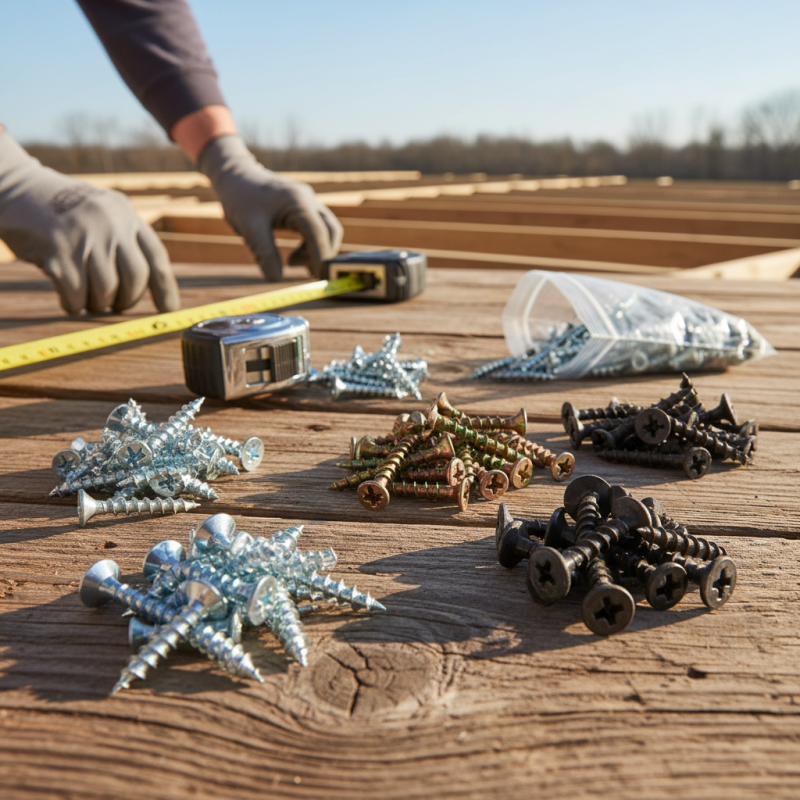
How to Choose the Perfect Deck Screw for Your Project?
When embarking on a decking project, choosing the right deck screw is crucial. Not all deck screws are created equal. Today, several types are available, each designed for specific needs and materials. Understanding these differences will lead to better choices.
Consider the material of your deck. Wood, composite, and metal require different screws. Stainless steel screws offer durability but can be pricey. Meanwhile, coated screws may prevent corrosion but vary in lifespan. It’s essential to weigh the pros and cons of each option carefully.
Selecting the perfect deck screw can feel overwhelming. Many find themselves confused by the multitude of choices. A poor choice can lead to structural issues over time. Questions often arise: Is the screw long enough? Will it resist rust? Taking the time to research is necessary.
Understanding Deck Screws: Types and Materials
When selecting deck screws, it's vital to understand the different types and materials available. Stainless steel screws offer excellent corrosion resistance, making them ideal for coastal areas. These screws maintain their structural integrity even in harsh environments. On the other hand, galvanized screws can be a cost-effective alternative for decks that are not exposed to extreme weather.
Another important factor is screw length. A longer screw provides better grip, but it can also lead to splitting the wood. Choosing the right size is critical. Many builders often overlook the importance of screw head types, such as flat or oval. The head type affects how flush the screw sits against the surface.
Material selection also matters. Polymer-coated screws offer a good balance between cost and performance. However, they may chip or wear down over time. It's essential to consider the specific needs of your project. Do not rush through the decision. Take time to research and evaluate your options carefully. This ensures your deck will not only look great but also stand the test of time.
Factors to Consider When Choosing Deck Screws
Choosing the right deck screw is crucial for any building project. Several factors influence the decision-making process. Understand the material of your deck. Wood, composite, and metal decks require different screw types. Select screws that will perform well with your specific material to ensure longevity.
Corrosion resistance is key. Deck screws are exposed to harsh weather conditions. Stainless steel screws resist rust better than others. If using treated lumber, choose suitable materials to avoid chemical reactions. Be mindful of the coating as well. Some coatings offer added protection against the elements.
Tip: Consider the screw length. It should penetrate at least one and a half inches into the structural support. A too-short screw may not provide adequate support. A too-long screw can split the wood.
Also, evaluate the head type. Flat heads sink into the surface, while round heads provide a stronger hold. Ensure the screw can accommodate your chosen deck design. Lastly, always read user reviews for insight on performance and durability. Making an informed choice is crucial.
How to Choose the Perfect Deck Screw for Your Project?
| Screw Material | Corrosion Resistance | Length | Diameter | Head Type |
| Stainless Steel | Excellent | 2.5 inches | #8 | Flat |
| Carbon Steel | Good (Coated) | 3 inches | #10 | Round |
| Brass | Moderate | 2 inches | #6 | Hex |
| Coated Steel | Good | 2.5 inches | #8 | Pancake |
| Aluminum | Fair | 2 inches | #8 | Flat |
Matching Deck Screws to Your Project's Environment
Choosing the right deck screw for your project requires careful consideration of the project's environment. Different environments expose your deck to various elements. For example, coastal areas have high humidity and salt exposure. In these locations, screws made of stainless steel can offer excellent corrosion resistance. They are ideal for projects near the ocean.
In contrast, if you're working in a dry environment, using coated screws may be sufficient. These screws are designed to resist rust and wear, but they offer less durability than stainless steel. It’s essential to assess the longevity of your project before making a decision.
Don't overlook the impact of temperature fluctuations. Extreme heat or cold can affect materials. Choosing screws that can handle these changes is crucial. Pay attention to the materials you use. Wood types also play a significant role. Certain woods may require specific screws to avoid splitting. Reflect on these factors carefully to enhance the durability of your project.
Size and Length: Finding the Right Deck Screw for Stability
Choosing the right size and length of deck screws is crucial for ensuring the stability of your project. The length of a screw should match the thickness of the materials you plan to connect. A screw that is too short will not provide enough grip, while one that is excessively long can split the wood. Generally, a minimum of 1.5 times the thickness of the materials is a reasonable guideline.
When it comes to size, consider both the diameter and the head style of the screw. A thicker screw can handle more load but may also require pre-drilling. If using hardwood, this can sometimes be necessary to avoid splitting. Additionally, the head style—whether flat, round, or others—affects how well the screw sits in the material. A round head may not provide a flush finish, which could be a concern for appearance-driven projects.
Take the time to weigh your options. It’s essential to assess the specific requirements of your project. Common mistakes include overlooking the type of wood or failing to consider environmental factors. For example, exterior projects often demand corrosion-resistant screws. Mistakes in these areas can lead to structural weaknesses. Make sure to reflect on these aspects as you finalize your choices to ensure a durable and stable deck.
Installation Tips for Optimal Performance of Deck Screws
When selecting deck screws, installation plays a crucial role in performance. For optimal results, consider the right drill bit. Using the wrong bit can lead to stripped heads or uneven penetration. Research shows that nearly 30% of deck installation failures stem from improper fastening techniques.
Proper spacing is essential. Experts recommend maintaining a distance of 16 inches between screws. This helps to distribute weight evenly and prevents warping. Additionally, avoid over-tightening, as this can cause the wood to split. Remember, wood can expand and contract, so a little flexibility goes a long way. A study indicated that decks installed with adequate spacing last, on average, 20% longer than those installed too tightly.
Don’t forget about pre-drilling. Pre-drilling reduces the chance of splitting, especially in harder woods. Reports indicate that pre-drilling can increase screw holding power by up to 50%. This is crucial for ensuring the deck withstands the test of time, weather, and use. Emphasizing these installation tips can significantly enhance the durability and safety of your deck.