What is Food Xray Technology and How Does It Work?
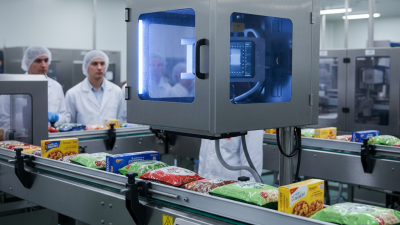
Food Xray technology is revolutionizing the food industry. This method uses advanced imaging techniques to detect contaminants and foreign objects in food products. According to a recent report by Market Research Future, the global food Xray market is projected to reach $1.2 billion by 2025, reflecting a growing demand for food safety solutions.
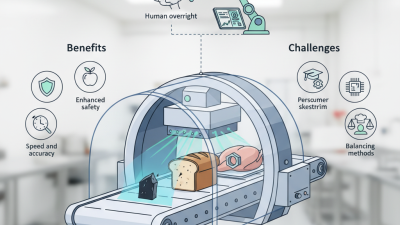
Industry expert Dr. Emily Carter states, "Food Xray technology is essential for ensuring consumer safety and enhancing product quality." This technology allows manufacturers to inspect food items without direct contact. It can identify metal, glass, and plastic contaminants, offering a non-destructive approach to quality control. However, challenges remain in terms of cost and the need for continuous innovation.
Despite its benefits, adoption rates vary across companies. Smaller producers may face financial barriers to implementing food Xray systems. As the industry evolves, addressing these issues will be vital. Consumers demand safety, and food Xray technology plays a key role in meeting those expectations. The food industry must reflect on how to integrate such advanced solutions effectively.
What is Food X-Ray Technology?
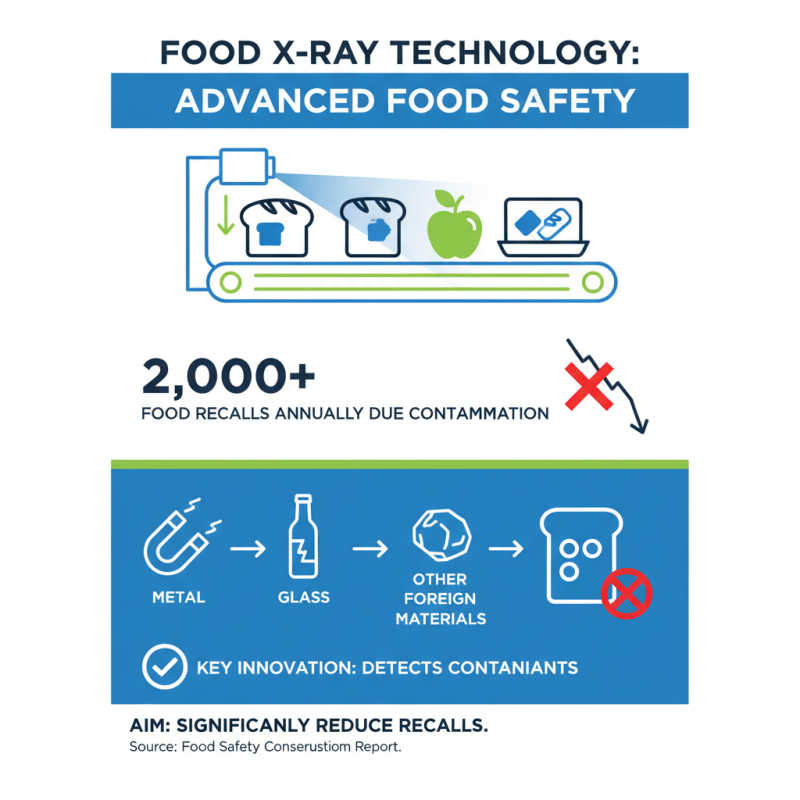
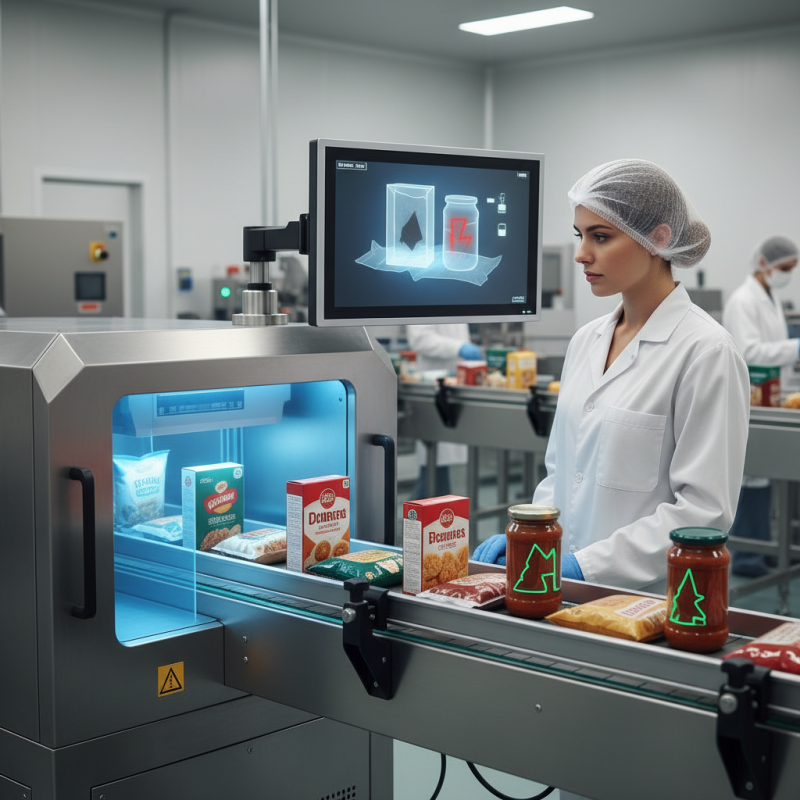
Food X-ray technology is a crucial innovation in food safety. It employs high-energy X-rays to inspect products for foreign contaminants. These contaminants can include metal, glass, and other materials that pose health risks. A report by the Food Safety Consortium states that over 2,000 food recalls annually are due to contamination. This technology aims to reduce those numbers significantly.
The process works by passing food items through an X-ray beam. Detectors capture the X-ray images. Unique algorithms analyze the data in real-time. Anomalies in density identify foreign objects. Studies show that food X-ray systems can detect contaminants as small as 0.5 mm. This accuracy is vital for maintaining consumer trust.
However, the technology is not without challenges. Implementation costs can be high for smaller operations. Training staff to operate the machinery effectively is essential but often overlooked. Moreover, there may be limitations with certain product types, like those with high moisture content. Despite these hurdles, food X-ray technology continues to evolve, offering better safety and quality in food production. More industry players are expected to adopt these technologies, reflecting a growing commitment to safety and quality standards.
The Science Behind Food X-Ray Technology
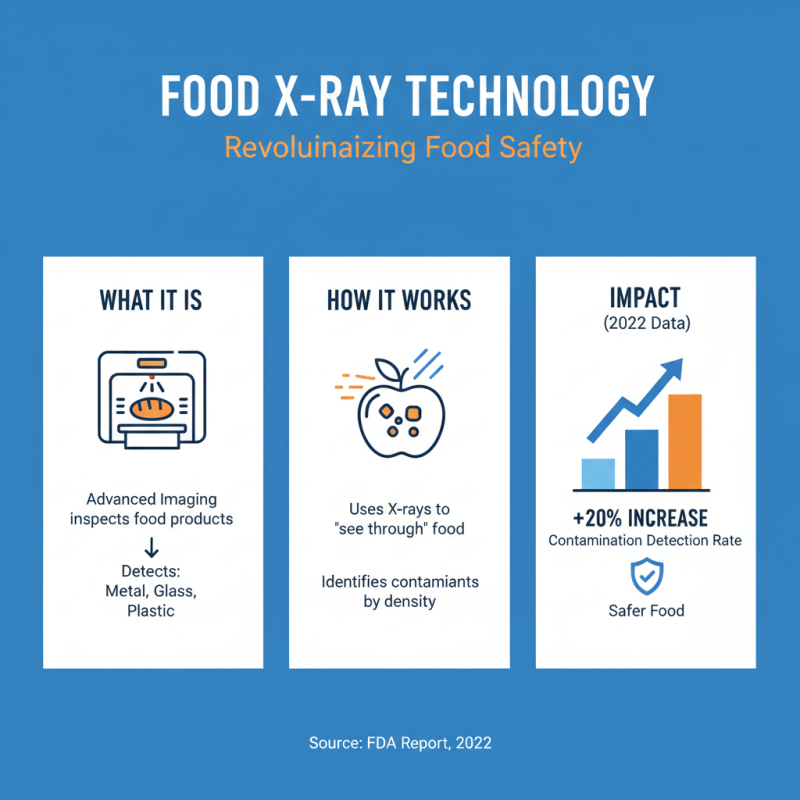
Food X-ray technology is a revolutionary method used in the food industry. It employs advanced imaging techniques to inspect food products. This technology detects contaminants like metal, glass, and plastic. A report from the Food and Drug Administration with data from 2022 indicates a 20% increase in contamination detection rates due to this technology.
The science behind food X-ray technology is fascinating. It utilizes X-rays to examine the internal structures of food without disrupting its packaging. The images produced allow inspectors to spot anomalies. Studies show that 30% of food recalls are due to contamination issues. X-ray inspection effectively reduces this risk. However, the technology isn't foolproof. Occasionally, false positives occur, which can lead to unnecessary waste.
Despite its benefits, challenges remain. For example, food density can affect the clarity of the X-ray images. A report from the Institute of Food Technologists highlights that certain food types yield mixed results. Understanding these limitations is vital. Investing in ongoing research will enhance accuracy and efficiency in the future. It’s essential to balance innovation with practicality.
How Food X-Ray Technology Works
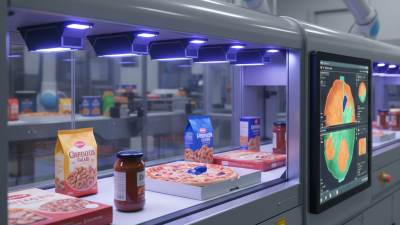
Food X-ray technology is revolutionizing the way we ensure food safety. This technology uses X-rays to detect foreign objects in food products. It scans the items as they move along the production line. High-energy X-ray beams penetrate packaging and reveal hidden contaminants. This process is rapid, often taking only seconds per item.
Reports show that food contamination can lead to significant economic losses, estimated at billions annually. X-ray technology can identify metals, glass, and other materials quickly. Data indicates that implementing this technology can reduce contamination incidents by up to 50%.
Tip: Regularly calibrate your X-ray machines. Ensuring that your equipment operates at peak performance is essential for accurate results.
Food X-ray technology also contributes to reducing waste. By identifying issues before products reach the market, it minimizes recalls. However, data suggests that not all facilities are using this technology efficiently. Training staff on proper usage is crucial for maximizing its benefits.
Tip: Invest in training sessions for your team. Understanding the nuances of X-ray technology can enhance overall efficiency.
Applications of Food X-Ray in the Food Industry
Food X-ray technology plays a significant role in the food industry. It uses detailed imaging to detect foreign objects in food products. According to a report by the Food Safety Network, up to 20% of food recalls occur due to foreign material contamination. This highlights the need for effective detection methods.
One key application is in quality control. Manufacturers employ X-ray systems to inspect packaged foods before they reach consumers. The technology can identify metal, glass, and plastic contaminants. In 2022, a study indicated that X-ray systems helped reduce contamination-related recalls by 30%. This improvement can lead to safer products and fewer financial losses.
Another application is in portion control. Food X-ray can assess product weight and size. Inaccurate weights can lead to regulatory issues and customer dissatisfaction. A survey revealed that 25% of consumers check product weights before purchase. Ensuring accuracy is crucial for brand loyalty and compliance. However, some companies may struggle with integration and costs. Balancing technology adoption with operational efficiency remains a challenge for many.
Food X-Ray Technology Applications in the Food Industry
Advantages and Limitations of Food X-Ray Technology
Food X-ray technology plays a vital role in modern food safety. It provides advanced detection capabilities for foreign objects in food products. This technology is known for its ability to identify metals, glass, and some types of plastics. Reports indicate that nearly 3% of all food recalls are due to contamination by foreign objects. Such figures underscore the necessity for precise detection methods in food safety practices.
One significant advantage of food X-ray technology is its non-destructive nature. It allows for detailed inspection without altering the product. Additionally, studies show that over 90% of producers finding foreign objects are satisfied with the efficiency of X-ray systems. However, it does have limitations. For instance, it may struggle with certain densities or complex packaging. Some recent evaluations highlighted detection failures for specific rubber materials.
Moreover, the investments required for X-ray machines can be substantial. Many smaller manufacturers may find it financially challenging to implement this technology. Despite the high potential benefits, not all food items are suitable for X-ray inspection. The varying densities and compositions can affect the accuracy of readings. The industry must continuously evaluate these aspects to improve overall effectiveness.