How to Optimize Aeration Process in Wastewater Treatment?
The Aeration Process In Wastewater Treatment is crucial for effective treatment and environmental sustainability. According to a report by the U.S. Environmental Protection Agency, aeration accounts for nearly 50% of the energy consumption in wastewater treatment plants. Optimizing this process can lead to significant energy savings. Improving aeration efficiency not only reduces operational costs, but also minimizes carbon emissions, aligning with global sustainability goals.
Efficiency in aeration systems can significantly enhance wastewater treatment outcomes. Studies show that optimizing aerator design and process control can improve oxygen transfer efficiency by as much as 30%. However, many facilities still rely on outdated equipment and methods. This reliance can hinder performance and increase operational expenses. The need for a shift in strategy is evident as wastewater treatment demands evolve.
As urban populations grow, the need for efficient wastewater treatment becomes more critical. Communities face increasing regulatory pressure to improve treatment standards. There is a pressing need to reassess and refine the aeration process in wastewater treatment systems. This reassessment can ensure systems meet current and future demands while promoting public health and environmental integrity.
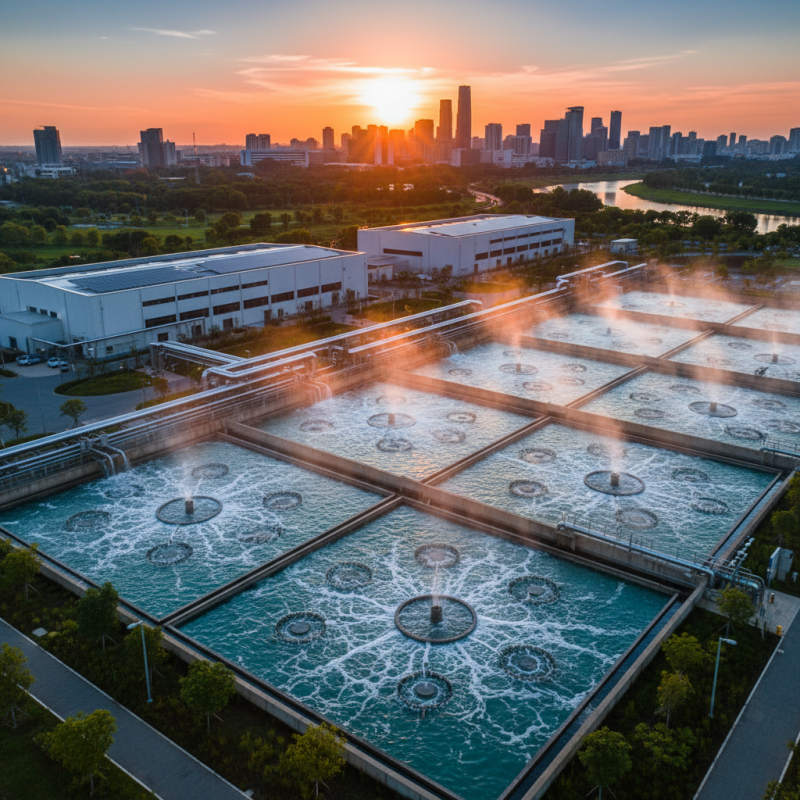
Understanding the Role of Aeration in Wastewater Treatment Systems
Aeration plays a critical role in wastewater treatment systems. It promotes the breakdown of organic matter by supplying oxygen to microorganisms. These microorganisms thrive and efficiently decompose waste in aerobic conditions. The effectiveness of this process directly impacts treatment performance and environmental compliance.
Optimizing aeration can be challenging. Factors like tank design, airflow rate, and energy consumption require careful consideration. Finding the right balance is crucial. For instance, too much aeration can lead to excessive energy costs. Conversely, too little oxygen can result in incomplete treatment. These situations demand ongoing adjustments and monitoring.
Tips for Optimization: Regularly assess the aeration equipment for efficiency. Apply flow meters to control and adjust the airflow accurately. Maintenance routines help prevent unexpected failures, ensuring smooth operation. Also, consider using dissolved oxygen sensors to fine-tune aeration levels. This allows for precise control, enhancing performance while reducing energy usage. Remember, optimization is an ongoing process, not a one-time fix.
Types of Aeration Techniques Used in Wastewater Treatment
Aeration in wastewater treatment is essential for promoting biological processes. There are various techniques, each with distinct advantages and challenges. One widely used method is diffused aeration, which employs a network of air diffusers placed at the bottom of a treatment tank. According to the Water Environment Federation, this technique can achieve more than 90% oxygen transfer efficiency. However, it requires regular maintenance to prevent clogging.
Another popular approach is mechanical aeration. This method involves surface aerators or mixers that agitate the water, enhancing oxygen uptake. Research indicates that mechanical aeration systems can improve energy efficiency by up to 30% when adjusted properly. Yet, these systems often depend on electrical power, posing risks during outages.
Lastly, fine bubble aeration is gaining traction, particularly in municipal plants. This technique produces smaller bubbles, increasing the contact surface area and maximizing oxygen transfer. Studies from various environmental agencies highlight its potential to reduce operational costs significantly. Despite these benefits, fine bubble systems are susceptible to fouling, which requires careful management. Balancing these factors is crucial for optimizing aeration processes in wastewater treatment.
Optimization Strategies for Aeration Efficiency
Aeration is a critical process in wastewater treatment. Optimizing this process can lead to significant improvements in efficiency and cost savings. Key strategies involve monitoring and adjusting aeration rates based on real-time data. Implementing sensors to track dissolved oxygen levels ensures that only the necessary amount of air is used.
Another effective method is to design aeration systems with flexibility. This allows for adjustments based on varying water quality. Experimenting with different aeration techniques, such as fine bubble diffusers, can enhance oxygen transfer rates. Regular maintenance of equipment is essential to prevent inefficiencies due to wear and tear.
However, optimization is not always straightforward. Operators might encounter challenges related to fluctuating inflow and weather patterns. Such factors can disrupt aeration efficiency. A reflective approach to data analysis and system adjustments is crucial. Continuous learning and adaptation help refine the aeration process over time.
Monitoring and Measuring Aeration Performance
Efficient aeration is crucial for effective wastewater treatment. Monitoring and measuring aeration performance ensures the treatment process is optimized. A 2021 report by the Water Environment Federation noted that inadequate aeration can lead to increased energy costs and poor effluent quality.
Various methods exist for monitoring aeration efficiency. Dissolved oxygen (DO) levels are a key metric. Regular testing of DO can help operators adjust air supply to match biological needs. It’s essential to maintain optimal DO levels; studies suggest that maintaining DO above 2 mg/L enhances microbial activity, leading to better treatment outcomes. However, measuring DO alone can be misleading without additional parameters.
Flow rate and pressure measurements also play a role. A 2020 study highlighted that variable-speed blowers can reduce energy use by up to 50%. Operators must analyze these data points frequently. Operators often overlook this aspect, leading to wasted resources and higher operational costs. Regular calibration of measuring instruments is vital to ensure reliability. Inadequate checks can invite inaccuracies, leaving the system underperforming. Balancing these metrics demands attention to detail and a commitment to ongoing evaluation.
Challenges and Solutions in Aeration Process Optimization
Optimizing the aeration process in wastewater treatment poses several challenges. One significant hurdle is achieving the right balance of oxygen levels. If the oxygen is too low, it hampers microbial activity, leading to poor treatment. Conversely, excessive aeration can increase energy costs. Finding this balance is key to an efficient treatment process.
Pumping systems also present challenges. Inefficient pumps can waste energy. They may not deliver the desired air volume or pressure, causing operational inconsistencies. Regular maintenance and calibration of these systems are essential.
Tips: Monitor energy consumption closely. Small adjustments can lead to significant savings. Use real-time monitoring tools to track system performance. Engage your team in training sessions focused on aeration optimization. This investment can lead to better practices and outcomes.
Another area of concern is the formation of biofilms. Over time, biofilms can clog aeration devices. This situation reduces effectiveness and complicates maintenance. Regular inspections can help identify issues before they escalate. A proactive approach keeps systems running smoothly and responsibly.

