Round Filter Press Highlights at 139th Canton Fair Are You Ready?
As the 139th Canton Fair approaches, anticipation builds among manufacturers and buyers alike. This prestigious event will showcase innovations, including the Round Filter Press. Designed for efficient liquid-solid separation, this technology streamlines processes in various industries. Attendees can expect to find cutting-edge machinery that enhances productivity and resource management.
The Canton Fair offers a unique platform for networking and discovering new products. Buyers can leverage AI-driven search features, quickly identifying suppliers that meet specific qualifications. Visitors can navigate the expansive exhibition areas, maximizing their time. The introduction of smart navigation will undoubtedly improve the overall experience.
While excitement surrounds the Round Filter Press and similar technologies, some challenges remain. Not every buyer may find the right fit immediately. The vastness of options requires careful consideration and reflection. It's essential to approach each opportunity with an open mind, ready to adapt and learn from others in the industry.
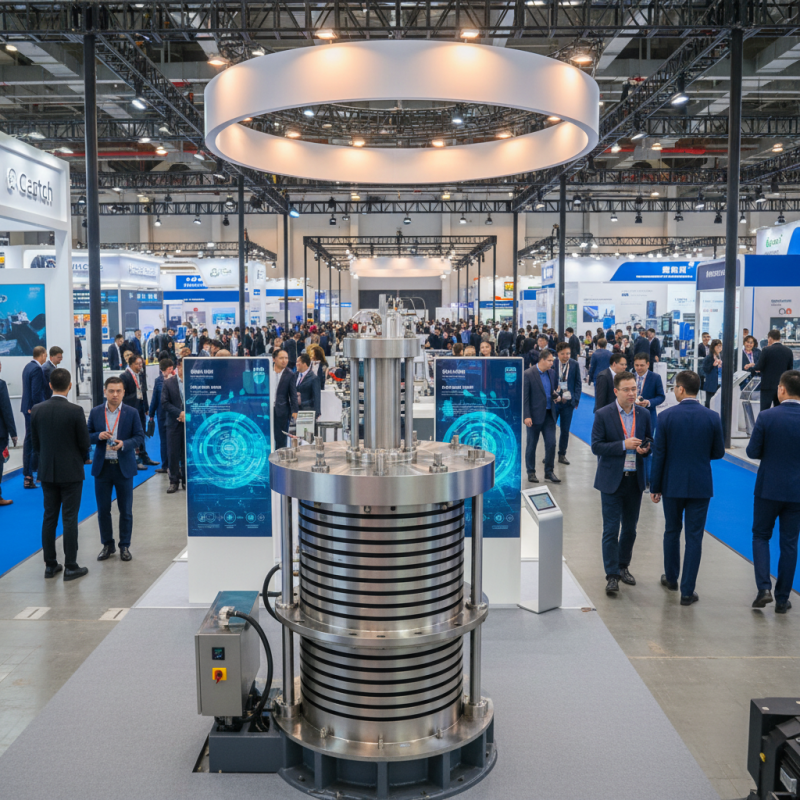
Round Filter Press: An Overview of Its Functionality and Applications
Round filter presses have become essential in various industries. They are especially popular in wastewater treatment, food processing, and chemical production. In fact, according to a recent industry report, the demand for filter presses is expected to grow by 5% annually over the next five years. This rise is largely due to their ability to efficiently separate solids from liquids.
These machines operate by forcing a slurry through a series of filter plates. The plates capture solids while allowing clean liquid to pass through. In many applications, this ensures that the final product meets strict quality standards. However, the effectiveness of these machines can vary. Issues like uneven slurry feeding can affect performance significantly.
Interestingly, many operators encounter challenges with maintenance and operation. Regular cleaning is crucial. Neglecting this can lead to reduced efficiency and higher operating costs. Real-world data shows that a well-maintained filter press operates up to 20% faster than a neglected one. Users should reflect on their operational practices to avoid costly downtimes. Balancing efficiency with maintenance may not always be straightforward.
Key Features of Round Filter Presses Showcased at the 139th Canton Fair
The 139th Canton Fair has drawn significant attention to round filter presses. These machines are essential in industries like wastewater treatment, pharmaceuticals, and food processing. Their efficiency and space-saving designs make them attractive for manufacturers.
Key features highlighted at the fair include enhanced filtration capacities and automation options, which reduce labor costs. According to a recent industry report, the global filter press market is projected to reach $3 billion by 2027. This growth indicates a rising demand for advanced filtration technologies.
Tips: Consider evaluating your filtration needs carefully. Not every industry requires high-capacity machines. Selecting the right model can improve efficiency and cost-effectiveness.
It's also important to note that while round filter presses can offer many advantages, they may not suit every application. They require regular maintenance to ensure optimal performance. Inadequate upkeep can lead to issues that negate their benefits. Assessing the long-term requirements of your processes can lead to better decisions.
Industry Statistics: The Growing Demand for Filter Press Technologies
The demand for filter press technologies continues to rise. Industries recognize the critical need for efficient liquid-solid separation processes. As sustainability becomes a priority, companies seek reliable methods to handle waste and recover valuable resources. This trend is evident at exhibitions like the Canton Fair.
Statistics point to a growing adoption of these technologies across various sectors. Water treatment facilities are upgrading their systems to enhance filtration efficiency. Similarly, food processing companies are investing in filter presses for better quality control. Even the mining industry is exploring innovative filtration solutions. Yet, many businesses still struggle with outdated equipment.
The challenge lies in staying updated with technology advancements. Many companies hesitate to invest in new systems. They fear initial costs outweigh long-term benefits. However, those who embrace innovation will likely lead the market. Creating sustainable practices should be a focus for everyone. There is always room for improvement in techniques and strategies used today.
Comparative Analysis: Round Filter Press vs. Traditional Flat Plate Presses
Round filter presses are gaining attention at the 139th Canton Fair. They offer distinct advantages over traditional flat plate presses. Their design allows more efficient filtration. This unique shape enhances the cake release process. Operators often report reduced downtime. That’s crucial for meeting tight production schedules.
When analyzing the two types, it’s important to consider efficiency. Round filter presses generally handle slurries more effectively. This means less material loss. In industries like food processing or wastewater treatment, that’s a big deal. The round shape provides better distribution of pressure, ensuring uniform filtration. However, initial setup costs may be higher.
Tips: Always evaluate your specific needs before making a choice. Consider space limitations in your facility. Make sure to test both types where possible. Some users might find the round design tricky to manage due to its larger footprint. Learning curves can present unexpected challenges as well. Ensure your team is adequately trained to handle this equipment.
Round Filter Press vs. Traditional Flat Plate Presses
| Feature | Round Filter Press | Traditional Flat Plate Press |
| Design | Cylindrical shape for better space efficiency | Flat plates with more bulk and space consumption |
| Filtration Efficiency | Higher due to better cake compactness | Can be lower with potential for uneven cake formation |
| Maintenance | Generally requires less maintenance | More maintenance due to complex components |
| Production Rate | Higher throughput due to faster cycle times | Slower due to longer cycles and manual operations |
| Cost | Initial investment may be higher | Typically lower initial cost |
| Applications | Ideal for a variety of slurry types | Best suited for specific applications |
| Footprint | More compact design | Larger area needed for installation |
| Adaptability | Easily adjustable for different materials | Less flexible; requires specific configurations |
Innovations in Filter Press Design Introduced at the Canton Fair
The 139th Canton Fair showcased exciting innovations in filter press design. Advances in filtration technology were significant, marking a shift in industry standards. The fair highlighted designs that improve efficiency and reduce filtration time by up to 30%.
New materials were introduced, enhancing the durability of filter presses. This could lead to lower maintenance costs. It's essential to consider that while new materials are promising, they may also present challenges. Manufacturers must ensure these innovations meet rigorous testing standards.
Statistics reveal that the global filter press market is expected to grow at a rate of 6.3% annually, reaching $2.5 billion by 2027. This growth reflects a rising demand for effective solid-liquid separation solutions. However, the pressure to innovate can sometimes lead to oversight in application feasibility. Companies must balance new designs with practical performance to avoid common pitfalls.

