BLOG
Top 10 Power Inductor Suppliers Worldwide
Power Inductors are becoming essential components in smartphones, electric vehicles, data centers, and advanced industrial equipment. They store and release energy while reducing voltage ripple in compact power circuits. This role becomes more demanding as processors require higher current, smaller footprints, and tighter thermal control.
Recent industry studies show strong, but uneven, expansion. MarketsandMarkets projects continued growth in the global power inductor market through 2028, driven by automotive electrification, 5G infrastructure, and cloud computing. Grand View Research also identifies electric vehicles and consumer electronics as major demand centers. However, market estimates vary because analysts define “power inductor” differently. That limitation deserves attention.
Pierre Cambou, Principal Analyst at Yole Group, has stated, “Power delivery is no longer a supporting function; it is becoming a system-level performance constraint.” His observation reflects what engineers see inside modern equipment: hotter circuit boards, tighter component spacing, and faster switching frequencies.
This Top 10 Power Inductor Suppliers Worldwide overview examines manufacturers through practical criteria. These include inductance stability, saturation current, thermal performance, qualification records, production scale, and application support. Supplier rankings should not rely on revenue alone. A large catalog cannot replace consistent performance under load.
Data from Fortune Business Insights and Research and Markets indicates that automotive electronics and renewable-energy systems will remain important growth engines. Yet supply-chain disruptions, raw-material costs, and regional manufacturing differences can change purchasing decisions quickly. The comparison therefore includes both global reach and engineering reliability. It may not provide a perfect ranking. Few rankings do.
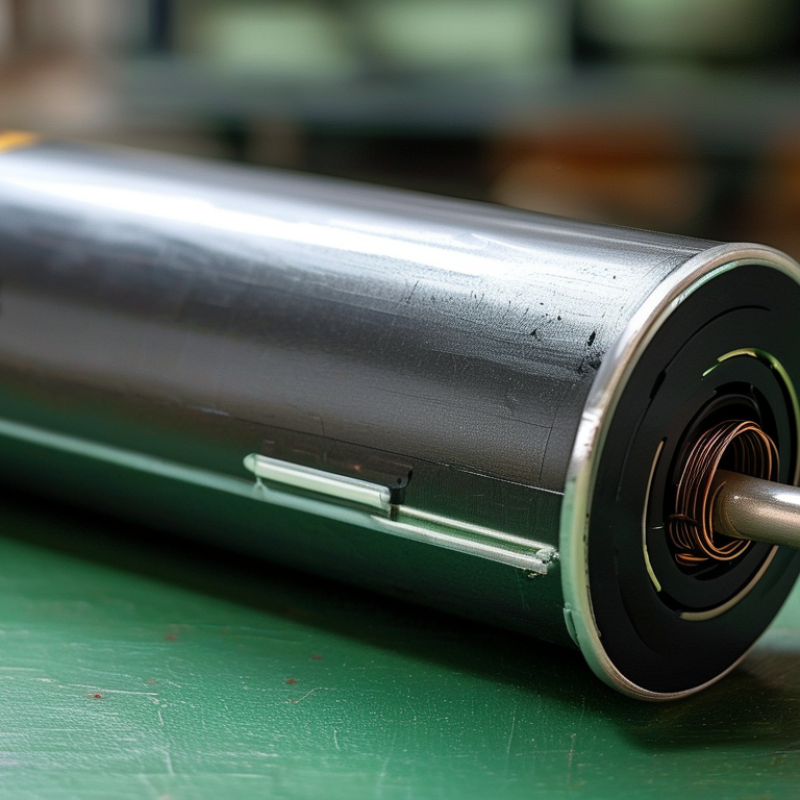
Definition and Role of Power Inductors in Electronic Systems
Top 10 Power Inductor Suppliers Worldwide
A power inductor is a passive magnetic component that stores energy in a magnetic field. It resists sudden changes in current. In a buck converter, the inductor receives pulsed energy from a switching transistor. It then releases smoother current to the load. It stores energy.
This action reduces ripple, protects sensitive circuits, and improves voltage regulation. Engineers select inductors by inductance, saturation current, rated current, resistance, and thermal performance. A compact 4.7 µH inductor may look insignificant on a circuit board. However, excessive current can saturate its core, causing efficiency losses and unexpected heating. Real boards rarely behave ideally. Layout, airflow, switching frequency, and nearby components also affect performance.
Demand is expanding with power conversion in vehicles, industrial equipment, telecom systems, and portable electronics. The International Energy Agency reported that global electric car sales exceeded 17 million units in 2024, representing more than 20% of new-car sales. This trend increases the need for reliable inductors in battery management and onboard charging systems. WSTS reported global semiconductor sales of approximately $627.6 billion in 2024, a 19.1% annual increase. That growth supports broader demand for power-management components, although it does not measure inductor sales directly. Market forecasts should therefore be read carefully. Different reports define “power inductor” differently, and their estimates are not always comparable.

Key Factors for Comparing Global Power Inductor Suppliers
Comparing the top 10 power inductor suppliers requires more than checking catalog prices. Electrical performance comes first. Engineers should compare inductance tolerance, saturation current, DC resistance, core loss, and temperature rise under identical test conditions. A component rated at 10 A may fail earlier in a compact enclosure if airflow is limited.
According to MarketsandMarkets, the global power inductor market is projected to grow at a compound annual rate above 5% through the late 2020s. This expansion reflects demand from automotive electronics, data centers, renewable-energy systems, and industrial converters. Supplier capacity therefore matters. Check monthly production volume, regional factories, lead-time history, and allocation policies. A low quotation is not useful when delivery slips eight weeks.
Quality evidence should be practical and traceable. Review process capability data, failure-rate records, material controls, and change-notification procedures. Automotive programs should verify AEC-Q200 testing and production-part approval support. Grand View Research identifies automotive electrification as a major growth driver for passive components, but its needs expose weak suppliers quickly. Ask for thermal cycling results, cross-section images, and lot-level certificates. Do not rely on a polished datasheet alone. It is an imperfect comparison, because suppliers may measure current differently. Independent testing is still worth the cost.
Top 10 Power Inductor Suppliers Worldwide - Key Factors for Comparing Global Power Inductor Suppliers
Comparative overview of publicly reported capability ranges and purchasing factors for major global power-inductor supplier profiles. Values are indicative ranges and should be confirmed against current datasheets, qualification reports, and quotations.
| Rank | Supplier Profile | Primary Manufacturing Region | Global Production Footprint | Core Product Strength | Typical Inductance Range | Typical Saturation-Current Capability | Operating Temperature Range | Automotive Qualification | Quality and Compliance Indicators | Typical Lead-Time Position | Common Application Markets |
|---|---|---|---|---|---|---|---|---|---|---|---|
| 1 | Supplier Profile 01 | Japan and East Asia | Multiple Asian production sites with global distribution | Metal-composite power inductors High-current molded types | 0.10 µH–1.0 mH | Approximately 1 A–80 A, depending on size and construction | -55°C to +155°C | Broad AEC-Q200 product coverage | ISO 9001; automotive programs commonly aligned with IATF 16949 and AEC-Q200 requirements | Generally strong for standard catalog products; custom parts require engineering approval | Automotive power conversion, industrial controls, telecommunications, consumer electronics |
| 2 | Supplier Profile 02 | Japan and Southeast Asia | Regional manufacturing network with established export channels | Shielded drum-core inductors Miniature DC-DC parts | 0.22 µH–10 mH | Approximately 0.5 A–65 A | -40°C to +150°C | Automotive-qualified series available | ISO 9001; selected automotive products commonly specified to AEC-Q200 | Competitive for high-volume standard components; allocation may affect peak-demand supply | ADAS power rails, infotainment, servers, networking equipment, portable devices |
| 3 | Supplier Profile 03 | China and East Asia | Large-scale Asian production with international logistics support | High-volume SMD inductors Cost-optimized power solutions | 0.10 µH–4.7 mH | Approximately 0.3 A–55 A | -40°C to +155°C | Selected series available | ISO 9001 and RoHS/REACH product documentation commonly available; qualification varies by series | Often favorable for volume pricing; qualification and sample schedules must be checked by product family | Consumer electronics, LED drivers, chargers, industrial automation, communication hardware |
| 4 | Supplier Profile 04 | South Korea and Southeast Asia | Integrated regional manufacturing and worldwide sales coverage | Shielded multilayer inductors Compact high-density designs | 0.10 µH–2.2 mH | Approximately 0.4 A–70 A | -55°C to +155°C | Automotive families available | ISO 9001; selected facilities and product lines support IATF 16949 and AEC-Q200 programs | Strong for high-volume electronics; customized magnetic performance may extend development time | Automotive electronics, mobile power management, displays, industrial computing |
| 5 | Supplier Profile 05 | Taiwan and Southeast Asia | Broad Asian manufacturing base with extensive distributor availability | Wire-wound SMD inductors Broad standard portfolio | 0.10 µH–10 mH | Approximately 0.2 A–60 A | -40°C to +155°C | Multiple qualified product families | ISO 9001; RoHS, REACH, conflict-minerals, and AEC-Q200 documentation available for applicable parts | Typically competitive for standard sizes and multi-source programs | Power supplies, networking, industrial equipment, automotive auxiliaries, consumer products |
| 6 | Supplier Profile 06 | United States and Asia | North American design support with Asian manufacturing capacity | High-current power inductors Magnetics engineering support | 0.10 µH–1.5 mH | Approximately 1 A–120 A for selected large-frame products | -55°C to +180°C for selected product families | Automotive-qualified ranges available | ISO 9001; automotive and industrial programs may include IATF 16949, AEC-Q200, and PPAP support | Good engineering responsiveness; high-current or custom designs may have longer qualification cycles | Servers, telecom infrastructure, electric vehicles, industrial power conversion, renewable energy |
| 7 | Supplier Profile 07 | Europe and Asia | European engineering presence supported by international production operations | Automotive-grade inductors EMI and power-filter components | 0.15 µH–4.7 mH | Approximately 0.5 A–75 A | -55°C to +155°C | Strong automotive product coverage | ISO 9001; automotive manufacturing and qualification processes commonly aligned with IATF 16949 and AEC-Q200 | Reliable for approved automotive programs; new-part approval can require formal documentation | Vehicle electronics, industrial drives, medical equipment, energy systems, factory automation |
| 8 | Supplier Profile 08 | China and Southeast Asia | High-volume regional production with broad export distribution | Molded power inductors Compact consumer and industrial parts | 0.10 µH–2.2 mH | Approximately 0.5 A–70 A | -40°C to +155°C | Selected automotive series | ISO 9001; RoHS and REACH declarations commonly available, with qualification dependent on series | Often attractive for cost and capacity; audit and traceability requirements should be reviewed | Power modules, battery equipment, consumer devices, lighting, industrial controllers |
| 9 | Supplier Profile 09 | Europe and Southeast Asia | European product development with distributed manufacturing and sales | Power magnetics Customized and application-specific designs | 0.10 µH–100 mH | Approximately 0.2 A–100 A, depending on package and magnetic material | -55°C to +180°C for selected industrial products | Automotive-qualified options available | ISO 9001; selected operations support IATF 16949, AEC-Q200, and customer-specific quality requirements | Strong for engineered solutions; design-in projects usually require longer technical coordination | Industrial power supplies, medical electronics, automotive systems, rail, renewable energy |
| 10 | Supplier Profile 10 | Japan, China, and Southeast Asia | Multi-country supply network with broad distributor reach | General-purpose SMD inductors Automotive and industrial variants | 0.10 µH–10 mH | Approximately 0.2 A–50 A | -40°C to +155°C | Automotive-qualified families available | ISO 9001; applicable parts may include AEC-Q200, RoHS, REACH, and halogen-free declarations | Generally suitable for second-source strategies and standard replacement programs | Consumer electronics, office equipment, industrial control, automotive body electronics |
Top 10 Power Inductor Suppliers Worldwide
The worldwide power inductor market is shaped by automotive electronics, renewable energy, telecommunications, and compact consumer devices. Industry reports from Grand View Research and Mordor Intelligence indicate steady growth near the mid-single-digit range through the decade. Their analyses also identify automotive power conversion as a major demand driver. However, supplier rankings remain imperfect because private-company revenue data is limited and reporting methods differ.
A practical review of the top ten global suppliers should examine more than shipment volume. Engineers should compare inductance tolerance, saturation current, DC resistance, thermal rise, shielding, and package height. A supplier with strong laboratory results may still struggle with regional inventory or long qualification cycles. Automotive programs should request AEC-Q200 evidence, traceability records, and lifecycle test results. These details often reveal more than a polished catalog.
Tips: Request samples from at least three suppliers. Test them at actual switching frequency, temperature, and load. Check impedance after repeated thermal cycling. Do not trust rated current alone; saturation can begin earlier on a crowded circuit board. Market reports provide useful direction, but independent validation remains essential. I have found that the cheapest part is rarely the lowest-cost choice after redesigns, delays, and field testing. That assumption deserves review.
Product Portfolios, Technologies, and Industry Applications
Top 10 Power Inductor Suppliers Worldwide
A meaningful top-ten comparison should examine product portfolios, not only shipment volume. Portfolios usually include wire-wound, multilayer, molded, and automotive-grade power inductors. Each structure balances saturation current, DC resistance, thermal stability, and package size differently. Small size matters.
Grand View Research reports that the global power inductor market is expected to grow at more than 5% annually through 2030. This expansion reflects rising demand for compact voltage regulators in servers, smartphones, industrial controls, and electric vehicles. The IEA recorded nearly 14 million electric car sales in 2023, increasing demand for inductors in onboard chargers, battery-management systems, and traction converters. Automotive designs also require stricter qualification, including AEC-Q200 testing, vibration resistance, and extended temperature performance.
Technology selection remains application-specific. Shielded molded inductors can reduce electromagnetic interference near dense switching circuits, while high-current wire-wound parts support power conversion and energy storage. Telecommunications equipment often prioritizes low loss and thermal endurance. Consumer devices usually prioritize height, cost, and automated assembly. A lower DCR does not always win. Core loss, acoustic noise, and saturation behavior may matter more under real load. Rankings are imperfect, because published specifications rarely show performance after years of heat cycling. Engineers should compare impedance curves, reliability data, sample consistency, and production traceability before approving a supplier.
Market Coverage, Quality Standards, and Supplier Selection Criteria
Top 10 Power Inductor Suppliers Worldwide
Worldwide ranking is only a starting point. Market coverage matters more when designs cross regions, voltages, and operating temperatures. Grand View Research estimates the global power inductor market will grow at about 5.8% annually through 2030. This growth reflects demand from electric vehicles, industrial controls, telecom equipment, and compact consumer electronics. A strong supplier should offer stable production across several regions. Local technical support also reduces qualification delays and shipping risks.
Quality must be measured, not promised. Buyers should request impedance curves, saturation-current data, thermal derating, failure-rate records, and lot traceability. AEC-Q200 remains important for automotive applications, while ISO 9001 supports controlled quality systems. IATF 16949 adds stronger process expectations for vehicle supply chains. IEC 62024-2 is useful when electrical safety and high-frequency performance require closer review. The supplier’s test method matters as much as the reported result.
Mordor Intelligence reports continued demand for higher-current inductors in power-management applications. However, market estimates differ between research firms. That is a warning. Do not select a supplier from rankings alone. Compare samples under real load, including heat, vibration, and repeated startup cycles. A spreadsheet can look convincing, yet one missing thermal curve may change the decision. I would also examine second-source readiness, minimum order quantities, engineering response time, and documented corrective-action history. Perfect data is rare. Critical gaps should remain visible.
Top 10 Power Inductor Suppliers Worldwide: Market Coverage, Quality Standards, and Supplier Selection Criteria
This reference framework shows how power inductor buyers commonly prioritize supplier evaluation. Quality and reliability are linked to ISO 9001 quality management, IATF 16949 automotive quality systems, AEC-Q200 component qualification, RoHS, and REACH compliance. Supply continuity, technical capability, cost, and regulatory coverage should be assessed together rather than by price alone.