BLOG
Top 10 Shuttle Rotomolding Machines for Global Buyers
Choosing a Shuttle Rotomolding Machine is rarely a simple equipment purchase. Global buyers must balance output, mold size, energy use, automation, and service support. In practice, a machine that performs well in one factory may disappoint elsewhere. Plant layout, resin handling, labor skills, and local operating conditions can change the result. This guide introduces ten shuttle rotomolding machines selected for practical comparison, not promotional claims. Real performance matters.
Our review focuses on evidence buyers can verify: carriage design, oven temperature control, cooling capacity, cycle consistency, hydraulic or electric movement, and operator access. We also consider production flexibility, mold-change time, spare-parts availability, training, warranty clarity, and supplier responsiveness. These details often decide whether a line runs smoothly after installation. A polished brochure cannot replace trial data, factory references, and a clear technical specification. Buyers should request sample parts and confirm expected wall thickness, dimensional stability, and cycle times before signing a contract. That step is easy to overlook.
The ranking is a starting point, not an absolute verdict. Pricing, regional support, import requirements, and energy costs may alter the best choice. Some established machines may offer stronger reliability, while newer systems may provide useful automation at a lower initial cost. We compare strengths, limitations, and suitable applications with a balanced view. Readers should verify certifications and applicable local standards independently. Careful questions produce better decisions.
Shuttle Rotomolding Machines: Design, Function, and Core Components
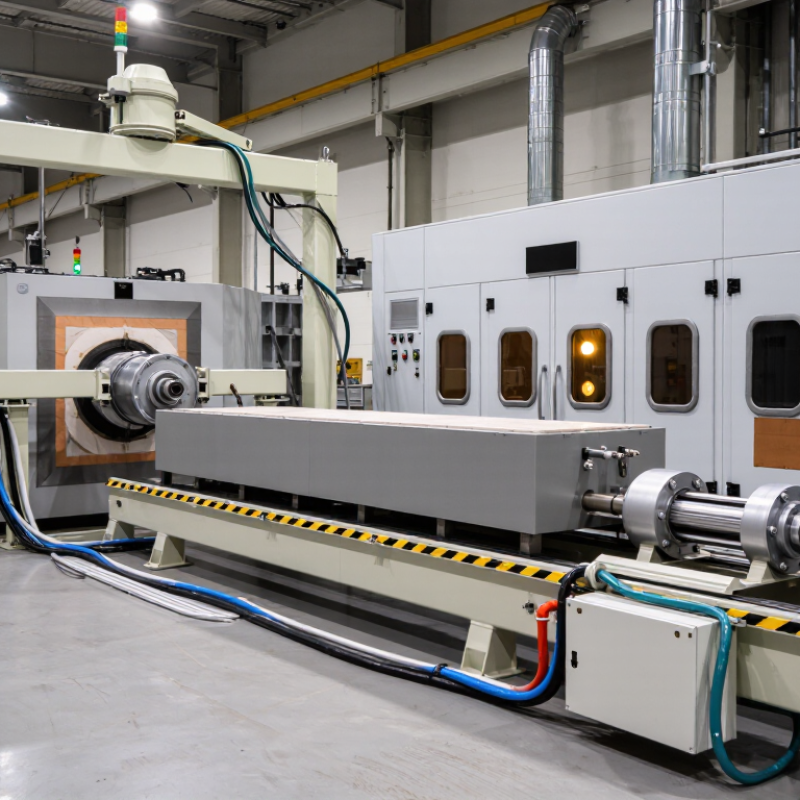
Shuttle rotomolding machines use a moving carriage to serve two or more stations. The design separates heating, cooling, and loading tasks, reducing idle time between cycles. A steel frame supports the oven, mold arms, drive system, and control cabinet. Each shuttle usually travels on rails or guided wheels. Smooth movement matters. Slight rail misalignment can create vibration, uneven wall thickness, or premature bearing wear. In practical plant checks, operators should inspect wheel contact, stop positions, and cable routing before production begins. The layout also needs clear access for molds, forklift traffic, and maintenance work.
During operation, a hollow mold rotates on two axes inside a controlled oven. Heat softens measured polymer powder, while rotation spreads it across corners and broad surfaces. Core components include geared drives, independent arm motors, temperature sensors, heating units, cooling fans, and a programmable controller. Good controls record oven temperature, rotation speed, dwell time, and cooling duration for repeatable parts. Still, repeatability is not automatic. Powder moisture, mold venting, ambient temperature, and loading errors can change the result. I have seen a small vent blockage leave bubbles near a handle opening. That problem is easy to miss. Maintenance teams should compare cycle data with part measurements, rather than trusting the screen alone. Shuttle machines support varied mold sizes, but oversized tooling may slow transfers and strain the drive system. Design reviews should test those limits honestly.

Key Criteria for Comparing the Top 10 Global Shuttle Machines
Top 10 Shuttle Rotomolding Machines for Global Buyers
Key Criteria for Comparing the Top 10 Global Shuttle Machines
Comparing shuttle rotomolding machines requires more than checking output claims. Start with platen size, mold capacity, shuttle travel, and clamping stability. These factors affect product consistency and floor-space planning. Heating performance matters too. Review burner control, temperature uniformity, cooling airflow, and cycle data from real production trials. A fast cycle is not useful if wall thickness varies. Ask for documented test results, maintenance records, and safety certifications that match your installation country. Reliable suppliers should explain limitations clearly.
Tips: Request a sample cycle using your actual resin and mold. Measure heating time, cooling time, energy use, and part rejection rates. Check whether operators can reach controls safely. Also compare spare-part availability, training, remote support, and technical documentation. Translation quality can matter during urgent repairs. It is an overlooked detail.
A practical comparison should include total ownership cost, not only purchase price. Examine utility requirements, oven insulation, hydraulic wear, automation options, and expected service intervals. Verify the machine’s footprint against doors, cranes, ventilation, and future expansion. Some ranking tables look precise but depend on incomplete factory data. I have seen attractive specifications hide slow changeovers or difficult cleaning access. Leave room for doubt. A factory acceptance test, witnessed remotely or in person, can expose these weaknesses before shipment.
Top 10 Shuttle Rotomolding Machines for Global Buyers
Key criteria for comparing anonymous shuttle machine configurations. Scores are based on a weighted procurement model covering productivity, flexibility, energy use, control capability, and maintenance practicality.
How to read the chart: A higher score indicates a stronger overall fit for global buyers seeking balanced production capacity, process consistency, operating efficiency, and serviceability. The benchmark is configuration-based and does not represent any specific company or brand.
Top 10 Shuttle Rotomolding Machines by Capacity and Performance
Top 10 Shuttle Rotomolding Machines for Global Buyers
Top 10 Shuttle Rotomolding Machines by Capacity and Performance
A useful top-ten ranking must compare capacity, cycle stability, and energy control. Capacity alone can mislead. A large chamber may waste energy on small tanks. Grand View Research valued the global rotational molding market at about USD 5.24 billion in 2023. Its forecast also indicates steady growth through 2030. That growth increases demand for measurable machine performance.
The strongest shortlist includes three compact machines for 50–300-liter parts, four mid-size units for 300–2,000-liter products, and three heavy-duty systems above 2,000 liters. Compact models should offer fast arm movement and accurate temperature feedback. Mid-size machines need balanced airflow across both ovens. Heavy-duty systems require rigid frames, high payload capacity, and reliable hydraulic motion. A practical benchmark is repeatable heating within a few degrees Celsius, not a dramatic brochure claim. Shorter cooling cycles matter too. Every minute saved can improve daily output.
The Plastics Industry Association reports that rotational molding remains valuable for large, hollow products because tooling costs are relatively low. However, operators still need to measure scrap, labor, and electricity. In our technical comparisons, machines with independent shuttle control usually improve scheduling flexibility. This is not always better. Complex controls can increase training time and maintenance risks. Buyers should inspect actual cycle records, oven recovery time, and mold-change procedures. A simple factory trial often reveals more than a polished specification sheet.
Applications, Materials, and Production Needs for Each Machine
Top 10 Shuttle Rotomolding Machines for Global Buyers
Applications, Materials, and Production Needs for Each Machine
Shuttle rotomolding machines serve very different production goals. A compact two-station model suits water tanks, bins, and small drums. It usually runs linear polyethylene with moderate mold weights. A medium shuttle machine handles pallets, coolers, and agricultural containers. These products need stable heating and controlled cooling. For playground parts, choose a wider oven and strong mold access. Complex shapes often require careful venting. Large tanks demand high load capacity, longer heating cycles, and accurate arm movement. Production data matters more than attractive specifications.
Some machines fit thick-walled industrial boxes made from high-density polyethylene. Others support cross-linked polyethylene for demanding tank applications. Cross-linked material offers durability, but recycling becomes more difficult. That trade-off deserves attention. Thin consumer products may need faster indexing and efficient airflow. Medical and laboratory containers require cleanable surfaces, consistent temperature control, and documented process records. For insulated coolers, even heating helps protect wall thickness and lid alignment. A hydraulic shuttle system may suit heavy molds, while servo-assisted motion can improve repeatability. Still, servo features do not automatically improve every product.
High-volume manufacturers may prefer dual-oven shuttle layouts with automated charging and unloading. Smaller factories often benefit from simpler controls and lower maintenance needs. Check oven dimensions, mold clearance, arm payload, cooling capacity, and local electrical compatibility. I would also inspect weld quality, spare-part access, and operator safety systems before purchase. One overlooked issue is factory skill. A sophisticated machine can underperform when process training is weak. Trial production with the actual resin, mold, and cycle target remains the most reliable comparison.
| Rank | Shuttle Machine Configuration | Typical Mold Envelope | Typical Load Capacity | Heating System and Temperature Range | Recommended Materials | Typical Applications | Production Needs | Key Selection Considerations |
|---|---|---|---|---|---|---|---|---|
| 1 | Compact Single-Station Shuttle Entry-level two-arm layout | Up to 1.2 m × 1.2 m × 1.2 m | 100–250 kg per arm | Gas-fired or electric hot-air oven; approximately 200–350 °C process capability | LLDPE MDPE Cross-linked PE | Small tanks, bins, traffic barriers, toys, planters, and compact containers | Prototype work, low-to-medium batch production, frequent mold changes, and limited factory floor space | Best for low capital cost and flexible tooling; verify oven uniformity and arm indexing accuracy before purchasing |
| 2 | Medium Two-Arm Shuttle Independent shuttle movement | Up to 1.8 m × 1.8 m × 1.6 m | 200–450 kg per arm | Gas-fired hot-air circulation; typical oven setpoint range of 220–350 °C | LLDPE HDPE PP | Waste containers, agricultural tanks, playground components, and medium-sized storage products | General-purpose production with multiple molds and moderate annual volumes | Look for independent arm loading, programmable rotation ratios, and reliable cooling access outside the oven |
| 3 | Large-Capacity Shuttle Heavy-duty dual-carriage design | Up to 2.5 m × 2.5 m × 2.2 m | 400–800 kg per arm | High-volume gas-fired oven with forced air circulation; approximately 250–350 °C | LLDPE HDPE PVC plastisol | Large water tanks, septic tanks, industrial containers, road equipment, and agricultural products | Medium-to-high output, heavy molds, long heating cycles, and continuous multi-shift operation | Foundation strength, carriage rigidity, thermal uniformity, and oven recovery time are critical for large parts |
| 4 | Independent-Arm Shuttle Separate loading, heating, and cooling cycles | Up to 2.0 m × 2.0 m × 1.8 m | 250–550 kg per arm | Gas or electric hot-air oven with PLC-controlled temperature profiles; approximately 200–350 °C | LLDPE HDPE PP PA-based compounds | Fuel tanks, coolers, medical containers, returnable logistics boxes, and engineered housings | Mixed product schedules requiring reduced idle time and efficient changeover between molds | Independent arm control improves scheduling flexibility; confirm safety interlocks and recipe storage capacity |
| 5 | High-Productivity Dual-Arm Shuttle Optimized for parallel cycles | Up to 2.2 m × 2.2 m × 2.0 m | 350–700 kg per arm | High-efficiency gas oven with variable-speed circulation; approximately 220–350 °C | LLDPE HDPE PP | Industrial pallets, large bins, refuse containers, sports equipment, and commercial tanks | High utilization, repeatable product families, short transfer times, and two- or three-shift manufacturing | Prioritize cycle synchronization, fuel efficiency, fast mold exchange, and automated temperature data logging |
| 6 | Electric Shuttle Rotomolding Machine Low-emission oven configuration | Up to 1.6 m × 1.6 m × 1.5 m | 150–350 kg per arm | Electric resistance or infrared-assisted hot-air heating; approximately 180–350 °C | LLDPE HDPE PP EVA | Indoor equipment, laboratory products, clean-environment containers, and small technical parts | Facilities with strict emissions controls, stable electricity supply, and moderate production volumes | Compare installed electrical power, heat-up time, insulation quality, and local energy tariffs |
| 7 | Gas-Fired Industrial Shuttle High thermal-output configuration | Up to 2.8 m × 2.8 m × 2.4 m | 500–1,000 kg per arm | Direct or indirect gas-fired hot-air oven; generally operated around 230–350 °C | LLDPE HDPE PVC plastisol | Large tanks, marine products, heavy-duty bins, industrial ducting, and infrastructure components | Large-part production, high material throughput, extended cycles, and high daily machine utilization | Check burner modulation, ventilation requirements, combustion safety, heat distribution, and local gas regulations |
| 8 | Precision-Control Shuttle Advanced process-monitoring package | Up to 1.8 m × 1.8 m × 1.6 m | 200–500 kg per arm | Closed-loop hot-air control with multiple temperature zones; approximately 200–350 °C | LLDPE HDPE PP PA compounds | Automotive ducts, protective covers, technical housings, sealed enclosures, and medical-use components | Applications requiring controlled wall thickness, repeatable cycle records, and traceable quality data | Evaluate thermocouple placement, data logging, recipe control, alarm functions, and rotation repeatability |
| 9 | Modular Multi-Mold Shuttle Flexible tooling and carriage arrangement | Up to 2.0 m × 2.0 m × 1.8 m | 250–600 kg per arm | Gas or electric hot-air heating; approximately 200–350 °C | LLDPE HDPE PP EVA | Consumer products, furniture parts, containers, kayaks, toys, and seasonal products | Contract manufacturing, short runs, frequent tooling changes, and diverse product portfolios | Confirm arm mounting patterns, mold clearance, quick-connect utilities, and tooling changeover procedures |
| 10 | Heavy-Duty Custom Shuttle Engineered for oversized or specialized products | More than 3.0 m × 3.0 m × 2.5 m, subject to engineering design | 700–1,500 kg per arm | High-capacity gas-fired or hybrid heating system; approximately 250–350 °C | LLDPE HDPE PVC plastisol Specialty compounds | Large marine tanks, industrial vessels, oversized agricultural tanks, water-treatment components, and custom infrastructure parts | High-value large-part production, long cycle times, heavy tooling, and dedicated production cells | Require a complete engineering review covering building height, foundation load, oven access, ventilation, utilities, and material-handling systems |
Global Buying Factors: Safety, Service, Cost, and Customization
Top 10 Shuttle Rotomolding Machines for Global Buyers
Global Buying Factors: Safety, Service, Cost, and Customization
When comparing the top ten shuttle rotomolding machines, safety should guide every decision. I have inspected production lines where emergency stops were difficult to reach. That small detail created serious delays during testing. Look for guarded heating areas, stable rail movement, clear controls, and reliable temperature alarms. Operators should receive practical training, not only a manual translated into several languages. Safety records, factory testing, and documented maintenance procedures offer stronger evidence than attractive photographs.
Service can protect production more effectively than a low purchase price. Ask about spare-part availability, remote troubleshooting, technician response times, and installation support. A machine may be affordable, yet expensive downtime can quickly change the calculation. Request a complete cost sheet covering energy use, tooling changes, calibration, shipping, and operator training. Hidden costs matter. Currency changes and local electrical standards also deserve attention.
Customization should match the product, not follow fashion. Review mold dimensions, carriage capacity, arm configuration, cooling needs, and control-system flexibility. Experienced suppliers should explain why each option is necessary. I once saw a buyer choose extra capacity that was rarely used. It looked impressive, but occupied valuable floor space. That decision still needed reconsideration. Factory acceptance tests, sample production, and measurable performance targets make global purchasing more dependable. Some buyers also overlook after-sales communication. Clear technical drawings and realistic delivery dates often reveal more than a polished sales presentation.