BLOG
Why Choose Urolithin A Bulk Powder for Global Sourcing?
Why Choose urolithin‑a‑bulk‑powder for Global Sourcing?
Global buyers increasingly examine urolithin‑a‑bulk‑powder for formulation flexibility, supply efficiency, and consistent product development. Urolithin A is a gut-derived metabolite linked with mitochondrial research. It is not naturally abundant in ordinary foods. Professor Johan Auwerx, a leading researcher in mitochondrial biology, has described it simply: “Urolithin A is a metabolite produced by gut bacteria.” This distinction matters when evaluating raw-material specifications and scientific claims.
Clinical evidence is developing, not finished. A randomized study published in Nature Metabolism in 2022 followed 66 older adults for four months. Participants received 1,000 or 2,000 milligrams daily. Researchers reported favorable safety findings and improvements in selected muscle-related measures. The study supports interest, but it does not prove every marketing promise. That limitation should remain visible.
Industry reports from Grand View Research and Future Market Insights identify expanding demand for specialty nutraceutical ingredients. However, public market estimates differ because definitions and regional coverage vary. Buyers should compare methods, not only headline numbers. A reliable supplier should provide batch-specific identity testing, assay results, microbial limits, heavy-metal data, stability information, and traceability documents. The powder should arrive in a sealed container, with a clear lot number and storage conditions.
Sourcing globally can reduce formulation delays and support larger production runs. It can also create risks involving transport humidity, inconsistent documentation, and changing regional requirements. A practical qualification process needs independent laboratory verification and regulatory review. The argument is promising, but incomplete. Urolithin‑a‑bulk‑powder deserves careful purchasing, not exaggerated certainty.
What Is Urolithin A Bulk Powder?
Urolithin A bulk powder is a concentrated, dry ingredient used for research, formulation, and controlled product development. It is a metabolite associated with ellagitannin-rich foods, such as pomegranates and certain berries. However, the human body does not produce it equally from these foods. Individual gut microbiota can influence conversion.
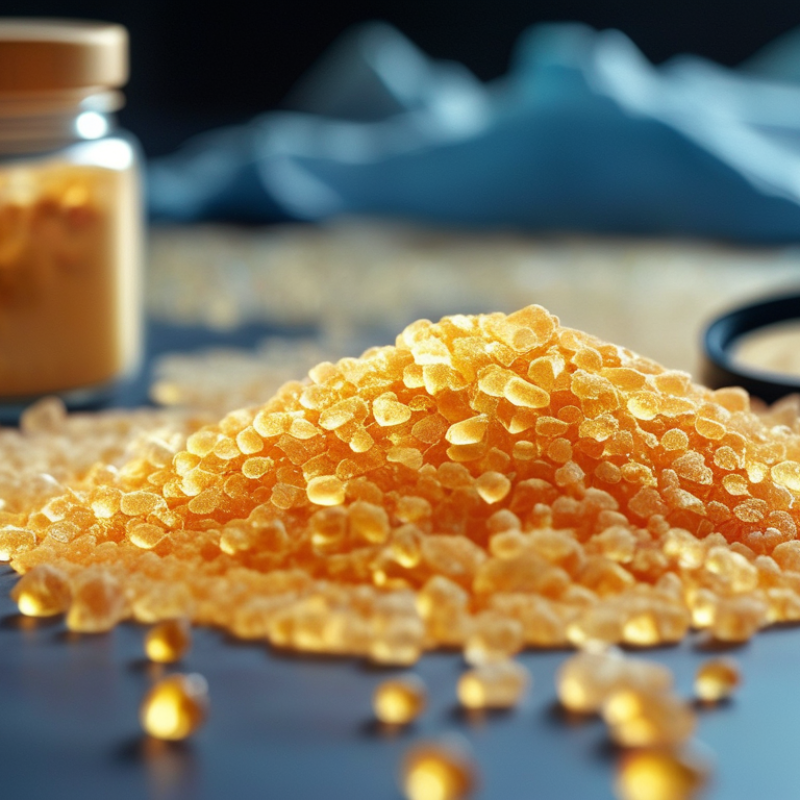
In practical sourcing, the powder usually appears as a fine, pale solid in a sealed container. Its value depends on more than the label. Buyers should review assay results, identity testing, moisture content, particle size, microbial limits, and heavy-metal data. A reliable supplier should provide a current certificate of analysis for each production lot. Packaging matters too. Moisture exposure can affect handling and stability. Small details count.
Tips: Ask for independent laboratory testing, manufacturing-site information, and storage instructions before purchasing. Confirm whether the material is intended for research or a regulated finished product. Check import rules in the destination market, because requirements differ. Do not assume “high purity” means suitable for every application. It may not. I would also compare recent batch records rather than relying on one attractive sample. Some specifications look precise but lack test methods. That deserves a second look.

How Urolithin A Bulk Powder Is Produced and Tested
Sourcing Urolithin A bulk powder requires more than comparing prices. Production details often reveal the real quality differences. Depending on the process, manufacturers may use microbial biotransformation of ellagitannin-derived materials, followed by filtration, purification, concentration, and controlled drying. Each stage can affect color, moisture, flowability, and final assay results.
The process should be supported by documented batch records and validated controls. Good production practice includes calibrated equipment, qualified raw materials, and clear separation between processing stages. Temperature and drying time deserve close attention. Excess heat may affect stability, while insufficient drying can increase moisture and reduce powder performance. Small details matter.
Testing should confirm identity, potency, and safety. High-performance liquid chromatography can measure assay and related substances. Mass spectrometry may provide additional identity confirmation. Laboratories commonly evaluate moisture, residual solvents, heavy metals, microbial limits, and particle characteristics. Independent testing adds credibility, especially when results include methods, specifications, and batch numbers. A certificate alone is not enough. I would still review the laboratory’s accreditation, sampling procedure, and test date.
No analytical panel answers every question. Stability data may cover only selected conditions, and powder behavior can change during transport. That limitation deserves honest discussion. Reliable suppliers should provide traceability from incoming materials to finished bulk powder, with retained samples available for investigation. Consistent testing matters more than a single impressive report.
Why Choose Urolithin A Bulk Powder for Global Sourcing?
Urolithin A bulk powder is typically evaluated through synthesis or bioconversion, purification, drying, and analytical quality control. Molecular-mass comparison is one useful identity check alongside HPLC, LC-MS, and NMR testing.
How Urolithin A Bulk Powder Is Produced and Tested
Urolithin A has the molecular formula C13H8O4 and a molecular mass of 228.20 g/mol. During bulk production, the target compound is separated from reaction or bioconversion mixtures, purified, dried, and milled into powder. HPLC is commonly used to assess chromatographic purity, while LC-MS and NMR help confirm molecular identity. The comparison below uses the theoretical molecular masses of urolithin A and structurally related urolithins as reference values for identity testing.
Key Factors in Global Sourcing and Supplier Selection
Why Choose Urolithin A Bulk Powder for Global Sourcing?
Global sourcing begins with supplier evidence, not attractive pricing. The 2023 Global Wellness Economy Monitor valued the wellness economy at $5.6 trillion in 2022. This growth increases pressure on ingredient buyers. Urolithin A suppliers should provide batch-specific certificates of analysis, validated identity testing, and clear manufacturing records. Confirm purity methods, not only stated percentages. Ask whether testing uses HPLC, LC-MS, or another suitable technique. Small documentation gaps can create large import delays.
Supplier selection also requires practical risk controls. Review GMP certification, allergen statements, heavy-metal results, microbiological limits, residual-solvent data, and stability information. The U.S. FDA’s Current Good Manufacturing Practice framework emphasizes quality control, laboratory testing, and recordkeeping for dietary ingredients. These principles offer a useful benchmark, even when products enter different markets. Check production capacity, minimum order quantities, lead times, packaging conditions, and temperature exposure. A supplier may pass one audit but still struggle with repeatability.
Traceability matters.
Request raw-material origin, batch coding, deviation records, and change-notification procedures. Compare at least three suppliers using the same scorecard. The 2024 OECD Due Diligence Guidance highlights risk-based supply-chain checks and documented accountability. However, no scorecard is perfect. Some buyers overvalue purity and overlook delivery reliability. Others accept polished certificates without verifying the testing laboratory. Independent pre-shipment testing can reduce that blind spot. Global sourcing works better when technical quality, regulatory readiness, and communication are evaluated together.
Quality, Documentation, and Regulatory Considerations
Why Choose Urolithin A Bulk Powder for Global Sourcing?
Global sourcing of Urolithin A bulk powder requires more than a competitive quotation. Quality begins with identity, purity, and batch consistency. Request a current certificate of analysis for each lot, not a generic template. The document should show assay method, specification limits, moisture, residual solvents, heavy metals, and microbiological results. Independent testing can confirm key values, especially after long-distance shipment. A retained sample, tamper-evident seal, and traceable lot number make investigations practical. Small details matter.
Documentation should connect the manufacturer, shipment, and intended market. Ask for manufacturing-site details, allergen statements, and relevant non-GMO or vegan declarations. Evidence of a functioning quality system also deserves attention. Stability data should explain storage conditions, packaging, and proposed shelf life. It is easy to overlook translation gaps or an outdated specification. We have seen paperwork look complete while omitting the analytical method version. That weakness deserves a question, not an assumption. Regulatory status differs by country. An ingredient accepted for one use may require notification, review, or different wording elsewhere. Check permitted claims, product classification, import rules, and labeling obligations with qualified local professionals. Keep change-control records for formulas, suppliers, test methods, and packaging. The cheapest file may be the least reliable one.
Why Choose Urolithin A Bulk Powder for Global Sourcing? - Quality, Documentation, and Regulatory Considerations
| Evaluation Dimension | What Global Buyers Commonly Review | Typical Purchasing Benchmark | Verification Method | Key Documentation | Global Sourcing Relevance |
|---|---|---|---|---|---|
| Identity | Chemical name, molecular formula, molecular weight, appearance, and identification profile | Identity confirmed against an approved reference standard; fine white to off-white powder is commonly specified | HPLC retention time, UV spectrum, and, where required, LC-MS or NMR confirmation | Certificate of Analysis (CoA), specification sheet, analytical method | Reduces the risk of substitution, misidentification, or inconsistent material across import markets |
| Assay and Purity | The concentration of Urolithin A and the level of related impurities | A common commercial benchmark is ≥98.0% by HPLC; the final limit should be agreed in the purchase specification | Validated or qualified HPLC method with batch-specific results | Batch CoA, chromatogram, method validation or method qualification summary | Supports consistent dosing, formulation performance, and buyer-to-buyer comparability |
| Moisture and Water Activity | Moisture content, hygroscopicity, caking tendency, and storage behavior | A practical internal target may be ≤2.0% moisture, subject to stability data and product form | Karl Fischer titration or validated loss-on-drying method; water activity where relevant | CoA, storage-condition statement, packaging specification, stability report | Helps protect powder flow, assay stability, and shelf life during long-distance transport |
| Residual Solvents | Solvents used during synthesis or purification and their final concentrations | Conformance with ICH Q3C solvent limits or applicable national requirements | Validated GC testing with a defined reporting limit | Residual-solvent test report, process declaration, safety data sheet | Important for food, dietary supplement, cosmetic, and pharmaceutical-adjacent applications |
| Elemental Impurities | Lead, cadmium, arsenic, mercury, and other elements relevant to the intended use | Limits should be based on the destination market, daily intake, and applicable food or supplement rules | ICP-MS or ICP-OES performed by a qualified laboratory | Heavy-metals report, laboratory accreditation details, sample preparation method | Provides evidence for toxicological risk assessment and import compliance |
| Microbiological Quality | Total aerobic count, yeast and mold, and absence of specified pathogens | Acceptance criteria should reflect the intended category, such as food, supplement, or cosmetic raw material | Validated microbiological methods and pathogen screening | Microbiology report, hygiene statement, environmental-monitoring summary where applicable | Supports product safety and reduces border or customer-release delays |
| Contaminants and Adulterants | Pesticides, mycotoxins, allergens, undeclared actives, and cross-contamination risks | Risk-based testing plan established according to raw materials, process, and destination regulations | Multi-residue LC-MS/MS or GC-MS/MS and documented allergen-control review | Contaminant report, allergen statement, GMO statement, BSE/TSE statement where requested | Helps satisfy retailer, importer, and finished-product quality requirements |
| Manufacturing Controls | Quality system, batch traceability, change control, deviation handling, and supplier qualification | Documented GMP-based controls appropriate to the intended application | Quality audit, certification review, batch-record review, and traceability exercise | GMP certificate, quality agreement, audit report, change-notification procedure | Improves supply continuity and makes quality problems easier to investigate |
| Stability and Shelf Life | Assay, impurity profile, appearance, and moisture changes over time | Shelf life should be supported by real-time and/or accelerated stability data rather than a fixed generic claim | Testing under defined temperature, humidity, light, and packaging conditions | Stability protocol, study summary, retest date or expiry date, storage instructions | Supports inventory planning across different climates and shipping routes |
| Packaging and Logistics | Container-closure integrity, tamper evidence, lot coding, net weight, and transport conditions | Double sealed, food-contact-compatible inner packaging with protective outer packaging is commonly requested | Packaging inspection, weight verification, seal testing, and shipment-condition review | Packing list, lot traceability record, transport specification, SDS | Reduces moisture exposure, labeling errors, and customs-handling risks |
| Regulatory Classification | Whether the material is intended for food, dietary supplement, cosmetic, research, or another regulated category | A separate market-specific assessment is required; regulatory status is not automatically identical across countries | Review of current laws, permitted-use lists, novel-food requirements, and importer obligations | Regulatory statement, intended-use declaration, composition dossier, safety assessment documents | Prevents unsupported claims and reduces the risk of rejected shipments or relabeling |
| Claims and Labeling | Ingredient name, serving amount, recommended use, warnings, and structure/function or health claims | Claims must be supported by applicable legislation and should not imply disease treatment or prevention without authorization | Regulatory label review and substantiation-file assessment | Label copy, claims substantiation, safety information, translation review | Allows the same bulk ingredient to be adapted responsibly for different markets |
| Batch Release and Testing | Sampling plan, release decision, out-of-specification handling, and independent confirmation testing | Each lot should be released against an agreed specification before shipment | Supplier testing plus periodic third-party verification or customer identity testing | Final CoA, sample retention policy, deviation and OOS procedure | Creates an auditable quality trail for distributors and finished-product manufacturers |
Note: Numerical benchmarks shown above are common purchasing criteria or examples, not universal legal limits. Final specifications, testing frequency, documentation, and permitted uses should be confirmed for the intended product category and destination market.
Storage, Shipping, and Commercial Applications
Why Choose Urolithin A Bulk Powder for Global Sourcing?
Storage and shipping determine whether urolithin A powder remains commercially useful. Follow the ICH Q1A(R2) stability framework, which evaluates long-term storage at 25°C/60% relative humidity and accelerated storage at 40°C/75% humidity. These conditions help buyers judge shelf life, packaging, and transport risk. Use sealed inner liners, light-protective drums, and documented lot testing. Keep the material in a cool, dry warehouse. A clean room is not always required, but poor humidity control can create avoidable problems.
Shipping needs practical planning. The International Air Transport Association reported that global air-cargo demand grew 11.3% in 2024, increasing pressure on freight capacity and handling schedules. Temperature loggers can reveal heat exposure during airport delays. Sea freight may reduce cost, yet seasonal heat can be severe inside containers. Do not rely only on the supplier’s preferred route. Review transit history, customs documents, pallet stability, and reserve inventory. One weakness remains: many purchasing teams compare prices before validating stability evidence.
Tips: Request a current certificate of analysis, residual-moisture data, microbial results, and accelerated-stability records. Confirm whether the tested package matches the commercial package. For applications, bulk powder can support capsules, sachets, sports-nutrition blends, and healthy-aging formulas. Nutrition Business Journal reported that U.S. supplement sales exceeded 60 billion dollars in 2023, showing strong commercial demand, but demand alone proves nothing. Start with small pilot batches, check dispersion, and measure finished-product stability before scaling globally.