BLOG
Why Is Food Xray Inspection Essential for Global Buyers?
Global buyers face a food safety challenge that crosses factories, ports, and retail shelves. One overlooked fragment can damage trust quickly.
The World Health Organization estimates that contaminated food causes 600 million illnesses and 420,000 deaths annually. Its global burden report shows why preventive controls matter beyond national borders. In the United States, CDC estimates link foodborne diseases to about 48 million illnesses each year. These figures are not merely statistics. They represent rejected shipments, recalls, medical costs, and empty supermarket displays.
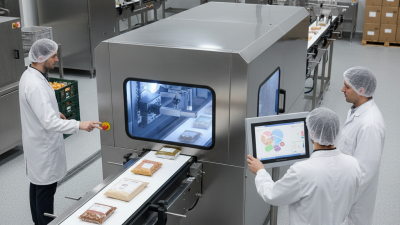
This is where food xray inspection becomes essential. Modern systems can examine sealed products for metal, glass, stones, calcified bone, and other dense contaminants. They can also identify missing items, broken components, or incorrect fill levels. A buyer may receive a carton of packaged meals. Inside one tray, a tiny glass shard could remain invisible during visual checks. X-ray technology can expose that risk before distribution.
Food safety expert Dr. Michael P. Doyle has emphasized, “Food safety is a shared responsibility.” His point applies directly to international sourcing. Suppliers, buyers, inspectors, and logistics partners must share reliable evidence. X-ray inspection supports HACCP programs and recognized certification schemes, but it is not a magic shield. Poor calibration, weak rejection controls, or incomplete records can still create gaps. The picture is imperfect.
Global buyers should therefore assess inspection sensitivity, validation records, operator training, and traceability data. They should ask practical questions. Was the system tested today? Did every rejected pack reach quarantine? Can the supplier prove it? Confidence begins with evidence, not promises.
What Food X-Ray Inspection Means and How It Works
Why Is Food X-Ray Inspection Essential for Global Buyers?
What Food X-Ray Inspection Means and How It Works
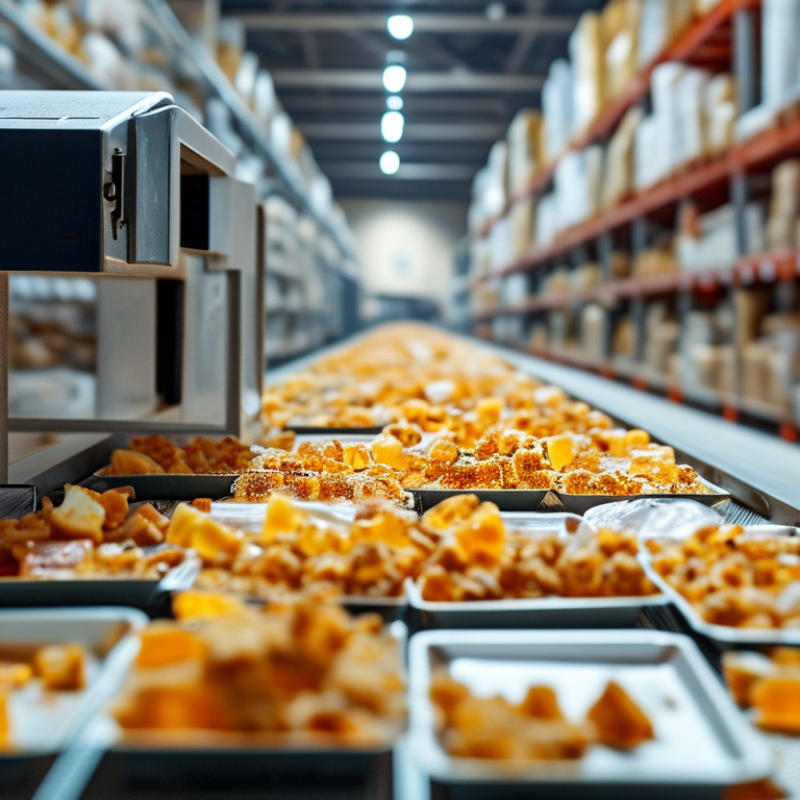
Food X-ray inspection uses controlled radiation to examine packaged products without opening them. A generator sends X-rays through the product, while a detector measures the energy that reaches it. Dense materials absorb more energy and appear as contrasting images. The system can identify metal, glass, stones, dense plastic, and some bone fragments. It may also reveal missing products, damaged seals, or uneven filling.
The process is fast. Products move along a conveyor, and software compares each image with quality limits. If contamination is detected, an automatic reject device removes the item. Inspection performance depends on product density, package shape, line speed, and test-piece placement. It is not magic. Low-density materials can remain difficult to detect, especially inside thick or irregular products.
The World Health Organization’s Estimates of the Global Burden of Foodborne Diseases reports about 600 million illnesses and 420,000 deaths each year from contaminated food. Children under five account for roughly 40% of this burden. These figures explain why global buyers increasingly request documented controls, not verbal assurances.
The FAO and WHO General Principles of Food Hygiene recommends validated hazard control through HACCP-based systems. Buyers should review sensitivity records, calibration results, reject checks, and corrective actions. They should also test every major product format. That assumption deserves scrutiny. A setting that works for one package may fail on another. Reliable inspection requires evidence, trained operators, and repeated verification across real production conditions.
Why X-Ray Inspection Matters for Global Food Buyers
Why Is Food X-Ray Inspection Essential for Global Buyers?
Why X-Ray Inspection Matters for Global Food Buyers
For global food buyers, x-ray inspection supports safer and more consistent purchasing decisions. It can detect dense foreign materials, such as glass, stone, and bone fragments, inside sealed products. Unlike visual checks, x-ray systems inspect the product through opaque packaging. They can also identify missing items, damaged packaging, and unusual density changes. These findings help buyers evaluate supplier controls with clearer evidence.
In practice, inspection results should connect with documented food safety procedures. Buyers can review calibration records, rejection data, maintenance logs, and corrective actions. Standards such as HACCP-based systems and ISO 22000 can provide useful reference points. However, x-ray inspection is not a magic shield. Low-density materials may be difficult to detect, and poor calibration can reduce reliability. This part deserves more attention than many purchasing teams expect.
Tips: Ask for recent inspection records and product-specific sensitivity tests. Confirm that test pieces match the product and packaging format. Review how rejected items are isolated and investigated. Compare results across different production batches. Keep communication direct. A useful question is, “What happens after a failed inspection?” Buyers should also remember that technology supports judgment; it does not replace supplier audits, traceability, or careful risk assessment.
Why Is Food X-Ray Inspection Essential for Global Buyers? - Why X-Ray Inspection Matters for Global Food Buyers
| Inspection Dimension | Typical Foreign Material or Risk | Relevant Physical Data | Why It Matters to Global Buyers | Recommended Verification Evidence | Buyer Evaluation Indicator |
|---|---|---|---|---|---|
| Metal Detection | Ferrous and non-ferrous metal fragments from processing or equipment wear | Approximate density: iron or steel, 7.7–8.1 g/cm³; aluminium, about 2.7 g/cm³ | Metal contamination can create consumer-safety risks, product recalls, border delays, and rejected shipments. | Validated test-piece records, challenge-test results, rejected-product logs, and corrective-action reports | Documented detection sensitivity by product type |
| Glass Detection | Glass pieces from containers, lighting, gauges, or damaged processing components | Typical glass density: approximately 2.4–2.8 g/cm³ | Glass can be difficult to identify visually after breakage and may remain inside sealed or packaged food. | Glass-breakage procedure, line-clearance records, X-ray challenge tests, and affected-lot traceability | Controls covering both open-product and packaged-product stages |
| Stone and Mineral Detection | Stones, gravel, mineral fragments, and soil-derived particles in agricultural products | Many common minerals have densities of roughly 2.2–3.0 g/cm³ | Raw materials may carry field contamination that is not reliably removed by visual inspection or washing alone. | Supplier raw-material specifications, incoming inspection results, hazard analysis, and X-ray verification data | Defined controls for higher-risk agricultural ingredients |
| Calcified Bone Detection | Bone fragments in meat, poultry, and processed products containing animal-derived ingredients | Compact bone density is commonly around 1.5–2.0 g/cm³, depending on composition and moisture | Bone fragments may have limited contrast against the food matrix and can present a physical-hazard risk. | Product-specific validation, sample-size rationale, inspection images, and reinspection procedures | Validation performed using the actual product and packaging |
| High-Density Plastic and Rubber | Dense plastic, rubber, or engineering-material fragments from belts, seals, scrapers, or packaging components | Typical density range: approximately 1.0–1.5 g/cm³; detectability varies significantly by composition | Some non-metallic contaminants may not be detected consistently by conventional metal detectors. | Material risk assessment, equipment-maintenance records, validated X-ray test samples, and failure investigations | Performance claims must be product- and material-specific |
| Packaging Integrity | Missing products, broken seals, trapped product, incorrect fill, or damaged containers | X-ray systems can evaluate density differences and certain physical assembly conditions inside closed packs. | Inspection can reduce shipment nonconformities and provide an additional control after filling and sealing. | Pack-format validation, reject verification, seal-control records, and image-based inspection procedures | Inspection coverage across every approved pack format |
| Product and Pack Variation | Changes in moisture, thickness, orientation, density, pack size, or product formulation | Detection performance is affected by product density, thickness, package material, speed, and contaminant position. | A result proven on one SKU or pack format cannot automatically be applied to another product or shipment. | Separate validation for relevant SKUs, pack sizes, production speeds, and worst-case conditions | A documented validation matrix, not a single generic test |
| International Food-Safety Alignment | Physical hazards within the buyer’s preventive-control and HACCP-based system | Codex HACCP principles require hazard analysis, critical control measures, monitoring, corrective action, verification, and records. | Consistent records help buyers assess supplier capability across borders and support audits, investigations, and import controls. | HACCP plan, prerequisite programs, internal-audit results, calibration records, and corrective-action history | Evidence that X-ray inspection is integrated into the food-safety system |
| Traceability and Recall Readiness | Products affected by a detected contaminant, equipment failure, or process deviation | Traceability should connect raw materials, processing records, inspection results, finished lots, and distribution records. | Fast lot identification can reduce the scope, cost, and duration of a withdrawal or recall. | Lot-code records, inspection-rejection records, retention samples, mock-recall results, and distribution mapping | Time required to identify and isolate affected lots |
Which Contaminants and Defects Food X-Ray Systems Detect
Why Is Food X-Ray Inspection Essential for Global Buyers?
Food X-ray inspection helps global buyers verify safety and product consistency before shipment. The World Health Organization’s 2015 global burden report estimated that contaminated food causes 600 million illnesses and 420,000 deaths annually. These figures make physical contamination a serious commercial and public-health concern. X-ray systems can detect metal, glass, stones, mineral fragments, dense bones, and some high-density plastics. They can also identify missing products, broken pieces, underfilled packs, and irregular product shapes. A small metal fragment can hide inside a sealed pouch.
Inspection teams often use test samples to confirm sensitivity during production. They check the smallest detectable contaminant, not only the largest one. System performance depends on product density, package thickness, moisture, and orientation. Wet salt products may create difficult images. Dark packaging does not matter as much as density differences. That detail is often misunderstood.
X-ray inspection is useful, but it is not magic. Very low-density materials may escape detection. False rejects can also increase waste and delay loading. Buyers should request validation records, challenge-test results, calibration procedures, and operator training evidence. The U.S. FDA’s Reportable Food Registry data also shows why traceability and preventive controls matter when hazards enter commerce. Each supplier should define acceptable limits for contaminants and packaging defects. Results should be reviewed across different lots and production speeds. Mistakes still happen. Careful verification remains necessary.
Why Is Food X-Ray Inspection Essential for Global Buyers?
X-ray inspection identifies foreign bodies by detecting differences in material density and X-ray absorption. The chart shows typical densities of contaminants commonly targeted in food inspection.
Typical density values are approximate and can vary by composition, moisture, thickness, and temperature. Food X-ray systems commonly detect metal fragments, glass, stones, calcified bone, dense plastics, and rubber. They can also identify product defects such as missing or broken items, incorrect fill levels, voids, damaged packaging, poor seals, and product deformation. Actual sensitivity depends on the product, contaminant size and position, line speed, and system settings.
How X-Ray Inspection Supports International Food Compliance
Food X-ray inspection is essential for global buyers because international food compliance demands measurable control. X-ray systems can identify dense foreign materials, such as metal, glass, stones, and calcified fragments. They can also reveal missing products, damaged seals, and unusual density changes inside sealed packages. This supports food safety plans and strengthens supplier verification.
Compliance is more than installing a machine. Buyers should request validated detection limits, calibration records, rejection logs, and corrective-action reports. These documents show whether the process works under real production conditions. They also support traceability during audits across different markets. Requirements vary by destination, so one inspection setting may not satisfy every customer. A perfect result is never guaranteed.
Tips: Test products at their fastest line speed. Use challenge samples that reflect actual package size and density. Check rejected packs by hand, but do not rely on visual checks alone. Train operators to respond consistently when alarms occur. Review trends monthly, because repeated false rejects may hide a process problem.
In practice, some factories focus too heavily on detection sensitivity. That can create waste and operator fatigue. A better approach balances safety, product quality, and reliable equipment performance. Keep evidence clear, current, and easy for buyers to verify. That practical discipline makes international food compliance more credible.
Key Factors for Choosing a Food X-Ray Inspection System
Why Is Food X-Ray Inspection Essential for Global Buyers?
Key Factors for Choosing a Food X-Ray Inspection System
Global buyers need more than a machine that produces clean images. The World Health Organization estimates that contaminated food causes 600 million illnesses and 420,000 deaths each year. This makes foreign-material control a serious purchasing concern. X-ray inspection can identify dense contaminants, including metal, glass, stone, and some calcified materials. However, it cannot solve every food-safety risk.
Start with verified performance. Ask for detection trials using the actual product, packaging, temperature, and line speed. Product density matters. A frozen meal and a dry snack will not create the same inspection image. The system should also record rejected packs, test results, alarms, and operator actions. These records support HACCP-based controls described by the Codex Alimentarius General Principles of Food Hygiene.
Hygiene design deserves equal attention. Choose accessible surfaces, suitable drainage, sealed components, and automatic reject confirmation. Check whether the system maintains accuracy during vibration, moisture, and production changes. The International Organization for Standardization reported more than one million ISO 22000 certificates worldwide in its 2023 survey, showing the value of structured food-safety management. Still, certification alone is not enough.
I would question impressive claims without site testing. No system is perfect. Calibration drift, poor training, or careless reject handling can weaken good technology. Global buyers should compare total ownership cost, service response, validation evidence, and data security—not only purchase price.
Related Posts
-
How to Choose the Best X Ray Food Inspection Systems for Your Business?
-

Best Food Inspection Machine for Quality Control in 2026?
-
2026 How to Improve Food Inspection Systems for Better Safety and Quality?
-
How to Use Metal Detectors Safely in the Pharmaceutical Industry
-

2026 Top Xray Inspection Trends for Global Buyers?
-

Top 10 Food X-Ray Machine Prices and Insights for 2023: A Comprehensive Guide