What is X Ray Food Inspection and How Does it Work?
X ray food inspection has become a vital tool in the food industry. It ensures the safety and quality of products before reaching consumers. This technology uses X-ray imaging to detect foreign objects in packaged foods. It not only identifies metal and glass but also organic materials like bones.
Experts recommend X ray food inspection for its efficiency and non-destructive nature. Many manufacturers rely on this method to comply with safety regulations. It enhances consumer trust in the food supply chain. However, some may question if it covers all potential hazards. There is still a need for ongoing improvements in detection technology. Balancing effectiveness and cost is crucial for widespread adoption.
As this technology evolves, it promises to increase food safety standards. Relying solely on X-ray solutions may not be enough. A multi-faceted approach is often more effective. This highlights the importance of continual reflection and adaptation in food safety practices.

What is X-Ray Food Inspection?
X-ray food inspection is a powerful technique used to ensure food safety. This method uses low-energy X-rays to penetrate food products and reveal hidden contaminants. With the ability to identify foreign objects like metal, glass, or plastic, the technology plays a crucial role in maintaining public health.
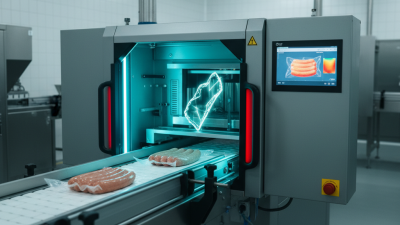
The process begins with placing food items on a conveyor belt. As they pass through the X-ray machine, images are generated in real-time. Trained personnel analyze these images for anomalies. This method provides a non-destructive means of detection, allowing food to remain undamaged during inspection.
Despite its advantages, the technology is not foolproof. Some contaminants may evade detection due to size or density limitations. Relying solely on X-ray inspection can lead to oversights, highlighting the need for comprehensive food safety protocols. Continuous improvement and feedback loops are essential in this field. Ensuring food safety is a collective responsibility, highlighting the importance of integrating multiple inspection methods for better results.
The Principle Behind X-Ray Technology in Food Safety
X-ray food inspection utilizes advanced imaging technology to enhance food safety. This method reveals hidden contaminants within products. By using X-ray radiation, inspectors can identify foreign objects like metal, glass, or plastic. The process starts by passing food items through an X-ray beam. The radiation interacts with the food and forms images based on density variations.
The principle behind this technology is straightforward yet effective. Dense materials absorb more radiation, appearing darker on the image. Lightweight materials allow more radiation to pass through, appearing lighter. This contrast allows inspectors to detect anomalies. Inspectors analyze the generated images for irregularities.
Despite its effectiveness, X-ray food inspection has limitations. Not all contaminants may be visible through this method. Additionally, some food items can interfere with the X-ray results. This raises questions about the overall reliability of the inspection process. Continuous advancements and better training for inspectors are essential for improving accuracy in detection.
The Process of X-Ray Inspection in Food Products
X-ray food inspection is a critical process in ensuring the safety of food products. The technology uses high-energy X-rays to penetrate food items. This allows inspectors to identify foreign objects, such as metal or glass, that may compromise food safety. The procedure is quick and efficient, providing real-time feedback on the contents of packages.
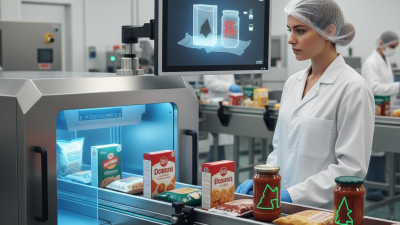
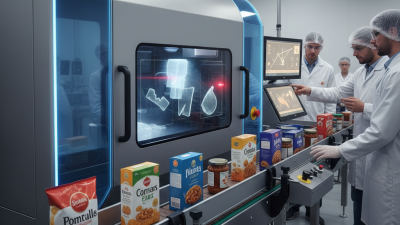
During the inspection, food products move on a conveyor belt through the X-ray machine. The machine scans for anomalies and generates images of the contents. Trained personnel analyze these images for quality assurance. Consistent vigilance is needed to maintain standards and adapt to new threats in food safety.
Tips for effective X-ray inspection include:
- Regular maintenance of the scanning equipment.
- Clear training for operators
- Ensure understanding of how to interpret X-ray images accurately.
- Stay updated on potential contaminants.
- Regularly review protocols and address any shortcomings in detection methods.
- Being vigilant and reflective about the process aids in ensuring food safety.
Benefits of Using X-Ray Inspection for Food Quality Control
X-ray food inspection has become a crucial practice in ensuring food safety and quality. This non-destructive method uses high-energy radiation to detect contaminants, foreign objects, and inconsistencies in food products. Recent studies show that implementing X-ray technology can reduce contamination risks by up to 80%. With foodborne illnesses affecting millions annually, the need for effective quality control is imperative.
The benefits of X-ray inspection extend beyond safety. It enhances operational efficiency. By integrating X-ray systems, manufacturers can speed up the inspection process without sacrificing quality. A report from the Food Safety and Inspection Service indicates that automated food inspection can improve processing speeds by nearly 30%. This allows companies not only to meet but exceed regulatory standards.
However, the technology is not without drawbacks. Initial implementation costs can be high. There may also be a learning curve for staff unfamiliar with the systems. Thus, continuous training and adaptation are essential for maximizing the benefits. While the technology shows promise, food industry leaders must remain vigilant and assess the effectiveness of X-ray inspections regularly.
Challenges and Limitations of X-Ray Food Inspection
X-ray food inspection has gained popularity as a method to enhance food safety. However, this technology faces several challenges. While X-ray systems can detect foreign objects in food, their effectiveness is limited by certain factors. For instance, dense materials like bones can obscure smaller contaminants. Research shows that about 20% of foreign objects may go undetected due to overlapping densities. This limitation raises concerns among food manufacturers about reliability.
Another significant concern is the cost and complexity of implementing X-ray inspection systems. Many food processors find the initial price and maintenance burdensome. Reports indicate that up to 30% of companies lack the financial resources to adopt such technology, even if they acknowledge its benefits. Additionally, the technology may require specialized training for staff, which can further complicate adoption.
Moreover, the potential for false positives can pose challenges. X-ray systems often alert operators to situations that may not actually be hazardous. This can lead to unnecessary product recalls, affecting both the company's finances and consumer trust. Despite the advancements in this area, operators must remain vigilant and continuously improve detection capabilities to ensure food safety effectively.
X-Ray Food Inspection: Challenges and Limitations