How to Choose the Best X Ray Inspection Equipment for Your Needs?
Choosing the right x ray inspection equipment is crucial for various industries. The right choice impacts safety, efficiency, and accuracy in inspections. Many options are available, each suited for specific needs. Evaluating your requirements is vital before making a decision.
When selecting x ray inspection equipment, consider your unique applications. The features of each model can vary significantly. Some may excel in detection capabilities, while others may focus on portability or cost-effectiveness. It’s essential to balance performance with budget constraints.
Additionally, consider the reputability of the manufacturer. Established brands often have a track record of reliability. Customer reviews and testimonials can provide insight into user experiences. Exploring these factors will help you make a more informed choice. This process may feel overwhelming, but thorough research will pay off in the long run.
Understanding Your Inspection Needs and Requirements
Choosing the right X-ray inspection equipment hinges on understanding your specific needs. Define your inspection goals clearly. Determine whether you need to analyze materials for density, detect flaws, or ensure safety compliance. Each requirement demands different capabilities from your equipment. The range of options can be overwhelming, so break down your needs into manageable criteria.
Consider the types of materials or products you will be inspecting. Specific applications, such as aerospace components or food packaging, require tailored solutions. Assess the environment where the equipment will be used. Will it be in a controlled lab setting or on a factory floor? These details impact performance and durability. Don’t underestimate the importance of having reliable, accurate data. Inaccurate readings can lead to costly mistakes.
Another crucial aspect is operator training. Even the best equipment cannot replace skilled personnel. Understand the knowledge gap among your team. Will you need additional training or support? Getting the right equipment isn’t just about specifications; it involves a thorough assessment of human factors. This reflection can lead to better decision-making.
Types of X-Ray Inspection Equipment Available on the Market
When selecting X-ray inspection equipment, understanding the types available is crucial. Common options include portable and fixed systems. Portable X-ray units are favored for their mobility. They are ideal for onsite inspections. Their lightweight design enhances flexibility in various environments. On the other hand, fixed systems are more suited for constant use in labs or industrial settings. They often provide higher resolution images and faster processing times.
Another type to consider is computed tomography (CT) systems. These offer detailed 3D images, making them invaluable for complex inspections. However, they tend to be more expensive and require specialized training. Digital X-ray systems are also popular, as they provide immediate image results. These systems allow easy integration with software for analysis.
While the variety of options can be overwhelming, selecting the right equipment requires thoughtful consideration of specific needs. Not every feature will be necessary for all inspections. For instance, a portable unit might suffice for simple, regular checks. However, intricate tasks might demand a more advanced setup. Balancing performance with practicality is key to effective decision-making in this field.
Types of X-Ray Inspection Equipment Available on the Market
| Type |
Application |
Key Features |
Price Range |
| Digital X-Ray Systems |
Medical Imaging |
High-resolution images, Quick processing |
$30,000 - $100,000 |
| Industrial X-Ray Machines |
Material Inspection |
Portable options, Non-destructive testing |
$25,000 - $200,000 |
| Computed Tomography (CT) Scanners |
3D Imaging |
3D cross-sectional imaging, High detail |
$100,000 - $1,000,000 |
| X-Ray Fluorescence (XRF) Analyzers |
Material Composition Analysis |
Portable, Fast analysis time |
$10,000 - $50,000 |
| X-Ray Inspection Systems for Security |
Security Screening |
Real-time imaging, Automatic threat detection |
$20,000 - $150,000 |
Key Features to Look for in X-Ray Inspection Equipment
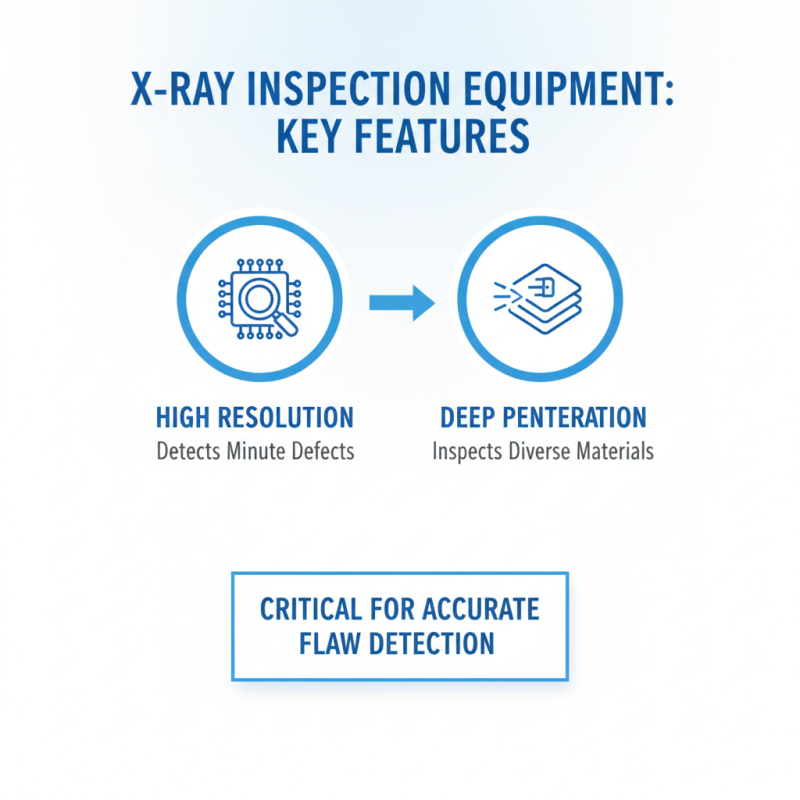
When selecting X-ray inspection equipment, it's essential to focus on key features. A good resolution is critical for detecting minute defects. Look for devices that offer high clarity images. This clarity can be the difference between identifying a flaw and missing it entirely. Equally important is the level of penetration. Ensure the equipment can penetrate various materials effectively to meet your specific needs.
Another key feature to consider is the software integration. Advanced software can process images quickly, allowing for immediate analysis. This can save significant time during inspections. User-friendly interfaces are also vital. An intuitive design can reduce training time for operators, enabling them to focus more on inspections rather than navigating complex systems.
Lastly, consider the equipment's portability and durability. Some models may be heavier and less portable, limiting their applications. Choosing equipment with a lightweight design can enhance flexibility. However, durability shouldn't be compromised for portability. Evaluate the build quality and consider the environments in which the equipment will be used. Balancing these aspects can lead to a more effective inspection process.
Budget Considerations and Cost-Effective Options
When considering x-ray inspection equipment, budget plays a crucial role in your decision-making. Knowing your financial limits helps narrow down options. You need to assess both initial costs and long-term maintenance. Cheaper options may seem appealing at first, but they can lead to higher costs later on.
Cost-effective options exist that don’t compromise on quality. Look into refurbished equipment, which can be significantly cheaper and still reliable. Online marketplaces often provide good deals on used machinery. These can deliver excellent performance, but watch out for hidden flaws or limited warranties.
Training for staff can also impact costs. Investing in comprehensive training ensures your team uses the equipment efficiently. Poor handling can lead to malfunction or damage, resulting in more expenses. It’s essential to weigh immediate savings against potential future costs. Consider all factors before making a decision.
Budget Considerations for X Ray Inspection Equipment
This bar chart illustrates the cost variation among different types of X Ray inspection equipment. As seen, basic models are the most affordable, while advanced models represent a higher investment, catering to extensive inspection needs.