BLOG
China Top Food Inspection Machine Manufacturers?
China has become an important sourcing base for food inspection equipment. Its manufacturers offer metal detectors, X-ray systems, vision platforms, and combination checkweighers. This guide examines which companies deserve attention when buyers search for China’s top food inspection machine manufacturers.
“Top” does not simply mean the cheapest supplier. It should reflect detection accuracy, production stability, hygienic design, software usability, and after-sales support. A reliable food inspection machine should identify metal fragments, missing products, damaged packaging, or weight deviations without slowing the line. Factory experience matters here. Stainless-steel frames, sealed conveyors, quick-release belts, and clear reject bins can make daily cleaning easier. Small details often decide long-term performance.
Real evidence matters more than impressive brochures. This overview will consider technical documentation, product testing, installation experience, customer feedback, and the manufacturer’s ability to customize equipment. It will also compare support response times, spare-part availability, training, and integration with existing production lines. Some suppliers publish excellent specifications, yet field performance may vary. That deserves careful reflection. No ranking can fit every factory, product, or budget. A frozen food producer may need different inspection technology from a bakery or ready-meal facility. Buyers should request sample testing with their own products, packaging, moisture levels, and line speeds. The strongest manufacturers are not always the most visible. They are the companies that communicate clearly, document limitations honestly, and continue supporting equipment after installation. Reliability is built on evidence, not confident promises.
What Are Food Inspection Machines and Why Are They Important?
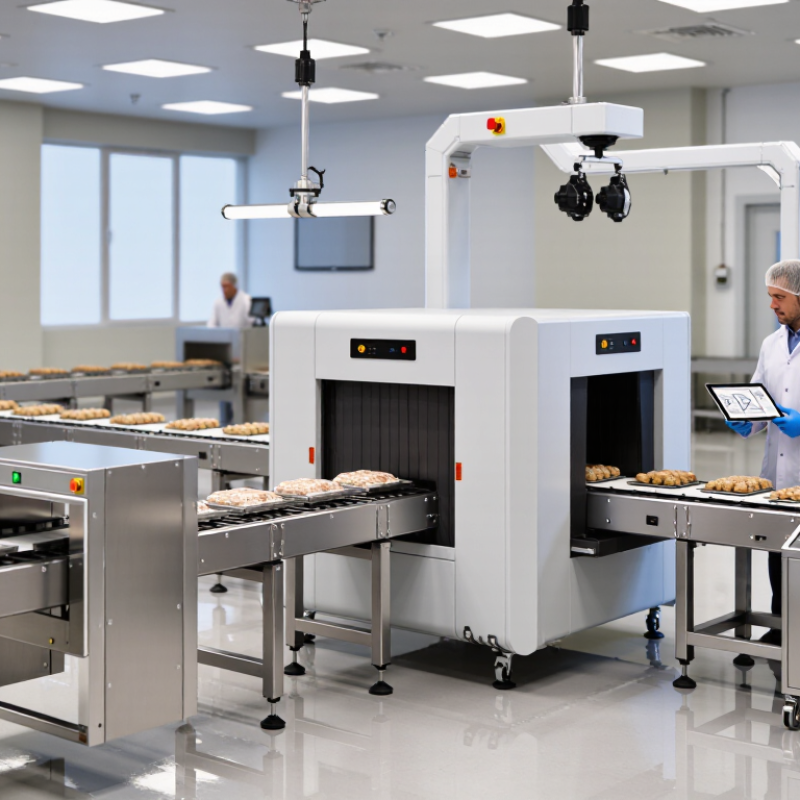
Food inspection machines check packaged products for physical defects, foreign materials, weight errors, and visible quality problems. Common systems include metal detectors, X-ray inspection units, checkweighers, and vision cameras. Each tool solves a different risk. Metal detectors find conductive fragments, while X-ray systems can identify dense materials inside sealed packs. Vision systems inspect labels, seals, color, and shape.
According to the World Health Organization’s 2022 fact sheet, contaminated food causes about 600 million illnesses and 420,000 deaths worldwide each year. That figure makes inspection more than a production upgrade.
Reliable manufacturers should design equipment around the product, packaging, and factory environment. Product moisture, temperature, foil packaging, and line speed can affect detection accuracy. A strong system should provide validated sensitivity tests, automatic reject confirmation, hygienic construction, calibration records, and clear audit trails.
Codex Alimentarius’ General Principles of Food Hygiene supports preventive controls, including hazard analysis and monitoring. Still, machines are not infallible. Poor cleaning, weak staff training, or incorrect settings can reduce protection. A glossy specification sheet may hide practical limitations.
Tips: Test samples under real operating conditions, not only in a showroom. Ask for documented detection limits and service response times. Review false rejects, because excessive rejection can waste safe food and conceal process problems. Combine machine inspection with sanitation, supplier control, and trained operators.
Which Types of Food Inspection Machines Are Made in China?
China manufactures a broad range of food inspection machines for factories and export markets. Common types include metal detectors, X-ray systems, checkweighers, machine-vision units, seal testers, and optical sorters. Each machine addresses a different risk. Metal detectors find ferrous and non-ferrous fragments. X-ray systems can identify dense contaminants, missing products, and broken parts inside sealed packs. Checkweighers verify portion accuracy and reject underweight packs. Vision systems inspect labels, codes, caps, color, and surface defects.
The need is substantial. The World Health Organization estimates that unsafe food causes about 600 million illnesses and 420,000 deaths annually. Market reports from Grand View Research also place the global food safety testing market in the tens of billions of dollars, with continued growth driven by automation and traceability. These figures explain the demand for Chinese equipment. In practice, however, performance depends on calibration, product density, line speed, and packaging material. A machine may pass a factory test yet perform differently with wet products or irregular shapes. That limitation deserves honest attention.
Tips: Match the sensor to the hazard, not the machine price. Ask for test samples using your real product and packaging. Check reject accuracy, cleaning access, data records, and service response. Request sensitivity results at the planned speed. Do not rely only on promotional detection limits. Independent validation and routine challenge tests provide stronger evidence.
How to Evaluate China’s Top Food Inspection Machine Manufacturers?
Evaluating China’s top food inspection machine manufacturers requires evidence beyond a polished factory tour. The 2024 Food Safety Testing Market report by MarketsandMarkets estimates growth from about USD 24.6 billion in 2024 to USD 37.9 billion by 2029. This expanding demand makes traceability, sensitivity, and service support important purchasing criteria.
Ask for recorded test results using certified metal, glass, stone, and dense plastic samples. Compare detection limits at different product speeds, temperatures, package sizes, and moisture levels. A machine that performs well in a showroom may struggle beside a wet production line. Test that claim. Review calibration records, software access controls, stainless-steel grade, washdown protection, and rejected-product handling. ISO 22000 guidance also supports documented verification, not verbal promises. I would not judge quality from export volume alone; installation discipline often decides real performance.
Tips: Request a factory acceptance test with your actual products. Measure false rejects during an eight-hour trial, not a five-minute demonstration. Check whether local technicians can respond within your production schedule. Ask for spare-parts lead times and maintenance training. A checklist can still miss poor operator design, so let your team use the interface repeatedly. Evaluate total cost over five years, including calibration, downtime, shipping, and software updates.
| Evaluation Dimension | What to Evaluate | Strong Manufacturer Benchmark | Evidence to Request | Suggested Weight |
|---|---|---|---|---|
| Inspection Technology Coverage | Ability to provide metal detection, X-ray inspection, checkweighing, vision inspection, or integrated systems for different food formats. | At least two complementary inspection technologies and a clear application-matching process. | Technical catalogue, application matrix, sample-test reports, and system configuration drawings. | 15% |
| Metal Detection Performance | Detection capability for ferrous, non-ferrous, and stainless-steel contaminants under actual product conditions. | Indicative sensitivity commonly falls around 0.8–1.5 mm for ferrous particles and approximately 1.5–2.5 mm for stainless steel, depending on aperture, product effect, and line speed. | Product-specific test results using the required aperture, package type, moisture level, and operating speed. | 12% |
| X-Ray Inspection Capability | Ability to identify dense contaminants such as glass, mineral stone, bone, and metal inside packaged products. | Stable image quality, automatic reject verification, contamination tracking, and documented test performance; practical detection limits vary by product density and package thickness. | Images from comparable products, contamination test records, calibration procedure, and reject confirmation data. | 12% |
| Line Speed and Throughput | Whether the machine can maintain inspection accuracy at the required packs per minute or kilograms per hour. | Rated capacity should exceed the production requirement by approximately 15–20% to allow for product variation and future output increases. | Factory Acceptance Test results, speed-versus-sensitivity data, and conveyor or production-line layout. | 10% |
| Food-Grade Hygienic Design | Cleanability, drainage, material selection, open-frame construction, sealing, and protection against water and food residue. | Product-contact areas made from food-suitable stainless steel, smooth welds, minimal dirt traps, tool-free access where practical, and an appropriate IP rating. | Material certificates, hygienic design drawings, IP-rating documentation, and cleaning instructions. | 12% |
| Compliance and Certification | Electrical safety, electromagnetic compatibility, machinery safety, and documentation required for the destination market. | A complete technical file with applicable conformity documents, risk assessment, electrical diagrams, manuals, and declaration of conformity where required. | Certificates, test reports, risk assessment, wiring diagrams, user manual, and compliance checklist. | 10% |
| Product Testing and Validation | Whether the supplier tests the machine using the customer’s real product, packaging, contaminants, and production conditions. | No-cost or clearly priced sample testing with documented results and agreed acceptance criteria before shipment. | Sample-test video, signed test report, sensitivity settings, reject confirmation, and FAT protocol. | 10% |
| Customization Capability | Ability to adapt conveyor width, aperture size, reject mechanism, product handling, communication interface, and line integration. | Standardized engineering process with approved drawings, interface specifications, and controlled change management. | General arrangement drawing, interface list, customization quotation, and revision history. | 8% |
| Traceability and Data Management | Recording of inspection results, alarms, rejected products, operator actions, recipes, and production batches. | Password-controlled access, recipe management, exportable production records, audit trails, and support for common industrial communication protocols. | Software demonstration, data-export sample, user-permission structure, and communication protocol list. | 5% |
| Delivery and Project Control | Production lead time, documentation readiness, packaging quality, installation planning, and shipment coordination. | Written milestone plan covering design approval, manufacturing, FAT, packing, dispatch, installation, and commissioning. | Project schedule, packing specification, inspection checklist, and previous project references without confidential customer data. | 3% |
| After-Sales Service | Remote support, spare-parts availability, troubleshooting, preventive maintenance, and technician training. | Defined response times, multilingual manuals, remote diagnostic support, recommended spare-parts list, and documented maintenance training. | Service-level agreement, spare-parts catalogue, escalation process, training agenda, and warranty terms. | 3% |
Which Chinese Manufacturers Lead the Food Inspection Equipment Market?
China’s food inspection equipment market has grown through practical engineering, flexible production, and strong export experience. Leading manufacturers commonly produce metal detectors, X-ray systems, checkweighers, and vision inspection machines. Their equipment serves meat, bakery, dairy, frozen food, and packaged goods factories.
The strongest suppliers usually begin with the production line, not a standard catalog. They study conveyor speed, product temperature, packaging material, moisture, and target contaminant size. A reliable manufacturer can provide test samples, factory acceptance testing, calibration records, and installation support.
These details reveal more than attractive specifications. Consistency matters. Operators also need clear screens, quick cleaning access, and simple reject confirmation during busy shifts.
Chinese manufacturers often compete well on customization and delivery time. Many can adjust conveyor widths, inspection openings, software settings, and communication interfaces for overseas plants. However, price alone can hide weaknesses. Some suppliers still need stronger documentation, local service networks, or clearer validation procedures. That gap matters. Buyers should inspect production records, component quality, training plans, and after-sales response times before signing contracts. An on-site audit remains valuable, even when videos and certificates look convincing. My own view is cautious: technical capability may be high, but dependable performance depends on testing the exact product, package, and operating conditions.
What Should Buyers Consider Before Choosing a Manufacturer?
Choosing a food inspection machine manufacturer requires more than comparing prices. Buyers should match the equipment to real products, line speeds, packaging materials, and factory conditions. A metal detector may suit sealed snacks, while an X-ray system can inspect dense products and check missing components. Ask for trials using your own products. Small changes matter.
Tips: Compare at least three proposals, but do not judge them by price alone. Check contact surfaces, washdown design, software controls, spare-part availability, and local technical support. Request documented calibration methods, acceptance records, and clear test-piece performance. Clarify service response times before signing.
Professional credibility also comes from verification. Review quality certificates, traceability procedures, cybersecurity controls, and evidence from similar production environments. Visit a reference site if possible. Talk with operators, not only sales staff. One overlooked detail is integration. Confirm communication with conveyors, reject devices, alarms, and production records. An inexpensive machine can become costly when integration needs redesign. Leave room for doubt. Even strong test results may not represent every future product or package. Reliable manufacturers explain limitations instead of promising perfect detection.
Related Posts
-
2026 Top Types of Food Inspection Machines for Global Buyers
-
2026 Best Food Inspection Machine Buying Guide
-
2025 Top X-Ray Machines for Food Processing: Ensuring Safety and Quality
-

What is the Importance of Food Xray in 2026 Top Industry?
-
How to Use Food X-Ray Technology for Safer and Healthier Eating Choices
-
Why Is X Ray Food Inspection Crucial for Food Safety and Quality?