2026 Top Trends in X Ray Food Inspection Technology?
The landscape of X Ray food inspection technology is rapidly evolving. According to a report by MarketsandMarkets, the X-ray food inspection market is expected to reach $663 million by 2026, with a CAGR of 7.5%. This growth reflects increasing food safety regulations and the rise in consumer demand for high-quality products. Experts like Dr. Emily White, a leading researcher in food safety technology, emphasize that "the advancement of X Ray food inspection methods can significantly enhance the detection of contaminants."
Recent trends indicate a shift towards employing more sophisticated algorithms and machine learning in X Ray food inspection systems. These developments allow for faster processing and more accurate detection of foreign materials. However, challenges still exist. Not all food products can be easily inspected with X Ray technology, and certain limitations in image clarity can result in false negatives.
As the industry pushes forward, stakeholders must remain diligent in addressing these hurdles. Continuous research and investment are essential. Balancing efficiency and effectiveness is crucial to maximizing the potential of X Ray food inspection technology while ensuring consumer safety. The journey is ongoing, and innovative solutions will likely surface as the industry adapts to new demands.

Emerging Technologies in X-Ray Food Inspection for 2026
In 2026, X-ray food inspection technology is set to evolve significantly. New advancements aim to enhance food safety and quality. Recent industry reports indicate that the global X-ray inspection market will reach USD 762 million by 2025. Innovations in this field will focus on improving detection capabilities and processing speeds.
Emerging technologies like artificial intelligence (AI) are reshaping how X-ray systems analyze food. AI algorithms can identify foreign objects, evaluate product density, and detect inconsistencies. This capability not only speeds up the inspection process but also increases the accuracy of results. Additionally, integrating machine learning can help adapt systems to various food types, although data quality remains a challenge.
Another trend is the increasing adoption of multi-energy X-ray systems. These systems can differentiate materials based on atomic numbers. This technology offers more sophisticated detection abilities compared to traditional X-ray systems. However, they require higher initial investments and training, which can be barriers for some organizations. The balance between cutting-edge technology and practicality remains a topic for further discussion in the industry.
Impact of Artificial Intelligence on X-Ray Food Inspection Efficiency
Artificial Intelligence (AI) is altering the landscape of X-ray food inspection. Its ability to analyze data swiftly enhances operational efficiency. AI systems can detect anomalies with greater precision than traditional methods. This shift leads to improved safety and quality in food production.
Emerging trends reveal a focus on real-time analysis. With AI, inspectors can monitor production lines continuously. This capability allows for immediate responses to any issues. It reduces the risk of contaminated products reaching consumers. Additionally, the integration of machine learning enables systems to adapt and improve over time.
**Tips**: Train staff regularly on AI tools. Familiarity can enhance efficiency. Equip machines with the latest software updates. This ensures optimal performance. Regular audits of inspection processes help identify areas for improvement.
2026 Top Trends in X Ray Food Inspection Technology - Impact of Artificial Intelligence on X-Ray Food Inspection Efficiency
| Trends |
Impact on Efficiency |
Percentage Improvement (%) |
Adoption Rate (%) |
| AI-Driven Anomaly Detection |
High |
30 |
45 |
| Enhanced 3D Imaging |
Medium |
25 |
40 |
| Data Analytics Integration |
High |
20 |
50 |
| Automated Reporting Tools |
Medium |
15 |
35 |
| Cloud-Based Solutions |
High |
35 |
55 |
Advancements in X-Ray Imaging Techniques for Enhanced Detection
Advancements in X-ray imaging are pushing the boundaries of food safety. Enhanced detection techniques are becoming essential in ensuring food products are free from contaminants. These developments focus on improving image clarity and accuracy. By utilizing advanced algorithms, inspectors can detect even the smallest anomalies. This is crucial for preventing foodborne illnesses.
Recent innovations include high-resolution imaging and real-time analysis. High-definition X-ray systems can reveal plastics, metals, and other foreign objects. Additionally, machine learning models analyze patterns quickly. This speeds up the inspection process and improves accuracy. However, challenges remain. Accessing these technologies can be cost-prohibitive for smaller producers.
The integration of artificial intelligence in X-ray systems is noteworthy. AI can predict potential contamination risks based on historical data. Nonetheless, reliance on technology raises concerns about system failures. Regular maintenance is crucial to avoid inaccuracies. The food industry must remain vigilant. Balancing automation and human oversight is key for reliable inspections.
Regulatory Standards and Compliance in X-Ray Food Inspection
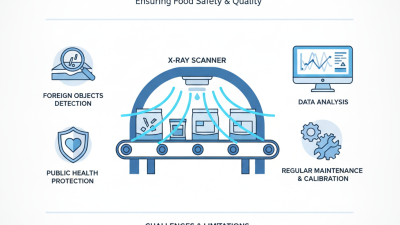
Regulatory standards in X-ray food inspection are evolving rapidly. Recent data shows that over 35% of food safety issues relate to contamination detection capabilities. The implementation of X-ray technology helps meet these standards. X-ray inspection systems can detect foreign objects within food products. This capability ensures adherence to regulations set by safety authorities.
The Global Food Safety Initiative (GFSI) emphasizes the importance of compliance. In 2022, a report indicated that 60% of food companies faced challenges in meeting these standards. This underlines the need for advanced inspection technologies. Companies using X-ray systems reported a 30% reduction in compliance failures. This advancement reflects the industry's push towards better safety measures.
Challenges remain in the adoption of these technologies. Many smaller producers struggle with the costs associated with X-ray systems. Some hesitate due to a lack of expertise in implementation. Continuous training and investment are necessary for ensuring effective use. As standards increase, the food industry must find solutions to these hurdles. This ongoing conversation about compliance will shape future trends in food inspection technologies.
Future Prospects: The Role of X-Ray Technology in Food Safety Industry
X-ray technology is increasingly pivotal in ensuring food safety. Recent reports indicate that the global X-ray food inspection market could reach over $700 million by 2026, at a CAGR of 6.5%. This growth is driven by rising safety concerns and regulatory pressures on the food industry.
Governments and industry bodies emphasize the importance of advanced detection methods. For instance, X-ray systems can identify foreign objects, contamination, and structural defects. A recent survey revealed that 78% of food manufacturers recognize the need for improved inspection technologies. While X-ray solutions offer enhanced safety, they still face challenges. Misinterpretations in data and equipment malfunctions often occur.
The future of X-ray technology lies in overcoming these limitations. Continuous innovation is essential. Integration with AI could enhance accuracy and reliability. Nonetheless, the industry must address these imperfections to fully realize the potential of X-ray technology in safeguarding food systems.
2026 Top Trends in X Ray Food Inspection Technology