BLOG

Top 10 X Ray Inspection Systems Manufacturers in China

Choosing reliable x ray inspection systems manufacturers requires more than comparing product pages. China’s market includes established suppliers, specialized engineering firms, and newer companies with ambitious claims. This guide introduces ten manufacturers worth examining through practical, technical, and purchasing perspectives.

The comparison considers image resolution, detection stability, software capability, conveyor design, maintenance access, and after-sales support. It also examines how each supplier handles real production details, such as uneven products, reflective packaging, moisture, and changing line speeds. Small details matter. An unstable belt can reduce confidence, even when the detector appears advanced. A clear interface can save valuable training time.

Wilhelm Conrad Röntgen, the pioneering physicist behind X-ray discovery, reportedly said, “I did not think; I investigated.” That principle remains useful when evaluating x ray inspection systems. Specifications deserve attention, but factory evidence deserves more. Product trials, sample testing, service records, and operator feedback can reveal limitations that brochures rarely mention.

This overview therefore avoids treating the highest specification as the automatic winner. A powerful system may still be unsuitable for a compact line or a demanding factory environment. Some conclusions may remain imperfect because supplier performance can vary by configuration, industry, and local service capacity. That uncertainty should be acknowledged, not hidden.

Readers will find a practical starting point for further qualification. The selected manufacturers are assessed for experience, engineering depth, product reliability, compliance awareness, and customer support. No ranking can replace an on-site evaluation. It can, however, make the shortlist more focused and the final decision more defensible.
Top 10 X Ray Inspection Systems Manufacturers in China

What X-Ray Inspection Systems Are and How They Work

X-ray inspection systems use controlled radiation to reveal hidden defects inside products. They are common in food, electronics, automotive parts, and industrial assemblies. Unlike visual inspection, they can examine sealed packages, dense components, and internal joints without opening them.

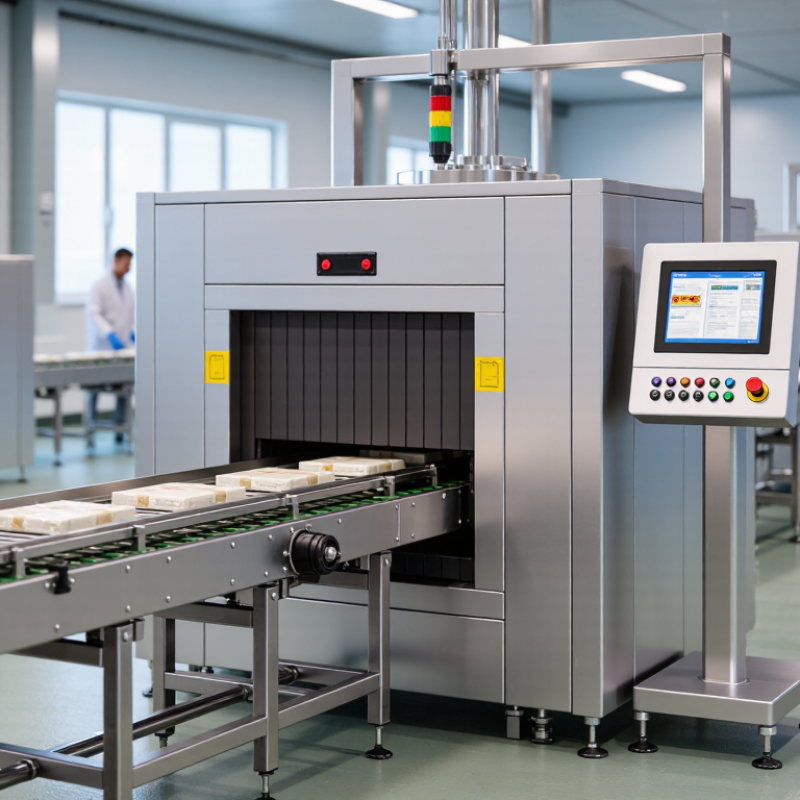
A typical system includes an X-ray tube, detector, conveyor, shielding cabinet, and analysis software. The tube sends X-rays through the item. Dense materials absorb more energy and appear brighter on the image. Air gaps, cracks, missing parts, and foreign objects usually create contrasting shapes. The detector converts the remaining radiation into a digital image, often within seconds.

In production, calibration matters as much as image quality. Operators normally test the system with reference samples before inspection begins. Conveyor speed, product position, material density, and detector settings can change the result. Small voids may disappear when two materials overlap. No scan is perfect.

I have seen teams trust automatic rejection too quickly. That is risky. Software needs suitable training images and regular verification. A skilled operator should review unusual patterns, record false rejects, and adjust thresholds carefully. Shielding, warning controls, and maintenance procedures also protect workers and support reliable operation. The best system is not simply the one with the strongest image; it must deliver repeatable results under real factory conditions.

Industrial X-ray inspection systems generate X-rays by accelerating electrons across a voltage and directing them onto a metal target. The chart shows the calculated minimum X-ray wavelength at common tube-voltage settings. Higher voltage produces higher-energy X-rays with shorter wavelengths, improving penetration through dense components.

Key Criteria for Evaluating Chinese Manufacturers

Top 10 X Ray Inspection Systems Manufacturers in China

Evaluating Chinese X ray inspection system manufacturers requires more than comparing prices. Start with documented engineering experience in your product category, such as food, electronics, packaging, or industrial components. Request test images using your actual products, including dense areas, overlapping parts, and irregular shapes. A clear detection report should state sensitivity, speed, rejection accuracy, and testing conditions.

Factory capability matters. Check whether critical components are traceable and whether each system receives calibration before shipment. Ask for installation records, operator training plans, preventive maintenance schedules, and spare-parts response times.

Independent certifications can support credibility, but certificates alone do not prove daily performance. Speak with recent customers when possible. Their feedback may reveal delays that sales documents omit.

Software evaluation deserves equal attention. Confirm image storage, password controls, audit records, language options, and integration with existing production lines. Cybersecurity and data handling should be explained in practical terms. A reliable manufacturer should provide a written warranty with measurable service commitments.

No supplier is perfect. Even experienced factories may underestimate installation space, product variation, or local support needs. I would record these gaps rather than hide them, then compare corrective actions across the shortlisted manufacturers. A low purchase price can become expensive when calibration, training, and downtime are ignored.

Top 10 X-Ray Inspection Systems Manufacturers in China

Top 10 X-Ray Inspection Systems Manufacturers in China

China’s top ten X-ray inspection systems manufacturers are competing through detector accuracy, software integration, and after-sales support. A credible comparison should examine these factors, not only factory size or export volume. MarketsandMarkets estimated the global X-ray inspection system market at about USD 1.1 billion in 2023, with steady growth expected through 2028. Food processing, electronics, batteries, and casting plants are important demand centers.

Practical testing reveals meaningful differences. Some Chinese manufacturers offer compact conveyor systems for packaged food, while others build high-energy equipment for welds, castings, and battery cells. Buyers should check image resolution, penetration capability, inspection speed, false-reject rates, and data traceability. A test piece with thin wires, dense metal parts, and uneven product spacing can expose weaknesses quickly. Ask for factory acceptance records.

Compliance matters.

Systems should support applicable Chinese requirements and relevant IEC electrical safety principles. Service quality also deserves attention. A fast replacement detector is useful, but remote diagnosis, operator training, and software updates may matter more over five years. Industry reports often describe market growth, yet they rarely measure downtime or real production losses. That is a gap worth questioning. The strongest top-ten selection should combine verified installations, transparent performance data, and practical maintenance experience rather than relying on promotional rankings.

Product Types and Industry Applications

Top 10 X Ray Inspection Systems Manufacturers in China: Product Types and Industry Applications

China’s X-ray inspection market serves food, pharmaceuticals, electronics, automotive parts, and packaging. Product selection depends on material density, line speed, image resolution, and inspection goals. Conveyor-based systems examine sealed products for missing items, voids, metal fragments, and inconsistent filling. Cabinet systems suit small batches, laboratory checks, and production-line sampling. Real-time imaging systems help inspect castings, welds, circuit boards, batteries, and complex assemblies.

Food processors often choose systems with hygienic stainless-steel frames and automatic reject functions. Pharmaceutical manufacturers need stable imaging, traceable records, and careful quality control. Electronics factories may require higher resolution for solder joints, connectors, and hidden defects. Industrial users often select larger chambers for castings and welds. Portable units can support field inspections, but operators must assess stability and image clarity carefully. A compact machine is not always the practical choice.

Tips: Test real samples before purchasing. Ask suppliers to measure detection performance on your products, not standard samples. Check software usability, cleaning access, maintenance response, and operator training. Specifications can look impressive on paper. Actual results may change with product shape, moisture, packaging layers, and production speed. Keep inspection records, review false rejects, and adjust sensitivity with qualified technicians. An overlooked workflow problem can reduce the value of advanced equipment.

Top 10 X Ray Inspection Systems Manufacturers in China - Product Types and Industry Applications
Rank Manufacturer Profile Primary X-Ray System Type Typical Detector Technology Typical Tube Voltage Typical Inspection Capacity Main Industry Applications Common Technical and Safety References
1 Profile A
Industrial NDT Focus
Digital radiography and industrial X-ray cabinet systems Flat-panel detector, amorphous silicon or CMOS 160–450 kV Welds, castings and fabricated parts up to approximately 300 mm thickness, depending on material Pressure vessels, pipelines, automotive castings, structural components and general non-destructive testing ISO 17636-2; ASTM E1742; ISO 5579; IEC 61010-2-091; GB 18871
2 Profile B
Electronics Inspection Focus
2D automated X-ray inspection system for PCBs and electronic assemblies High-resolution CMOS or amorphous-silicon flat panel 90–160 kV Component packages, solder joints, vias, wire bonds and multilayer boards PCB assembly, semiconductor packaging, connectors, LED modules and consumer electronics IPC-A-610; IPC-7095; IEC 62471-related equipment practices; IEC 61010-2-091
3 Profile C
Battery and Energy Focus
Inline X-ray inspection system for cylindrical, prismatic and pouch batteries High-speed line detector or flat-panel detector 80–225 kV Electrode alignment, tab welding, internal foreign material, sealing and cell geometry Lithium-ion cells, battery modules, energy-storage systems and electric-vehicle battery production IEC 62619; IEC 62133-2; UN 38.3; IEC 61010-2-091; GB 18871
4 Profile D
Food and Packaging Focus
Conveyor-based X-ray foreign-object detection system Dual-energy or multi-energy line-scan detector 70–150 kV Packaged food, beverages and pharmaceutical products on continuous production lines Metal, glass, stone and bone detection; missing-product checks; fill-level and seal verification HACCP principles; ISO 22000; BRCGS requirements; IEC 61010-2-091; applicable food-contact regulations
5 Profile E
Computed Tomography Focus
Industrial micro-CT and cone-beam CT inspection system High-resolution flat-panel detector or photon-counting detector 90–450 kV Three-dimensional internal geometry, porosity, cracks and dimensional defects in small and medium parts Additive manufacturing, precision casting, plastics, electronics, medical components and research laboratories VDI/VDE 2630; ASTM E1695; ASTM E1570; ISO 15708; IEC 61010-2-091
6 Profile F
Automotive Inspection Focus
Automated X-ray inspection line for castings and powertrain components Flat-panel detector with automated image-analysis software 160–320 kV Aluminum and iron castings, engine blocks, wheels, housings and welded assemblies Automotive manufacturing, electric motors, transmission parts, suspension components and brake systems ASTM E505; ASTM E2422; ISO 17636-2; IATF 16949 quality-system environment
7 Profile G
Security Screening Focus
Baggage, cargo and parcel X-ray screening equipment Dual-energy line detector with material discrimination 140–320 kV Cabin baggage, checked baggage, parcels, pallets and small cargo containers Airports, customs, logistics hubs, ports, public buildings and critical infrastructure IEC 62463; IEC 61010-2-091; applicable aviation-security and radiation-safety requirements
8 Profile H
Weld and Pipeline Focus
Portable digital radiography and crawler-compatible X-ray equipment Wireless digital detector or computed radiography plate 120–300 kV Circumferential welds, longitudinal welds, pipe fittings and field repair areas Oil and gas pipelines, petrochemical plants, shipbuilding, boilers and on-site maintenance ISO 17636-2; ISO 5579; ASME BPVC Section V; ASTM E1742; local radiation-control rules
9 Profile I
Semiconductor and Precision Focus
High-magnification X-ray and oblique-angle inspection system Scientific CMOS, hybrid pixel or high-resolution flat-panel detector 40–130 kV Micro-BGA, wafer-level packages, solder bumps, bond wires and miniature connectors Semiconductor packaging, MEMS, medical electronics, precision sensors and aerospace electronics IPC-A-610; IPC-7095; JEDEC package inspection practices; IEC 61010-2-091
10 Profile J
General-Purpose Cabinet Focus
Enclosed benchtop or floor-standing X-ray inspection cabinet Digital flat-panel detector or image intensifier 90–225 kV Small and medium components, assemblies, weld samples and finished products Education, laboratories, quality control, electronics, plastics, jewelry and light industrial manufacturing IEC 61010-2-091; IEC 61010-1; GB 18871; applicable national occupational-radiation regulations
Technical values are representative ranges for commercially available systems in the Chinese X-ray inspection market; exact specifications vary by configuration, detector, material and inspection objective.

How to Choose the Right Chinese Manufacturer

Top 10 X Ray Inspection Systems Manufacturers in China

Choosing a Chinese X-ray inspection system manufacturer requires more than comparing prices. Start by matching the machine with your product size, material density, line speed, and inspection target. Ask for test results using samples that resemble your real production. A factory may show excellent images on simple samples, yet perform poorly with layered packaging or uneven products. This is where practical testing matters.

Check the manufacturer’s engineering experience and quality controls. Request detector resolution, image-processing details, radiation safety documentation, calibration procedures, and electrical certifications. Reliable suppliers should explain these points clearly, without hiding behind technical language. Visit the production site when possible. Observe cable routing, cabinet assembly, software testing, and final inspection records. Small details often reveal the working culture.

After-sales support deserves equal attention. Confirm installation training, spare-part availability, remote diagnosis, response times, and local service options. Ask for references from factories with similar equipment and production conditions. A low quotation can become expensive when engineers wait weeks for support. I have learned that a confident sales presentation proves very little. Verified data is stronger. Still, no evaluation is perfect. Your own sample test may expose problems that factory demonstrations miss. Leave room for retesting, design changes, and a written acceptance standard before placing an order.