BLOG
China Top X Ray Food Inspection Systems Manufacturers?
Choosing among China’s top x ray food inspection systems manufacturers requires more than comparing prices or machine appearance. Buyers must examine detection sensitivity, software stability, hygienic design, and after-sales support. A polished cabinet means little without reliable images.
MarketsandMarkets’ Food Safety Testing Market report estimated the sector at USD 24.6 billion in 2023. It projected growth to approximately USD 35.0 billion by 2028. This expansion reflects stronger quality-control expectations, automated production, and rising demand for traceable inspection records. X-ray technology supports these needs by identifying dense contaminants and checking product completeness inside sealed packaging.
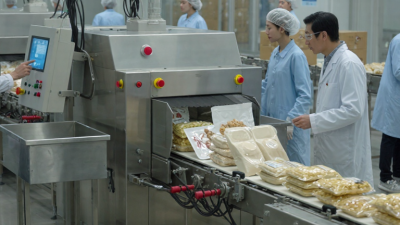
The equipment must fit the factory floor. Consider a wet conveyor, a 24-hour line, or a small pouch moving quickly beneath the detector. These details influence performance.
Food inspection specialist Neil Giles has emphasized, “The best inspection system is the one that consistently protects the product without interrupting production.” That principle matters when evaluating Chinese manufacturers. A system should deliver stable rejection accuracy, simple calibration, and clear fault alerts. It should also provide usable data for quality teams.
Still, no machine solves every inspection challenge. Product density, package shape, speed, and testing discipline can affect results. This is where many comparisons become too optimistic. Certification claims should be checked against independent documentation, factory trials, and customer references.
This guide examines China’s leading x ray food inspection systems manufacturers through a practical lens. It considers technology, application experience, customization, service response, and long-term operating value. The strongest supplier may not be the cheapest. It should be the partner that performs reliably when the production line is wet, fast, noisy, and unforgiving.
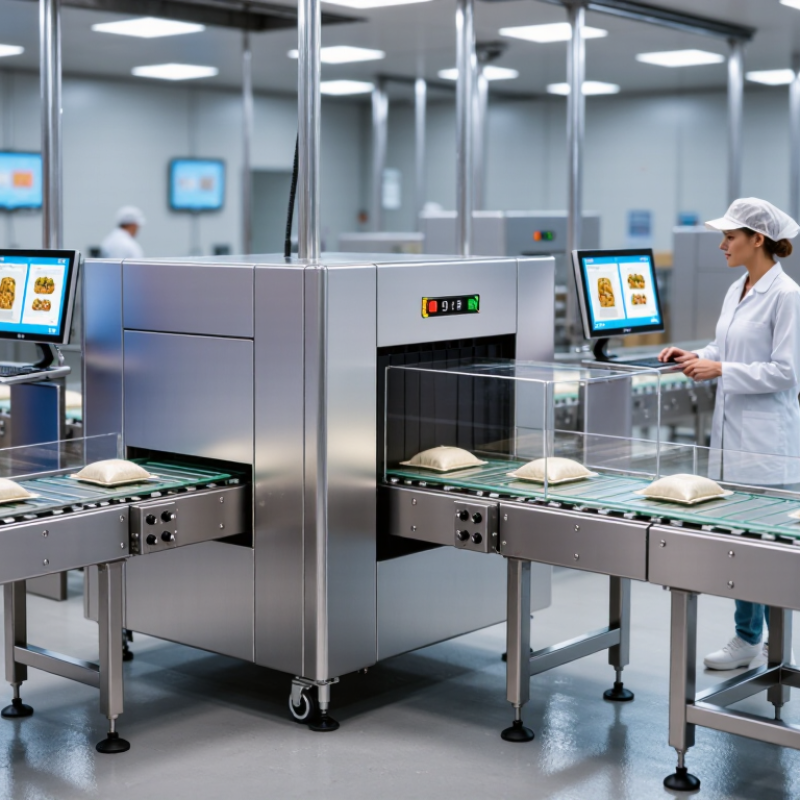
China’s X-Ray Food Inspection Market: Scope, Roles, and Key Metrics
China’s X-ray food inspection market is expanding with stricter quality controls, export requirements, and automated production. MarketsandMarkets projected the global food safety testing market to reach about USD 24.6 billion by 2029, growing at 7.1% annually from 2024. X-ray inspection remains a specialized segment within this wider market.
Chinese manufacturers mainly serve three roles: equipment design, system integration, and after-sales calibration. Their systems typically detect dense contaminants, missing products, damaged packaging, and weight-related inconsistencies. In practical factory use, key metrics include detection sensitivity, line speed, false-rejection rate, uptime, and cleaning time. A small reduction in false rejects can protect thousands of packaged units each shift.
Data quality matters.
The PMMI report, “Food Packaging Trends and Advances in Inspection,” highlights stronger demand for automated inspection and traceable production data. However, published performance figures are not always comparable. Testing conditions, product density, package shape, and belt speed can change results significantly. This is the market’s weak point. Buyers should request witnessed tests using their own products, not rely only on laboratory claims. The China market also needs more transparent reporting on service response time, component life, and total operating cost. These details often decide whether a system performs reliably after installation.
| Market Dimension | Key Metric or Requirement | China Market Context | Typical Operational Reference | Basis or Interpretation |
|---|---|---|---|---|
| Market Scope | Primary inspection targets | Foreign bodies, including metal, glass, mineral stone, calcified bone, dense rubber, and selected high-density plastics | Application depends on product density, packaging material, contaminant size, and line speed | X-ray inspection is a non-destructive quality-control method and does not identify every type of low-density contaminant |
| Food Processing | Common installation points | After filling, sealing, portioning, case packing, or before final shipment | Inspection is normally positioned after the highest-risk contamination or packaging step | End-of-line inspection improves lot control, while in-process inspection can reduce product loss |
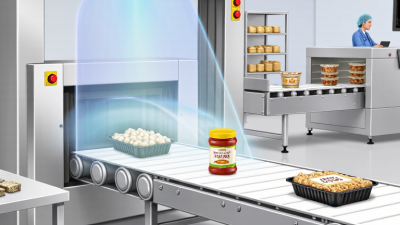
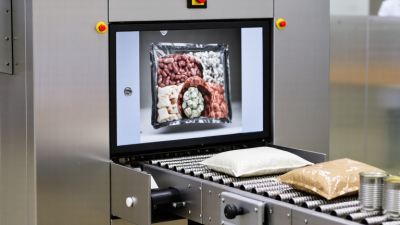
| Product Formats | Supported packaging formats | Bags, cartons, trays, cans, bottles, jars, pouches, multipacks, and bulk products | Horizontal beam systems are common for packaged products; vertical or falling-stream systems are used for bulk applications | System configuration must match conveyor direction, package geometry, and product presentation |
| Food Categories | High-use segments | Meat and seafood, dairy, bakery, ready-to-eat meals, snacks, beverages, canned food, frozen food, and agricultural products | Risk is generally higher where products involve cutting, deboning, glass packaging, metal equipment, or high-speed handling | Adoption is driven by product risk, retailer requirements, export controls, and customer complaint prevention |
| Detection Performance | Smallest detectable contaminant | Not a universal fixed value; it varies by product, package, contaminant type, and inspection speed | Many industrial applications specify performance in the approximate 0.8–3.0 mm range for selected test pieces under defined conditions | Published sensitivity should always state the product, package, contaminant material, position, and line speed |
| Line Capacity | Throughput | Capacity is selected according to the production line rather than a single market-wide standard | Typical systems are configured from low-speed specialty lines to high-speed lines exceeding 100 m/min, subject to product and detector design | Higher speed can reduce available exposure time and may affect sensitivity, image quality, and rejection accuracy |
| Inspection Functions | Additional quality checks | Missing products, broken products, incorrect fill level, damaged packaging, and product-count verification | One system may combine foreign-body inspection with shape, mass-distribution, or packaging-integrity algorithms | These functions improve equipment utilization but should be validated separately from contaminant detection |
| Rejection Control | Automatic reject performance | Reject mechanisms include air blast, pushers, diverters, drop flaps, and stop-and-remove systems | Critical parameters include reject timing, confirmation sensors, reject-bin security, and rejected-product traceability | Food safety programs should verify that contaminated products cannot re-enter the accepted-product flow |
| Regulatory Framework | Food hygiene management | Food manufacturers commonly operate under China’s food safety standards and hazard-control procedures | GB 14881-2013 provides the general hygienic specification for food production | X-ray inspection is a control measure within a broader HACCP, preventive-control, or quality-management system |
| Chemical Safety | Contaminant-control reference | Food producers must manage contaminants and prohibited substances according to applicable national food-safety standards | GB 2762-2022 specifies limits for contaminants in food, while equipment inspection focuses mainly on physical contamination | X-ray inspection cannot replace laboratory testing for chemical, microbiological, or residue hazards |
| Packaging Compatibility | Effect of package material | Metalized films, aluminum trays, thick glass, dense cartons, and overlapping packages can reduce inspection performance | Validation should use the heaviest, thickest, or most challenging approved package configuration | Application testing is required because attenuation and image contrast depend on the complete product-package combination |
| Radiation Safety | Shielding principle | Industrial food X-ray inspection equipment uses an enclosed beam path with shielding and interlocked access points | Installation, maintenance, leakage checks, warning labels, and operator procedures must follow applicable Chinese safety requirements | Food exposed to X-rays does not become radioactive; the equipment must still be correctly installed and maintained |
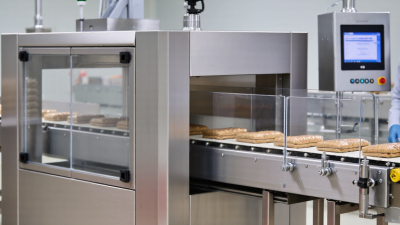
| Hygienic Design | Cleanability and materials | Food-contact and adjacent surfaces should be suitable for the product environment and cleaning regime | Typical evaluation points include stainless-steel construction, accessible surfaces, drainage, ingress protection, and tool-free cleaning areas | Hygienic design is especially important in wet, chilled, frozen, and ready-to-eat production areas |
| Data and Traceability | Inspection records | Manufacturers increasingly require event logs, product recipes, reject records, alarm history, and audit trails | Useful records include date, time, product code, line speed, test result, operator action, and rejected-product disposition | Data retention periods should be aligned with customer contracts, internal procedures, and applicable food-safety requirements |
| Validation | Routine performance verification | Performance should be challenged with certified or controlled test pieces under defined operating conditions | Checks are commonly performed at start-up, after product changeover, after maintenance, and at scheduled intervals | Test-piece size alone is insufficient; position, orientation, product load, speed, and rejection confirmation must also be controlled |
| Total Cost of Ownership | Cost drivers | Purchase price is only one component of lifecycle cost | Important factors include installation, integration, training, preventive maintenance, spare parts, software support, utilities, and downtime | High availability and reliable reject verification can be more valuable than a lower initial equipment price |
| Supplier Evaluation | Technical selection criteria | Food companies typically compare application testing, detection stability, service coverage, integration capability, and documentation | Request product-specific sensitivity data, acceptance criteria, validation records, service response procedures, and training plans | Supplier capability should be judged using the buyer’s actual product and packaging rather than generic brochure specifications |