
BLOG
7 Best X Ray Inspection Equipment for Global Buyers
Choosing reliable x ray inspection equipment requires more than comparing prices, images, and advertised resolution. Global buyers must examine product type, material density, conveyor speed, detector performance, and service support. A compact food inspection line may need a 0.4-millimeter wire detection capability, while an electronics plant may prioritize image contrast and software integration. These differences matter.
This guide introduces seven practical x ray inspection equipment options for international purchasing teams. Each option is assessed through operating experience, technical specifications, maintenance needs, and typical industrial applications. The evaluation considers stainless steel frames, sealed inspection tunnels, intuitive controls, and clear image storage. It also highlights operator training and regional technical assistance. These details often influence uptime more than impressive brochure claims.
Performance is not everything. A powerful system can still disappoint when calibration is difficult or spare parts arrive slowly. Buyers should request sample testing with their own products before signing a purchase agreement. That step reveals blind spots.
The selected equipment covers common needs across food processing, pharmaceuticals, packaging, manufacturing, and quality control. However, no ranking can fit every facility. Production volume, environmental conditions, compliance expectations, and available floor space can change the best choice. Some recommendations may require deeper verification because supplier data is not always presented consistently. Careful comparison remains essential. Reliable decisions come from measurable evidence, experienced support, and realistic operating conditions—not from specifications alone.

X-Ray Inspection Equipment: Purpose, Applications, and Core Technologies
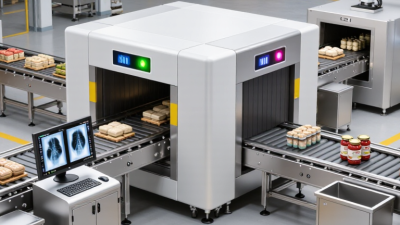
X-ray inspection equipment reveals hidden defects without cutting the product open. It helps buyers examine welds, castings, circuit boards, batteries, food packages, and aerospace parts. The purpose is practical: detect voids, cracks, missing components, contamination, and uneven density before shipment.
Grand View Research estimated the global X-ray inspection system market at about USD 1.1 billion in 2023, with continued growth through 2030. MarketsandMarkets also identifies electronics, automotive, and food processing as major application sectors. These figures indicate strong demand, but market estimates differ by scope and methodology. Buyers should check the original report definitions.
Core technologies include two-dimensional digital radiography, line-scan detectors, computed tomography, and dual-energy imaging. Two-dimensional systems suit fast conveyor inspection. CT creates cross-sectional images for complex assemblies. Dual-energy analysis can separate materials with similar shapes but different densities. Artificial intelligence may reduce false alarms, yet it still needs verified training images and human review. Radiation shielding, interlocks, leakage testing, and operator training remain essential. The International Atomic Energy Agency’s safety guidance stresses controlled exposure and documented procedures.
In practice, select equipment around the smallest defect, product speed, material thickness, and required image resolution. A larger detector is not automatically better. It may increase cost and calibration demands. I would not trust a polished demonstration alone. Request sample testing, measurement uncertainty data, service records, and validation results from comparable products. Mistakes happen when buyers compare only voltage, price, or image size.
| Equipment Type | Primary Inspection Purpose | Typical Applications | Core X-Ray Technology | Typical Tube Voltage | Inspection Area or Product Size | Key Detectable Defects | Typical Throughput | Best Fit for Buyers |
|---|---|---|---|---|---|---|---|---|
| Food Product X-Ray Inspection System | Detects physical contaminants and verifies product integrity without opening sealed packaging. | Packaged food Canned goods Ready meals Dairy products | Single- or dual-energy transmission imaging with digital line-scan detectors and automatic reject mechanisms. | 50–90 kV | Typical product height: 20–250 mm; conveyor widths commonly 200–600 mm. | Metal, glass, mineral stone, calcified bone, dense plastic, missing products, broken items, and fill-level irregularities. | Approximately 30–300 m/min, depending on product spacing and inspection resolution. | Food processors requiring HACCP- and retailer-compliant foreign-body detection on high-speed lines. |
| Pharmaceutical X-Ray Inspection System | Checks sealed pharmaceutical packs for contamination, completeness, and packaging consistency. | Blister packs Bottles Vials Syringes | High-resolution digital radiography, image enhancement, product-count verification, and configurable software inspection. | 40–80 kV | Typical conveyor widths: 100–400 mm; optimized for small and medium-sized packs. | Missing tablets, broken capsules, foreign particles, damaged closures, incorrect fill levels, and package defects. | Approximately 100–600 packs/min, depending on format and inspection criteria. | Regulated manufacturing environments requiring traceability, electronic records, and repeatable inspection results. |
| Battery and Electronics X-Ray Inspection System | Examines internal assemblies that cannot be reliably evaluated by optical inspection alone. | Lithium-ion cells PCBs Semiconductor packages Connectors | 2D digital radiography or microfocus X-ray imaging; selected systems support computed tomography for detailed analysis. | 90–160 kV; microfocus systems may use lower voltage with very small focal spots. | Typical sample dimensions: 5–500 mm; resolution depends on geometry, detector, and focal-spot size. | Solder bridges, voids, cracks, wire-bond defects, misplaced components, weld penetration issues, and foreign material. | Inline systems commonly inspect 10–120 units/min; laboratory systems are generally batch-based. | Manufacturers needing non-destructive verification of hidden joints, cell welds, and internal component placement. |
| Casting and Weld X-Ray Inspection System | Reveals internal discontinuities in metal parts, welds, and pressure-containing components. | Automotive castings Pipelines Pressure vessels Aerospace parts | Digital radiography, flat-panel detectors, real-time radiography, and optional computed tomography for complex geometries. | 160–450 kV for many industrial applications; higher-energy systems are used for thicker steel sections. | Parts commonly range from 50 mm to more than 1,000 mm; penetrable thickness depends strongly on material and source power. | Porosity, shrinkage, cracks, inclusions, lack of fusion, lack of penetration, and incomplete filling. | Typically 1–60 parts/min for automated lines; large components may require longer exposure times. | Industrial plants that need code-based weld or casting quality control without destructive sectioning. |
| Security and Baggage X-Ray Scanner | Provides rapid non-destructive screening of baggage, parcels, and personal belongings. | Airports Courthouses Mailrooms Critical infrastructure | Single- or dual-energy transmission imaging with material discrimination and operator-assisted image enhancement. | Typically 80–180 kV, depending on tunnel size and penetration requirements. | Common tunnel openings range from approximately 400 × 300 mm to 1,000 × 1,000 mm. | Weapons, dense metals, concealed tools, suspicious organic materials, liquid containers, and prohibited items. | Approximately 300–1,800 bags or parcels/hour, depending on conveyor configuration and operator workflow. | Facilities requiring fast visual screening, material classification, and high-volume baggage or parcel handling. |
| Portable Industrial X-Ray System | Performs radiographic inspection in locations where large fixed equipment is impractical. | Pipeline maintenance Field weld testing Ship repair Infrastructure inspection | Portable pulsed or constant-potential X-ray source paired with digital radiography or imaging plates. | Typically 150–300 kV | Suitable for localized welds and components; practical coverage depends on source-to-object distance and material thickness. | Weld porosity, cracks, lack of penetration, inclusions, wall-thickness variations, and assembly errors. | Usually measured by exposures per inspection location rather than conveyor speed; exposure times may range from seconds to several minutes. | Inspection contractors and maintenance teams working across multiple sites or in confined areas. |
| Computed Tomography X-Ray Inspection System | Creates cross-sectional and three-dimensional images for comprehensive internal analysis. | Automotive components Additive manufacturing Electronics Research and development | Rotational X-ray acquisition with reconstruction software; available as cone-beam CT or high-energy industrial CT. | 90–450 kV for many systems; higher-energy configurations support denser and larger parts. | Typical part diameter: 20–600 mm; larger systems can accommodate substantially bigger components. | Internal voids, cracks, inclusions, dimensional deviations, assembly errors, wall thickness, and hidden geometry. | Typically 1–30 parts/hour, depending on part density, scan volume, resolution, and reconstruction requirements. | Users prioritizing detailed failure analysis, dimensional metrology, process development, and full internal visualization. |
Related Posts
-
10 Best X Ray Inspection Equipment to Buy?
-

What Is the Best X Ray Inspection Machine in 2026?
-
2026 Best Xray Inspection Systems for Global Buyers
-
2026 Top Types of Food Inspection Machines for Global Buyers
-
Top 10 X Ray Inspection Systems Manufacturers in China
-
How to Choose Food X Ray Inspection Equipment in 2026?
