BLOG
What Is Food X Ray Inspection Equipment Used For?
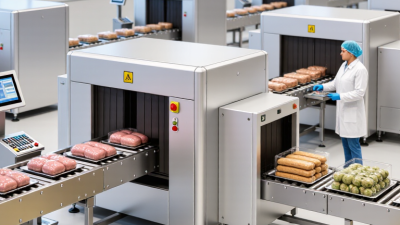
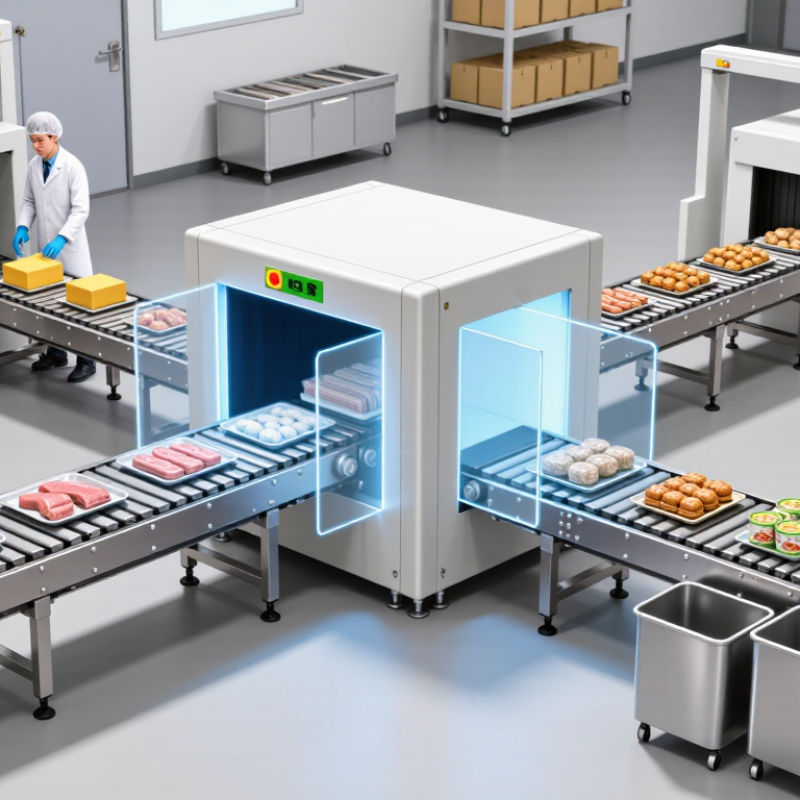
Food x ray inspection equipment helps manufacturers examine packaged food without opening or damaging it. It uses differences in density to identify foreign materials, such as metal, glass, stones, and dense bone fragments. The system can also check product completeness, fill levels, and damaged packaging. This makes it useful for meat, seafood, dairy, bakery, canned, and ready-to-eat products.
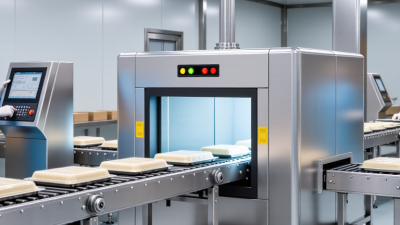
In a real production line, sealed products pass through a controlled inspection tunnel. A clear image appears on the operator’s screen within seconds. If the software detects an unusual area, the rejection system removes the affected package. Records can support traceability, quality investigations, and supplier reviews. However, performance depends on product density, package shape, line speed, and image settings. No machine is perfect. Low-contrast materials may remain difficult to detect. Moisture, overlapping products, or poorly maintained equipment can also reduce accuracy.
Reliable results require documented procedures and trained operators. Routine calibration, verification tests, cleaning, and preventive maintenance should be part of the inspection program. Manufacturers should also evaluate radiation safety, equipment integration, and applicable food safety requirements before installation. A practical assessment matters more than a brochure claim. The best system fits the product and the factory’s actual risks. It should support, not replace, good manufacturing practices, supplier controls, and careful visual checks. Small operational details matter. Operators may need clearer alerts, better reject confirmation, or simpler records. These lessons often appear only after daily use. Understanding these limitations clarifies what food x ray inspection equipment is truly used for.
Definition and Purpose: Detecting Foreign Bodies as Small as 0.3 mm
What Is Food X-Ray Inspection Equipment Used For?
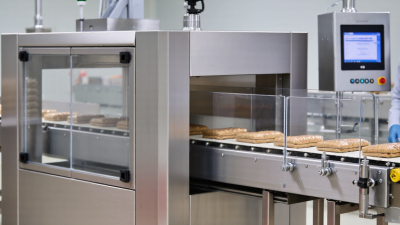
Food X-ray inspection equipment checks packaged products for dense foreign bodies that ordinary visual inspection may miss. Depending on the product, packaging, speed, and test conditions, modern systems can detect particles as small as 0.3 mm. These may include tiny stones, glass fragments, metal pieces, mineral deposits, or dense bone fragments.
The process measures differences in X-ray absorption. A contaminant appears as a darker or brighter signal against the food image. It can inspect sealed trays, cans, cartons, and flexible packs without opening them. The European Commission’s 2023 RASFF report recorded more than 4,000 food notifications, showing that physical hazards remain a practical concern across supply chains. Detection, however, is not magic.
Sensitivity changes with product thickness, moisture, overlapping items, and packaging structure. A 0.3 mm claim should come from documented validation tests, not a sales headline. Operators should challenge the equipment with certified test pieces during production and record the results. Cleaning, calibration, and image review also matter.
There is room for error.
Poorly chosen settings can create false rejects or missed contamination. Experienced quality teams therefore combine X-ray inspection with supplier controls, process checks, and traceability. This layered approach reflects preventive food-safety principles described by international food safety standards and regulatory guidance.
Food X-Ray Inspection: Foreign Body Detection Reference
Food X-ray inspection equipment is used to identify dense foreign bodies inside packaged or unpackaged food, including metal, glass, mineral stone, and calcified bone. The chart shows reference test-piece diameters commonly used to illustrate detection capability, including objects as small as 0.3 mm. Actual performance depends on product density, packaging, line speed, orientation, and equipment configuration.
Operating Principle: Using 30–160 kV X-Rays to Analyze Product Density
What Is Food X-Ray Inspection Equipment Used For?
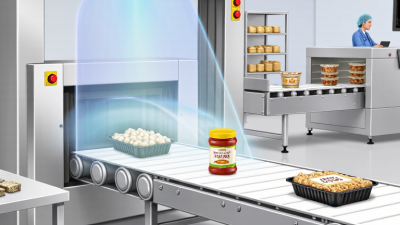
Food x-ray inspection equipment detects density differences inside packaged products. It commonly operates between 30 and 160 kV. Lower energy suits thin products and small dense contaminants. Higher energy penetrates thick, frozen, or multilayer packages. X-rays pass through the product and reach a detector. The detector converts absorption patterns into a grayscale image. Dense materials appear brighter. The system can identify metal, glass, stones, bone fragments, missing products, and unusual voids. It is not a sterilization system.
The public-health need is substantial. The CDC estimates that foodborne illness causes 48 million illnesses, 128,000 hospitalizations, and 3,000 deaths annually in the United States. The WHO’s 2015 global burden report estimated 600 million illnesses and 420,000 deaths each year. These figures support stronger preventive controls, but inspection cannot replace sanitation or process discipline. During line trials, technicians adjust voltage, conveyor speed, and detection thresholds with certified test pieces. A clean image can still mislead. Product thickness, salt content, moisture, and packaging geometry affect results.
Practical systems also check product presence and package consistency. A missing sachet may create a clear density gap. A trapped air pocket may produce a different pattern. Operators need shielded tunnels, interlocked access panels, warning indicators, and scheduled leakage checks. The Codex General Principles of Food Hygiene, revised in 2022, emphasizes monitoring, verification, and maintained equipment. Calibration remains imperfect. Human review still matters when borderline images appear.
What Is Food X Ray Inspection Equipment Used For? - Operating Principle: Using 30–160 kV X-Rays to Analyze Product Density
| Inspection Dimension | Typical Operating Data | What the Equipment Detects or Performs | Common Food Applications | Practical Considerations |
|---|---|---|---|---|
| X-ray tube voltage | Approximately 30–160 kV, selected according to product density, package thickness, and conveyor speed | Controls X-ray penetration and image contrast | Low-density bakery products, packaged foods, dense canned or frozen products | Higher voltage generally improves penetration through dense or thick products, while application-specific settings are required for suitable contrast |
| Foreign-body detection | Detection is based on differences in X-ray absorption and apparent density | Identifies many metallic and non-metallic contaminants, including glass, stones, mineral fragments, and some dense plastics or rubber | Ready meals, meat, poultry, seafood, dairy products, confectionery, and packaged dry goods | Sensitivity depends on contaminant size, orientation, product composition, package material, and inspection geometry |
| Missing or damaged product | Software compares the scanned image with configured product-area or density-area limits | Detects missing pieces, incomplete portions, broken products, and misplaced components | Biscuits, chocolate assortments, trays of prepared food, multipacks, and portion-controlled products | Reliable results require consistent product presentation and a validated inspection recipe |
| Fill-level verification | Image analysis evaluates the product boundary or material distribution inside the package | Checks underfilled, overfilled, or unevenly filled containers | Cans, jars, bottles, cartons, pouches, and sealed trays | Detection performance is influenced by product uniformity, container shape, headspace, and package orientation |
| Seal and package inspection | The system analyzes density changes and abnormal structures around the closure area | Finds product trapped in seals, folded package areas, broken closures, and some seal irregularities | Flexible pouches, lidded trays, sachets, cartons, and heat-sealed packs | Seal inspection capability depends on package design and whether the defect creates a detectable density difference |
| Product mass and distribution | Estimated from image attenuation patterns and calibrated product models | Assesses approximate mass consistency and identifies uneven product distribution | Bulk food packs, meat portions, filled confectionery, and prepared meals | X-ray estimation is application-dependent and should be verified against approved weighing or quality-control procedures |
| Product orientation and count | Pattern recognition evaluates the number, position, and outline of products or components | Checks item count, arrangement, overlap, and component presence | Multipacks, snack assortments, boxed products, and meal trays | Performance improves when products are consistently spaced and presented to the inspection beam |
| Scanning and image formation | X-rays pass through the product and are measured by a detector as the package moves through the inspection zone | Creates a grayscale image representing relative X-ray absorption across the product | Continuous in-line inspection of packaged and unpackaged food products | The system does not identify contamination by appearance alone; it identifies features with suitable absorption or density contrast |
| Automatic rejection | A configured reject device removes products that exceed the inspection threshold | Separates suspected contaminants or nonconforming packages from the accepted product stream | High-speed lines for packaged food, meat, seafood, bakery, and dairy products | Reject timing must be synchronized with conveyor speed, product spacing, and the detector position |
| Radiation safety | Food inspection systems use shielded X-ray chambers, safety interlocks, warning indicators, and leakage controls | Allows in-line inspection while controlling exposure outside the shielded tunnel | Food processing and packaging environments with trained operators | Installation, operation, testing, and maintenance must comply with applicable local radiation-safety and food-industry requirements |
Inspection Applications: Finding Metal, Glass, Stone, Bone, and Packaging Defects
What Is Food X-Ray Inspection Equipment Used For?
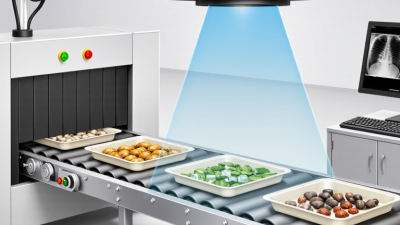
Food X-ray inspection equipment helps manufacturers examine packaged products without opening them. It uses differences in density to locate unwanted materials inside food. Metal is often detected clearly, including small wire fragments or equipment wear particles. Glass and stones can also appear because they are denser than most food products.
Bone detection is important in meat, poultry, and processed foods. The system can identify bone pieces that trimming or visual checks may miss. Results depend on product thickness, moisture, packaging, and the bone’s size. A practical test should use samples that represent real production conditions. No system is perfect.
X-ray inspection can also identify packaging defects. It may find missing products, incorrect product counts, broken containers, trapped air patterns, and unusual fill levels. Contaminated seals may be detected when product material changes the expected image near the closure. However, image quality alone cannot confirm every sealing problem. Operators should combine inspection results with seal checks, weight control, and routine equipment testing. Poor calibration can create false alarms or missed defects. That risk deserves attention. Detailed records, regular test pieces, and trained staff make the inspection process more reliable.
Production Integration: Supporting Inline Inspection at Over 1,000 Packs per Minute
Food X-ray inspection equipment detects dense foreign materials, such as glass, stone, bone, and metal, inside sealed packages. It can also identify missing products, broken pieces, and major weight inconsistencies.
At over 1,000 packs per minute, production integration matters more than detector resolution alone.
A synchronized encoder tracks every pack. The control system then links inspection results with precise rejection timing.
Speed exposes weak engineering.
The conveyor, reject device, buffer, and verification sensor must communicate continuously. A delayed signal can remove the wrong package. A missed signal can allow a defective pack to continue downstream.
The World Health Organization’s Estimates of the Global Burden of Foodborne Diseases report attributes about 600 million illnesses and 420,000 deaths annually to contaminated food.
That figure explains why inline controls require documented validation, not optimistic assumptions.
FAO’s The State of Food and Agriculture 2019 estimated that 14% of food is lost between harvest and retail. Reliable inspection can help reduce avoidable waste by finding problems before distribution.
Still, X-ray inspection is not a complete safety program. Product density, packaging format, vibration, and poor calibration can reduce sensitivity.
Operators need challenge tests, trend reviews, and clear corrective actions.
The uncomfortable reality is simple: a line may exceed 1,000 packs per minute, yet its real performance depends on every signal, reject, and human decision working together.
Safety Compliance: Meeting FDA 21 CFR 1020.40’s 0.5 mR/h Leakage Limit
Food X-ray inspection equipment detects dense foreign objects, such as metal, glass, stones, and calcified bone. It can also identify missing products, damaged packaging, and weight variation. The World Health Organization estimates that contaminated food causes 600 million illnesses annually. Physical contamination remains one visible part of that wider risk.
Radiation safety requires measured control. Under FDA 21 CFR 1020.40, cabinet X-ray systems must not exceed 0.5 mR/h at any point five centimeters from the external surface. This limit applies during normal operation, including accessible areas near doors, curtains, and inspection openings. In practice, technicians should test leakage with calibrated instruments and retain dated records.
A compliant reading is not a permanent guarantee. Components age, seals loosen, and maintenance can change results. X-ray inspection also does not destroy pathogens or detect every chemical hazard.
Tips: Place warning labels clearly. Test after installation, repair, or relocation. Verify interlocks before production. Keep operators away from open access points. The FDA’s Food Safety Modernization Act emphasizes preventive controls, so X-ray inspection should support, not replace, a broader hazard-control plan. Operators should review rejected products manually, because false rejects can hide equipment drift or poor setup. Small details matter. Calibration intervals deserve honest review.